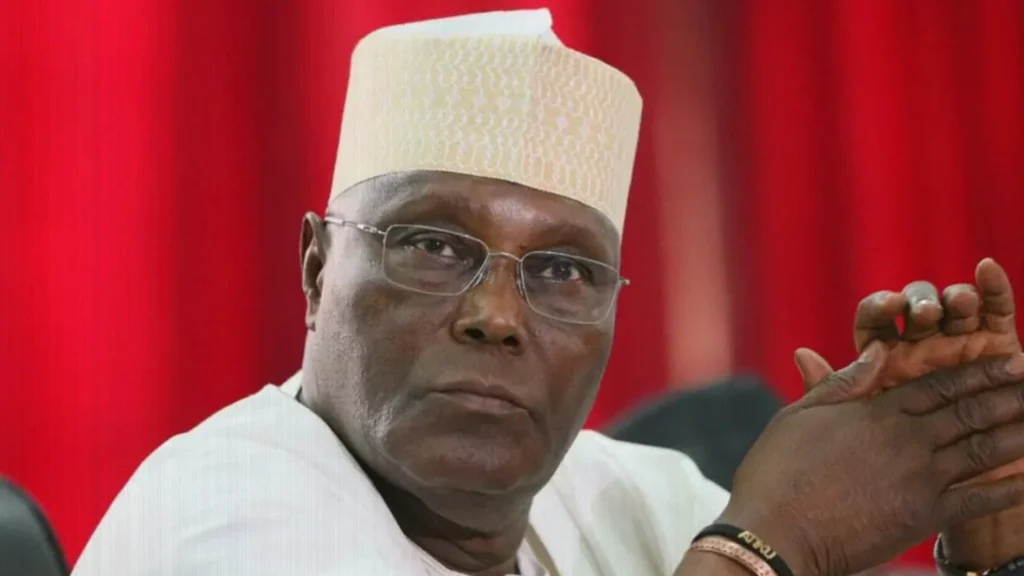
Atiku Abubakar, a former vice president and presidential candidate of the African Democratic Congress, has dismissed President Bola Ahmed Tinubu’s proposed 90-day cost-of-living relief programme as an election-driven promise that would expire only after Nigerians cast their ballots.
Key takeaways
- Atiku said the 90-day relief initiative was announced 86 days before the presidential election, placing its end date beyond polling day.
- He argued that the plan’s focus on food, taxes, projects, investment and household assistance addresses problems left unresolved for three and a half years.
- Atiku cited civilian deaths, kidnappings, floods and storm damage in Kaduna ahead of Tinubu’s expected campaign launch in the state.
- He questioned the practical effect of an NNPC petrol promotion after saying he paid ₦1,405 per litre at one of its retail outlets.
- The opposition candidate said voters should assess the government on their experience of rising living costs rather than on short-term pledges.
Relief plan criticised as post-election promise
In a Friday statement issued by his spokesman, Phrank Shaibu, Atiku said the calendar behind the National Economic Council’s proposal exposed its political purpose. With 86 days remaining before the presidential election and the programme set to continue for 90 days, he said Nigerians would be asked to vote before seeing whether the promised assistance materialised.
“The calculation is straightforward: the programme concludes only after Nigerians have voted,” Atiku said. “Following three and a half years of hardship, this administration is asking households to take yet another pledge to the ballot box and wait until votes have been counted for relief.”
He described the proposal as an attempt to win support from financially strained voters by promising cheaper food while putting the relief beyond the election date. In his view, the implicit proposition was that Nigerians should vote first and receive help later. He urged voters instead to judge the administration on the hardship experienced during its time in office.
The five areas identified under the programme are lower food costs, tax harmonisation, completion of major projects, removal of barriers to investment and assistance for households. Atiku said these were longstanding demands that had gone unaddressed since Tinubu took office.
He said families had reduced the number of meals they eat, employees were spending a larger share of their income commuting, manufacturers were struggling with production, and some companies had shut down. A 90-day intervention, he argued, could not undo three and a half years of economic pressure.
Atiku also linked the current hardship to the removal of the petrol subsidy. He said the resulting rise in transport, food and manufacturing costs was foreseeable, and that safeguards for low-income households should have been introduced at the same time as the policy change. Instead, he said, the costs were imposed immediately while Nigerians were left waiting for compensating benefits.
“No government can set a 90-day limit on hunger, a living-cost crisis and insecurity, then describe that as economic policy,” he said.
Kaduna record and questions over fuel discount
Atiku said Tinubu was expected in Kaduna to begin his re-election campaign and urged the president to consider the difficulties faced by the state before campaign events begin.
He pointed to the December 3, 2023 Army drone strike on civilians attending a Maulud gathering in Tudun Biri, where at least 85 people were killed. Tinubu sent the vice president to meet survivors, Atiku said, but did not personally visit families who had lost relatives.
In September 2024, Giwa residents reported that a separate military airstrike killed at least 24 civilians. Atiku also referred to families in Kajuru who had buried relatives and searched for people abducted by bandits. In September 2025, a kidnapping-related attack in Kachia affected 152 people, resulting in eight deaths and nine injuries.
Kaduna has additionally faced severe weather-related losses. Windstorms and heavy rain in July 2025 affected 6,172 people and damaged hundreds of homes across five local government areas. Flooding in Zaria in September affected 476 people and injured dozens more.
Atiku said Kaduna required the president’s attention while residents were mourning victims, looking for abducted relatives and repairing damaged homes. However, he said the Presidency’s account of Tinubu’s September 2025 visit to the state mentioned a wedding and a courtesy visit. The president was now returning, he added, as the election campaign approached.
“Tinubu was able to travel to Kaduna for a wedding and can travel there to seek votes,” Atiku said. “Why was he not there when bereaved families needed their president?”
He said Kaduna’s victims should not be used as a background to an election rally. Before requesting another mandate, Atiku said, Tinubu should state what support had been provided to Tudun Biri victims, disclose the outcome of inquiries into civilian deaths and explain how the government would protect communities still facing the threat of abductions.
Atiku also challenged the government’s account of the NNPC petrol discount campaign, which began on October 1 and was later presented as part of the broader cost-of-living response. He said he had personally visited NNPC Retail outlets, where attendants told him that no discount was available, and that he bought petrol at ₦1,405 a litre.
With less than a week remaining before the promotion ends, he said his experience was one of a relief pledge followed by a higher price at the fuel pump. If motorists could obtain the discount through an app, NNPC should explain why customers at its outlets were told otherwise, he argued.
Atiku called for NNPC to release data showing how many customers received the reduced price, which stations applied it and how many litres were sold at the discounted rate.
NNPC operates about 900 retail stations, while Nigerians buy petrol through thousands of outlets nationwide. Atiku questioned the reach of a ₦66-per-litre discount restricted to that network, as well as the lasting value of the reduction for households whose transport and food costs remain elevated.
“Tinubu announces relief from a podium, but Nigerians get to the pump and pay more,” he said. “The government is now asking the country to rely on another announcement, this time one limited to 90 days.”
Atiku said the political timing was particularly notable because he had made the cost-of-living crisis a central part of his campaign, pledging to make Nigeria affordable again. He accused Tinubu’s administration of attempting to adopt that message through a programme extending through the election period, and urged Nigerians not to exchange three and a half years of direct economic hardship for three months of promises.