
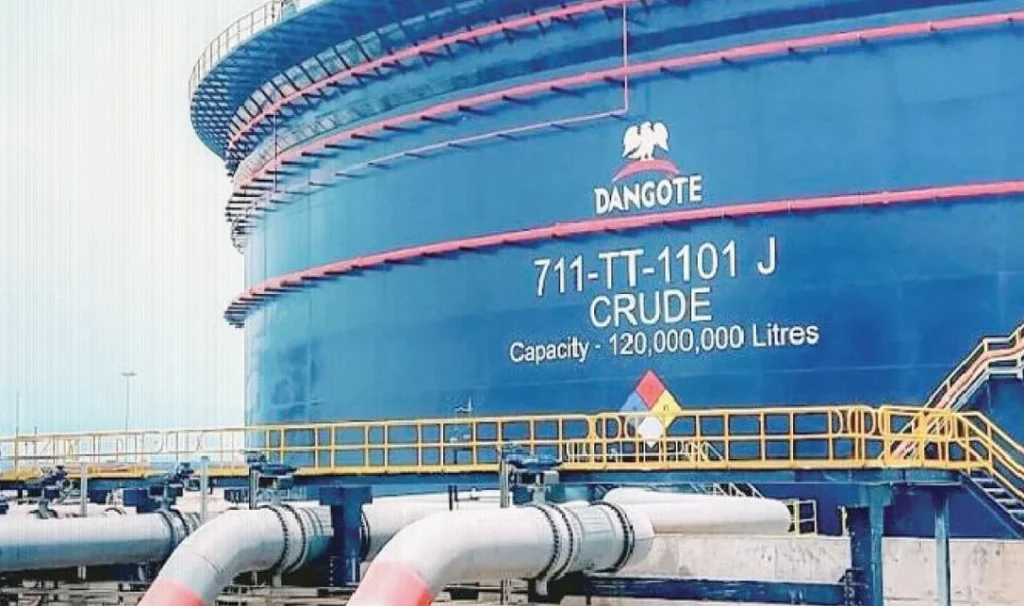
Dangote Petroleum Refinery and Petrochemicals said reports based on Nigerian Upstream Petroleum Regulatory Commission (NUPRC) figures had overstated the significance of its rejection of 15.5 million barrels of crude offered by domestic producers during the second quarter of 2026. The refinery said it remains committed to buying Nigerian crude and advancing the goals of the Domestic Crude Supply Obligation (DCSO), but added that supplies must be sufficient and priced competitively for domestic refining to remain viable and petroleum products to stay affordable.
Devakumar Edwin, Group Vice President for Oil & Gas and Fertiliser at Dangote Industries Limited, said the key question was not how much crude was listed as an offer under the DCSO system, but how much was actually available for purchase on commercially workable terms. He said the refinery had repeatedly warned of limited access to Nigerian crude and had more recently encountered offers priced well above prevailing market references.
“We are prepared to buy Nigerian crude whenever adequate volumes are available at competitive market prices,” Edwin said. He added that the refinery, like any other processing facility, must obtain feedstock at a cost that allows sustainable operations and value creation. That requirement, he said, is central to preserving the economics of local refining and supplying Nigerians with petroleum products at competitive prices.
Since the DCSO began, the refinery has struggled to obtain crude directly from domestic producers, Edwin said. Consequently, much of the crude assigned through the scheme has been purchased via international oil companies and other intermediaries instead of directly from Nigerian upstream suppliers.
Those additional parties can add premiums and transaction expenses, pushing acquisition costs above international reference prices published by Platts, Argus and other market agencies. In a number of cases, this has left Nigerian crude at a disadvantage compared with alternative grades available abroad.
Edwin said intermediary premiums materially raise the refinery’s feedstock bill, weakening the economics of processing crude in Nigeria. The resulting increase in production costs ultimately feeds through to the prices of refined products sold in the domestic market.
Dangote said it supports the purpose of the DCSO policy, but believes practical problems are limiting its performance. Edwin also pointed to provisions of the Petroleum Industry Act (PIA) framework that permit counterparties to end negotiations without a formal review mechanism or sufficient protections. Such uncertainty, he said, can weaken the reliability of Nigeria’s domestic crude supply arrangements.
Outside cargoes delivered under NNPC term contracts, Dangote Refinery said it has completed negotiations for only a small number of DCSO shipments since the scheme was introduced. On several occasions, it said, cargoes designated for domestic processors had already been sold or committed to other buyers before talks with the refinery began.
The company said those developments demonstrate the need for more open market processes, greater efficiency and supply agreements that work on a commercially sustainable basis if Nigeria is to achieve its refining objectives. It added that dependable crude access is essential for using more of the country’s refining capacity, improving energy security, lowering dependence on imported fuels, preserving foreign exchange and generating more economic value at home.