
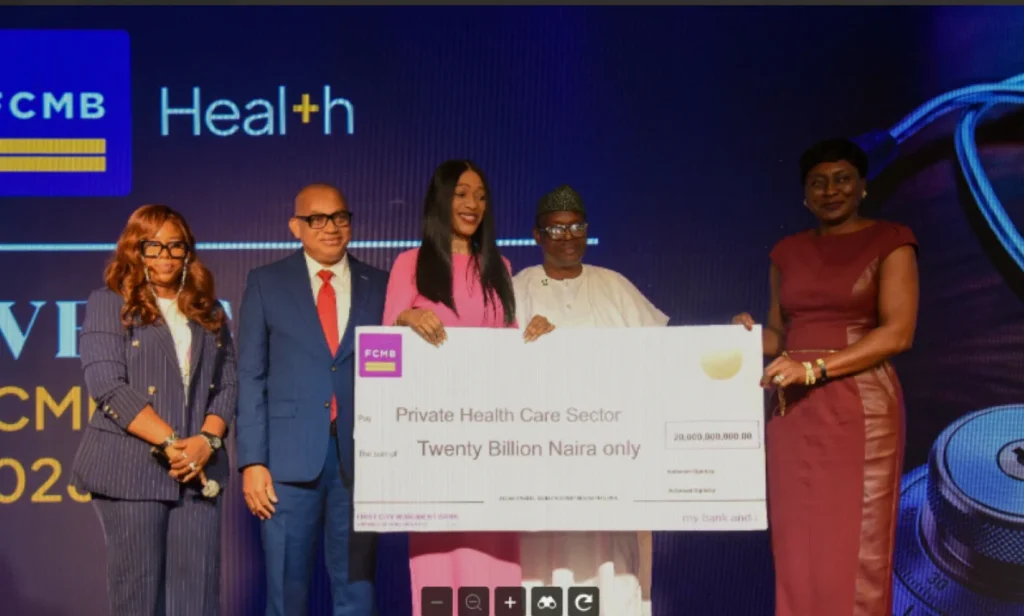
First City Monument Bank (FCMB) is setting aside ₦20 billion for private healthcare companies in Nigeria, aiming to ease a shortage of affordable, long-term financing in a sector under pressure to expand capacity.
Healthcare financing plan
The Healthcare Fund was unveiled at the bank’s first healthcare summit in Lagos. It will provide capital to a broad range of operators, including hospitals, clinics, diagnostic providers, pharmaceutical manufacturers, pharmacies, maternity facilities and other businesses across the industry.
- Expansion projects and new infrastructure
- Purchases of medical equipment
- Day-to-day working capital
- Technology upgrades and investment
The initiative comes as Nigeria works to increase domestic healthcare capacity and reduce reliance on imported medicines and medical devices. Under the Presidential Initiative for Unlocking the Healthcare Value Chain, the government has set a goal of producing 70% of the country’s medicines and medical devices locally by 2030.
“Healthcare is both a social obligation and an economic priority,” FCMB Managing Director and Chief Executive Officer Yemisi Edun said in remarks presented at the summit by Felicia Obozuwa, the bank’s Executive Director for Corporate Services and Service Management. A resilient health system, Edun added, needs funding that is reasonably priced, patient and available over an extended period.
FCMB said the fund will be part of a wider healthcare proposition combining loans with advisory services and partnerships. The package is intended to help operators improve their businesses, strengthen execution and become more attractive to investors.
Preparing businesses for investment
Limited access to capital remains one of the main obstacles facing private healthcare providers, Njide Ndili, president of the Healthcare Federation of Nigeria (HFN), said.
Ndili pointed to HFN’s work with the PharmAccess Medical Credit Fund as evidence that small and medium-sized healthcare companies can maintain strong repayment records when lending is paired with technical assistance, management training and adherence to quality requirements.
HFN and FCMB will create a system for screening healthcare facilities before financing and for helping operators prepare to receive investment. The federation represents more than 400 organisations and 4,000 professionals.
The partnership also reflects a challenge for financial institutions: healthcare companies must have sound governance, reliable accounts, capable management teams and credible expansion strategies if they are to use borrowed funds effectively.
Public funding and sector priorities
Nigeria has increased government spending on healthcare in recent years. Iziaq Salako, Minister of State for Health and Social Welfare, said at the summit that more than ₦339 billion has been paid out through the Basic Healthcare Provision Fund during the past 12 years.
Of that total, ₦235 billion was distributed over the last three years through the Health Sector Renewal Investment Initiative. In a further recent allocation, ₦32.9 billion was provided to support more than 8,300 primary healthcare centres. The government intends to extend the programme to roughly 13,000 facilities nationwide.
Salako called for stronger mobilisation of both private and public money. He also urged healthcare companies to improve corporate governance and financial disclosures, while making greater use of blended-finance models to support expansion.
The summit considered investment opportunities in primary healthcare, diagnostic services, domestic drug manufacturing, medical equipment, digital health and healthcare infrastructure.
FCMB said its financing platform is intended to serve companies throughout the healthcare value chain as they increase capacity and improve the quality and availability of services.