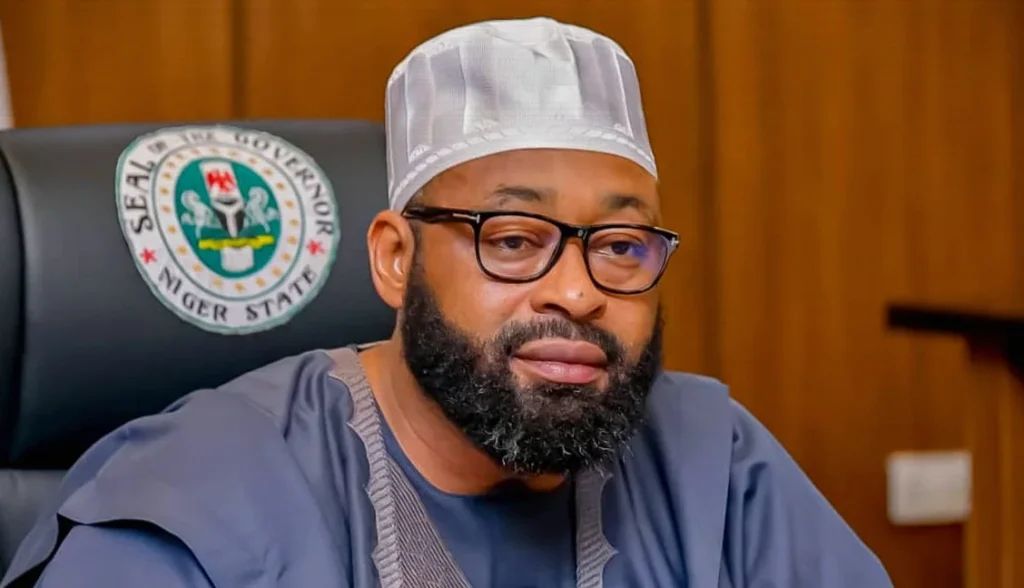
Niger State’s political landscape is becoming increasingly fragmented as parties position themselves for the 2027 general election, with contested primaries, cross-party defections and new opposition alliances complicating the All Progressives Congress’s effort to retain control of the governorship.
Key takeaways
- Discontent over the APC’s May 2026 Niger South senatorial primary has propelled former aspirants Muhammad Nami and Mohammed Ndarani Mohammed into governorship contests under rival parties.
- Nami won the PDP governorship nomination on August 29, 2026, while Ndarani became the SDP candidate with Japhet Pada Samson as his running mate.
- Former APC officeholders and more than 200 members in Bosso have moved to the ADC, although ex-PDP chairman Tanko Beji has joined the APC.
- The APC has created a 550-member Niger State Presidential and Gubernatorial Campaign Council, led by former Deputy Governor Ahmed Musa Ibeto.
- Opposition parties have alleged the removal or obstruction of their campaign billboards and posters, while the APC says some of its own materials have been destroyed.
Primary dispute reshapes the governorship contest
The underlying dispute began during the APC’s May 2026 primaries for the Niger South Senatorial District. Idris Legbo Kutigi, viewed as Governor Mohammed Umar Bago’s preferred contender, secured the party’s nomination after efforts to agree on a consensus candidate broke down.
Other contenders included former Federal Inland Revenue Service chairman Muhammad Nami; Senior Advocate of Nigeria Mohammed Ndarani Mohammed; Senators Peter Ndalikali Jiya and Bima Muhammad Enagi; and Engineer Adamu Alfa Abu.
Several unsuccessful aspirants disputed the exercise, alleging procedural breaches and arguing that the process departed from agreed arrangements. Among their complaints was a claim that the result was declared before electoral materials had arrived.
The row intensified in June, when protesters gathered at the APC national secretariat in Abuja. The dissatisfied contenders later pursued court action over the nomination, although state APC publicity secretary Alhaji Musa Sarkin-Kaji said at the time that the party had not received formal notice of any suit.
Bago sought to defuse the conflict. At a July 25 meeting involving candidates and defeated aspirants, he appealed to members to remain within the APC and put the party’s broader interest ahead of personal political ambitions.
That intervention did not produce an immediate settlement. By July 31, the aggrieved aspirants had turned down the proposed resolution, leaving the Niger South race among the ruling party’s most serious internal flashpoints. In September, Sarkin-Kaji again said Kutigi remained the APC nominee and appealed to members to stop criticising party candidates on social media. The dispute, however, continued to influence alliances and political calculations statewide.
Nami moves from APC contender to PDP flagbearer
Nami’s path illustrates how the senatorial primary disagreement expanded into the governorship race. He had initially sought the APC governorship ticket but left that contest in September 2025 following consultations with political figures, including the Etsu Nupe, Alhaji Yahaya Abubakar.
He then concentrated on the Niger South Senate contest, but his loss in the APC primary altered his political direction. Nami rejected the result and argued that complaints arising from the process remained unresolved.
In public comments, Nami said that if what he regarded as injustices against Niger South were not addressed, a candidate from the district would challenge the Bago administration. The remark gained greater weight after he emerged as the Peoples Democratic Party’s governorship candidate.
On August 29, 2026, Nami secured the PDP nomination after Architect Abubakar Suleiman withdrew from the contest. His emergence converted an APC internal disagreement into a direct opposition challenge, broadening the implications of the disputed senatorial primary for the gubernatorial election.
During a September 30 visit to the PDP state secretariat, Nami, accompanied by his deputy governorship candidate, Dahir Dan’Azumi Abdul, attacked the Bago administration’s priorities on public expenditure, water supply and insecurity affecting farmers. He later presented a 10-point programme focused on security, human-capital development, jobs, health services and accountability.
Nami’s campaign has attempted to link discontent among APC members to wider concerns about public administration. On October 8, youths in Gabas/Kudu Ward in Lapai were reported to have set APC brooms on fire and announced support for him. APC leader Mohammed Bello said the ward had backed the party since 2015, portraying the incident as a break from its established voting alignment.
Nami was also reported to have met Umar Mohammed Nasko, a former PDP governorship candidate, in Abuja on October 12 to discuss support and cooperation. Such contacts could strengthen the PDP’s position, though their practical value will depend on whether the political figures involved develop a common campaign arrangement.
Ndarani adopts the SDP platform
Mohammed Ndarani Mohammed also departed the APC following the Niger South primary dispute. He became the Social Democratic Party’s governorship candidate, selecting Japhet Pada Samson as his running mate.
In September, Ndarani called on his supporters to remain united and said he would protect their interests. His bid provides another vehicle for dissatisfied APC members, although his campaign is separate from Nami’s PDP operation.
The entry of both candidates has expanded the competitive field in Niger State. Each is seeking backing beyond his original political networks, but their electoral reach will depend on campaign machinery, alliances and engagement with communities across the state.
Defections spread beyond the top race
Political departures from the APC have not been limited to governorship hopefuls. On July 16, the Niger Rescue Movement Political Family, led by Maikil Al-Amin Bmitosahi, who previously served as chief of staff to former Governor Abubakar Sani Bello, announced that it was joining the African Democratic Congress.
The group included former commissioners, local government chairmen, councillors and other associates. Its members cited dissatisfaction with post-primary developments in the APC and said they intended to pursue political change ahead of 2027.
Separately, more than 200 APC members from Bosso were reported to have defected to the ADC in July under the leadership of former commissioner Mamman Musa. They pointed to dissatisfaction with the party’s primaries and what they described as the centralisation of political influence.
The ADC has portrayed the new arrivals as a chance to broaden its grassroots structure. Their eventual impact, however, will depend on whether the defectors stay active, bring supporters with them and help establish a coordinated statewide campaign.
Movement has not been entirely away from the ruling party. In August, Tanko Beji, formerly PDP state chairman, switched to the APC. PDP state secretary Hamidu A. A. Kadi Kuta questioned how Beji could ask voters to trust the ruling party after years of urging them not to do so.
“You went to these same people 12 years ago and told them not to believe or trust the APC, saying all manner of things about it,” Kuta said. “Then you return to tell those same people to trust the APC. Will they believe you? How would he face them during the campaign?”
Beji was later appointed deputy director-general of the Niger APC Presidential and Gubernatorial Campaign Council, placing him at the centre of the party’s preparations for the next election cycle.
APC seeks campaign unity amid wider political tensions
Assembly group denies plans to leave APC
Internal strains have also reached the Niger State House of Assembly. In late August, reports said 15 lawmakers, referred to as the G-15, were considering leaving the APC after failing to obtain return tickets.
The lawmakers were said to have held a closed-door meeting with Bago as speculation mounted. On September 1, Speaker Abdulmalik Sarkin-Daji denied that any defections were planned.
G-15 spokesperson Mohammed A. Haruna said disagreements had been settled, adding that all 27 members of the assembly remained in the APC and supported both Bago and President Bola Tinubu. While some reports had suggested that lawmakers could move to the PDP, no large-scale departure was confirmed.
The episode nonetheless underscored the pressure that nomination disputes can impose on ties between elected representatives and party leaders.
Vatsa leaves after 13 years
Jonathan Tsado Vatsa’s departure from the APC added to the party’s challenges ahead of 2027. His resignation took effect on October 19, ending a 13-year association with the party.
In a letter addressed to the APC chairman of Gulu Anguwa-Gulu Vatsa Ward in Lapai, Vatsa described the decision as personal and said it followed discussions with relatives, friends and political associates. He expressed appreciation to the party but gave no specific explanation for leaving.
Vatsa was Niger State’s first APC publicity secretary after the party was formed in 2013. He later served as commissioner under former Governor Abubakar Sani Bello and held advisory and communications roles in Governor Bago’s administration.
He had repeatedly opposed Muslim-Muslim tickets at both federal and state level, arguing for greater balance in appointments and elective positions.
His exit came as the APC tried to consolidate support for the 2027 polls. Vatsa’s name was absent from the publicly announced campaign structure unveiled on October 14, although no reason was offered for the omission and no connection was formally established between that decision and his resignation.
Although Vatsa did not link his departure to current party arrangements, the resignation of a longstanding APC figure added to the pressures on party unity. Efforts to establish his reasons for leaving did not yield a response at the time.
A 550-member campaign council
On October 14, the APC announced a 550-member Presidential and Gubernatorial Campaign Council for Niger State, structured around three committees and 17 directorates.
Former Deputy Governor Ahmed Musa Ibeto was appointed director-general. Beji was named deputy director-general, while Barrister Manko Bagudu became secretary.
The Patrons Committee is chaired by General Mohammed Abdullahi Garba. Sale Bashari, known as Makama, serves as vice-chairman, and Dattijo Usman is secretary.
Senator David Umaru chairs the Central Working Committee, with Information and National Orientation Minister Mohammed Idris Malagi as vice-chairman and Senator Aliyu Sabi Abdullahi as secretary.
The Advisory Council is led by Ambassador Zubairu Dada, a former minister of state for foreign affairs. Former Deputy Governor Ahmed Mohammed Ketso is vice-chairman, while Mu’azu Bawa, the APC’s North Central national vice-chairman, serves as secretary.
The 17 directorates cover finance; welfare and entertainment; media and publicity; security and intelligence; planning and research; youth mobilisation; women mobilisation; legal services; protocol and logistics; new media; special duties; labour issues; support groups; special needs; religious affairs; traditional institutions; and inter-tribal relations.
The appointments bring together politicians with varied backgrounds and party histories. Beji’s elevation is especially notable because he led the PDP at state level before joining the APC in August. His role shows how the ruling party is incorporating recent defectors into its election planning.
The size of the organisation and its broad composition also create questions over coordination and the division of duties. Three committees and 17 directorates create space for multiple interests and campaign functions, but performance will depend on whether officeholders can work together and mobilise voters beyond the announcement of positions.
The council was formed after months of primary-related disputes, defections and reconciliation initiatives. Some appointees reportedly learned of their positions from friends or online notices rather than through direct contact, raising further concerns over the party’s handling of engagement with those expected to serve.
At national level, Bago was appointed North Central zonal coordinator of the APC Presidential Campaign Council. Tinubu leads the national body, with Vice President Kashim Shettima as first vice-chairman, APC National Chairman Nentawe Yilwatda as second vice-chairman and Senator Abdulaziz Yari as director-general.
Billboard and poster disputes emerge
As the APC builds its campaign machinery, opposition parties have raised complaints over the treatment of their publicity materials. In September, reports said Bida Local Government chairman Usman Mohammed Manko directed the removal of opposition billboards.
One affected display was said to belong to Muhammed Rabiu Sadiq, the Nigeria Democratic Congress senatorial candidate. The media team of Muhammad Abubakar Abacon, an ADC candidate for a federal constituency, also questioned the removal of a billboard near the St John area of Bida, asking whether planning approvals or a local government rule had prompted the action.
On October 10, ADC Niger State chairman Hassan Musa alleged that the party had obtained approval to install a billboard in Paiko, within Paikoro Local Government Area, but had been prevented from putting it up.
Nami similarly alleged that Bago ordered the removal of his campaign posters and banners after he criticised the administration. Yahaya Mohammed Adam, the NDC governorship candidate, also alleged intimidation and the destruction of campaign materials.
The APC, for its part, has said that aggrieved members and supporters vandalised its own campaign materials. The competing allegations indicate that campaign visibility has become another source of conflict as parties seek to establish early voter recognition.
A race driven by networks as well as party labels
Niger State’s developing contest extends beyond a conventional battle between the governing party and its established rivals. The APC is attempting to hold together officeholders, former appointees and grassroots supporters, while the PDP and SDP are fielding candidates whose emergence followed conflict over the ruling party’s primaries.
The ADC has drawn former APC officials and dissatisfied members, while Beji’s move in the other direction shows that political realignment is not simply a matter of the ruling party losing personnel.
The contest is therefore not only over individual candidates, but also over the local networks, influence and campaign structures that politicians carry between parties. The APC campaign council provides a formal framework for its preparations, but a large number of appointments alone will not resolve the divisions that followed the primaries.
Nami’s PDP nomination, Ndarani’s SDP candidacy, Vatsa’s resignation and earlier defections have created new relationships that every party must manage. Opposition groups must convert dissatisfaction with the APC into organised electoral support. The ruling party must preserve its existing base, retain disaffected members and defend its record on governance, security, spending priorities and development.
The next stage of the campaign will reveal whether these competing efforts can move beyond internal talks, appointments and defections into sustained voter mobilisation across Niger State.