Nigeria’s Joint Revenue Board says 21 states have enacted a model law to unify taxes and levies, a reform intended to end overlapping charges, strengthen revenue administration and give businesses greater certainty across state lines.
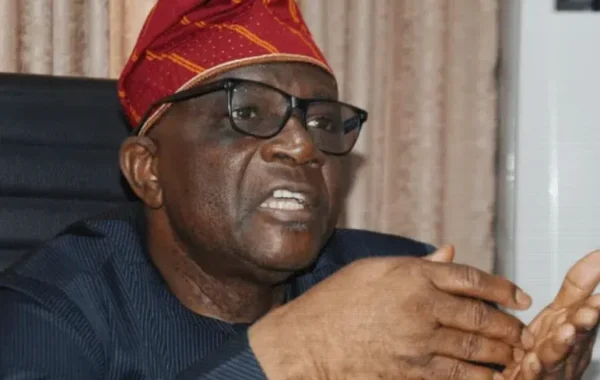
Olusegun Adesokan, executive secretary of the Joint Revenue Board, said in Abuja on Wednesday that the harmonised taxes and levies legislation was developed with the Presidential Committee on Fiscal Policy and Tax Reforms.
Harmonised state tax framework
-
The initiative has consolidated more than 100 subnational taxes, fees and charges into nine approved groups.
-
Those groups cover road tax, a harmonised levy, an economic development levy, daily tickets, user charges and other authorised payments.
-
The model law targets the long-standing problems of duplicate taxation, uneven levies and unclear collection methods, which have added costs for companies operating in more than one state.
-
It also bans revenue collection through the sale of stickers and emblems, tax-related roadblocks and unauthorised cash payments. Offenders may face legal action.
Adesokan said revenue data for 20 states showed a 27% increase in collections during January to June 2026 compared with the same six-month period in 2025.
He said the improvement occurred even as a larger number of earners became eligible for reduced personal income tax or no personal income tax under the revised framework.
The reforms are intended to lift disposable incomes, support commercial activity and bring more Nigerians into the formal tax net, rather than place a heavier burden on lower-income workers.
“The mission is to ensure that the tax burden is fair and that Nigerians have the space to do their businesses, earn more and improve their livelihoods,” Adesokan said.
Effect on workers and small businesses
For an individual earning N20 million a year, the revised rules could raise monthly net pay from roughly N1.281 million under the former arrangement to about N1.362 million, Adesokan said.
That equates to savings of more than N80,000 each month, or close to N1 million over a year, depending on deductions available to the taxpayer.
Permitted deductions include pension payments, mortgage-interest costs and eligible rent relief, along with other items used in calculating taxable income.
The policy is structured so lower earners pay less tax, or none at all, while higher-income taxpayers contribute under the applicable rules.
Businesses classified as nano enterprises, with yearly turnover of up to N12 million, are exempt from income tax under the new regime. The regulations likewise prohibit roadblocks and unauthorised cash collection connected to tax enforcement.
National Tax ID and enforcement
The board is introducing a unified national tax identification system to allow taxpayer information to be recognised across jurisdictions and to limit repeated tax demands.
Under the system, state revenue agencies will be able to check taxpayer records when individuals or companies carry out transactions in another state, avoiding duplicate documentation and unnecessary payments.
Adesokan said unlawful levies and collections along roads raise the cost of moving goods, eventually feeding through to higher expenses for businesses and consumers.
A proposed nationwide task force, extending to local government areas, will enforce the harmonised laws and tackle illegal collections. The Joint Revenue Board is working with police and state revenue agencies to establish the unit and remove unauthorised collectors from highways and transport routes.
The reforms also set out a more consistent approach to taxing informal-sector businesses, addressing differences in how states had previously administered such charges.
The board will continue assisting state revenue authorities through digital systems, staff training and closer cooperation to support implementation and build a more business-friendly tax environment.
Adesokan said the national Tax ID should improve coordination among revenue bodies while making it easier for taxpayers to secure permits, licences and other public services without facing duplicate tax claims.