Nigerian electricity users could see a more dependable grid after the Federal Ministry of Power secured the release of long-delayed transmission equipment that had remained trapped at the country’s ports for as long as two decades.
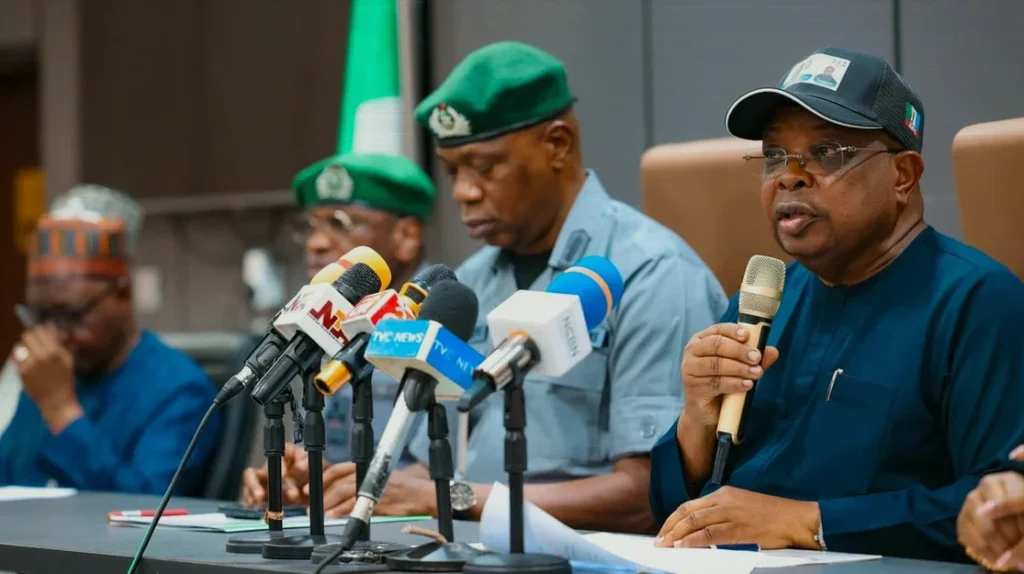
Power Minister Joseph Tegbe said at a Lagos media briefing that 44 containers were initially released from the ENL Terminal. A further 54 containers were cleared from the APMT and Sun & Moon terminals, taking the number recovered so far to 98 from a total inventory of more than 300 containers.
The shipment includes high-capacity transformers, transmission cables and switchgear acquired for the expansion of Nigeria’s electricity transmission system and to reduce strain on heavily loaded substations. Tegbe said the prolonged port delays had prevented major power projects from advancing, intensified pressure on existing facilities, left costly equipment exposed to deterioration and generated mounting cargo-related charges.
The impact has extended throughout the economy, he said, with companies forced to spend more on self-generated electricity, households facing repeated supply disruptions and public institutions finding it harder to sustain vital services.
The containers were released after President Bola Ahmed Tinubu ordered their immediate clearance. Tegbe said he worked with the Comptroller-General of Customs to implement the directive and credited the President with enabling the breakthrough.
The minister also thanked the Ministers of Finance and of Marine and Blue Economy, the Comptroller-General of Customs, and personnel from the Ministry of Power and its agencies for helping to resolve the long-running issue.
Customs Comptroller-General Bashir Adeniyi said the action followed the President’s instruction to clear the cargo promptly and address outstanding fees and administrative obstacles without further delay. The Nigeria Customs Service has begun facilitating clearance in coordination with the Ministry of Power, the Nigerian Ports Authority and terminal operators.
Adeniyi said Customs would continue working alongside Tegbe until every outstanding container had been cleared. He also urged terminal operators to support what he described as an important national priority.
An inspection found that most of the recovered equipment remains functional and suitable for use. After removal from the ports, the assets will be checked and tested, with refurbishment carried out where required before they are sent to project locations.
The equipment is intended to complete delayed installations, ease congestion at overstretched substations and reinforce transmission routes operating under constraint. Once the projects enter service, they are expected to curb overload-related outages, improve voltage quality and increase the grid’s ability to supply households, companies and essential public facilities.
Tegbe said the ministry would oversee the process from recovery through installation and commissioning, provide updates on the containers yet to be released and ensure that the remaining cargo is cleared without additional delay.
By returning equipment that had sat unused for years to the power system, the government aims to convert policy commitments into measurable improvements in electricity supply for homes, businesses and workplaces under President Tinubu’s Renewed Hope Agenda.