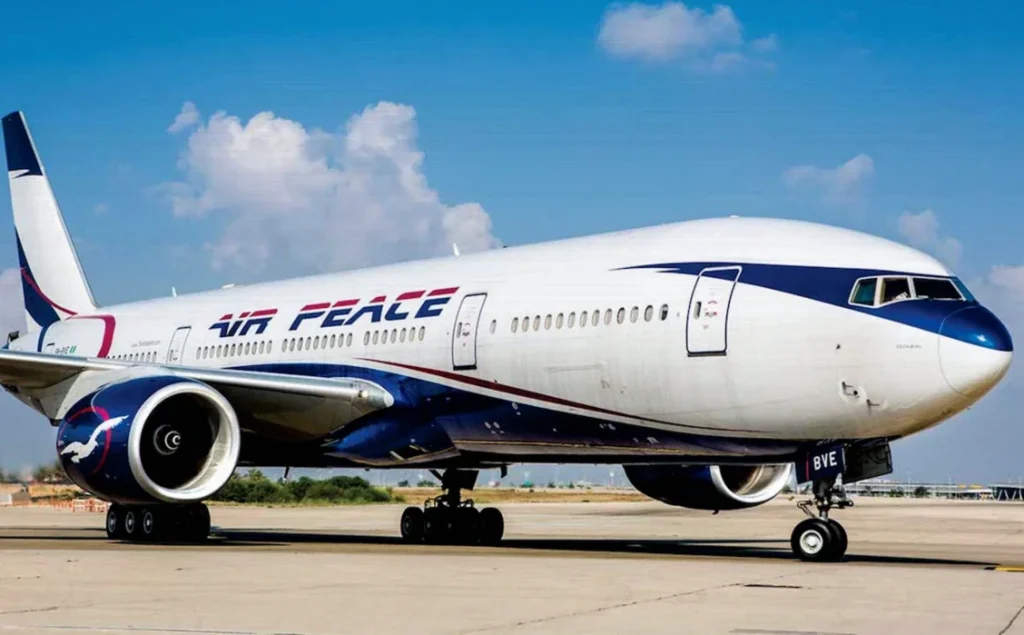
The Nigerian government is preparing sanctions against Air Peace, United Nigeria Airlines and other carriers over repeated delays on domestic routes, after the two airlines recorded the highest proportions of late flights in August 2026. Data from the Nigerian Civil Aviation Authority (NCAA) showed that 4,765 of the 7,961 flights scheduled during the month failed to depart on time, meaning nearly six out of every 10 services missed their timetables.
The figures, issued by Michael Achimugu, the NCAA’s director of public affairs and consumer protection, showed that delays affected 71% of Air Peace flights and 76% of United Nigeria Airlines’ operations. The disruption has added to the frustration of domestic travellers already facing expensive airfares.
Achimugu said the regulator had begun taking action. The NCAA had held meetings with Air Peace, United Nigeria Airlines and Max Air, he said, and had issued strong warnings over their performance. He also advised passengers to consider other carriers when making travel arrangements. “If an airline keeps behaving badly, choose another airline, buy that ticket and complete your journey,” he said.
Weak oversight and airline planning under scrutiny
Capt. John Ojikutu, an aviation industry specialist and chief executive of Centurion Aviation Security and Safety Consult, attributed Nigeria’s continuing delays and cancellations to inadequate enforcement of aviation rules as well as weak commercial planning by airlines.
He said regulations designed to protect passengers already existed, but questioned how consistently the authorities applied them. “The issue is not whether the regulation exists; it is whether the airline is being effectively sanctioned and supervised,” Ojikutu said. Passengers, he added, generally understood their rights and knew which agencies to approach, but complaints would have little value unless regulators responded decisively.
Ojikutu asked how often airlines actually faced meaningful enforcement, noting that late departures and cancellations had become a persistent feature of Nigeria’s aviation market. He illustrated the problem with a personal journey to Abuja, when he had to board an aircraft three times before another plane eventually arrived to carry passengers. The disruption meant he returned to Lagos considerably later than planned.
He described the regulator’s enforcement record as “very, very ineffective,” saying the agency sometimes appeared either unwilling to act or unaware of the steps it should take. He added that criticism of its performance often provoked an angry response from the authority.
Some delays, Ojikutu argued, also stem from airlines deploying aircraft that are too large for the number of passengers available on particular routes. Carriers should prepare realistic business plans based on expected demand before selecting destinations and deciding how frequently to fly, he said, including plans submitted to the NCAA.
He questioned the commercial logic of several airlines scheduling multiple daily services between Lagos and Abuja when the passenger market might not support the combined capacity. “If an airline flies to Abuja three or four times a day, where are the passengers needed to fill those aircraft?” he asked.
Rather than concentrating on the busiest corridor, airlines should identify routes with adequate demand but less competition, Ojikutu said. Although Abuja attracts virtually every operator, he questioned whether enough passengers were available to justify the number of aircraft serving the capital.
He pointed to the former Nigerian Airways as an example of a more flexible network. The former national carrier used larger planes on major routes and smaller aircraft to feed passengers from regional destinations into key airports, helping spread traffic across the system.
Many current operators, by contrast, buy aircraft capable of carrying more than 100 people without having enough demand to fill them. If a carrier cannot consistently find even 50 passengers for such a plane, Ojikutu said, the resulting losses can ultimately destroy the business.
He also criticised the heavy concentration of airline activity in Lagos and urged the regulator to encourage carriers to establish operating bases elsewhere in the country. Airports could be grouped by traffic levels, with charges adjusted to make regional services more attractive, he proposed.
Such a framework could help airlines link smaller cities and towns instead of competing almost exclusively on the Lagos-Abuja route. Ojikutu cited Kaduna, Jos, Minna and Sokoto as possible points in a regional network, with passengers from places such as Sokoto brought to Abuja without the airline trying to compete directly with the largest carriers operating from the capital.
Ojikutu also raised concerns about the brief operating lives of many Nigerian airlines, which he partly linked to inadequate planning. The NCAA, he said, should require applicants to demonstrate credible and sustainable business models before granting permission to begin services.
In his view, the absence of sound plans has contributed to the sector’s instability, while the regulator has not done enough to help airlines correct those plans before and after entering the market.