Nigeria’s planned N70,000 monthly transport allowance will apply only to public-sector employees, excluding unemployed citizens, private-sector staff and state government workers. The policy has also exposed divisions between the Nigeria Labour Congress (NLC) and the Trade Union Congress (TUC).
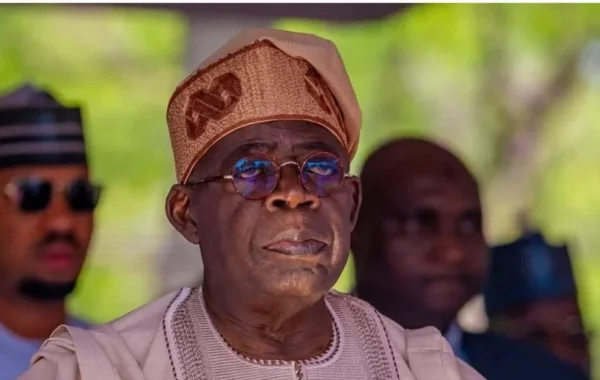
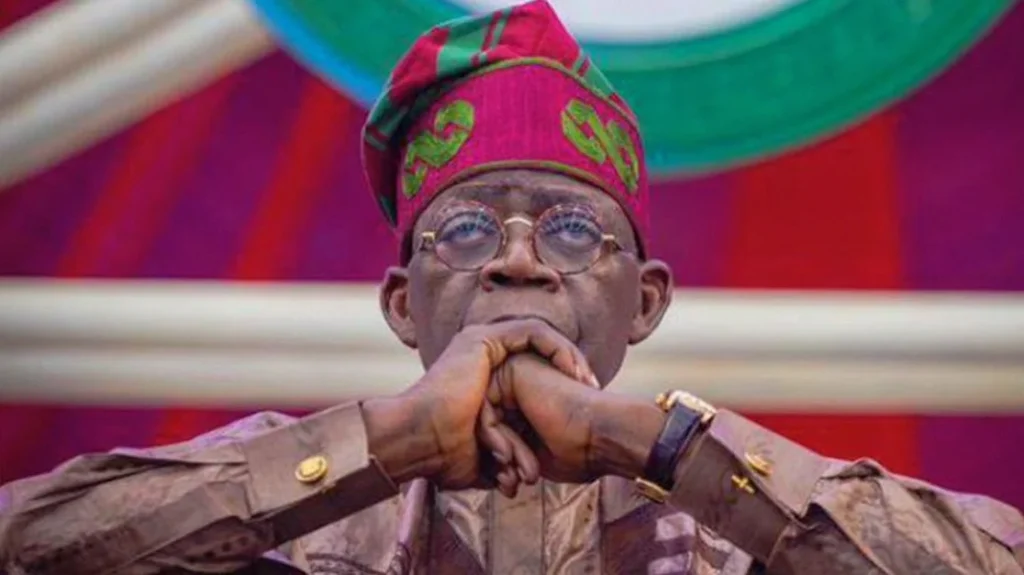
President Bola Ahmed Tinubu approved the payment through the Minister of Labour after the NLC threatened a nationwide shutdown over higher fuel costs and called for a review of the N70,000 minimum wage, whose purchasing power has been weakened by inflation.
The administration has scheduled implementation for November 5. While federal public employees await the allowance, workers outside the public service and jobless Nigerians will receive no equivalent support.
Quick facts
- The proposed monthly transport payment is N70,000 for public-sector workers.
- Implementation is set for November 5.
- Nigeria has 71.2 million self-employed people, compared with 3.32 million public-sector workers.
- Private-sector employment accounts for 9.64 million formal jobs, based on 2024 Labour Force figures.
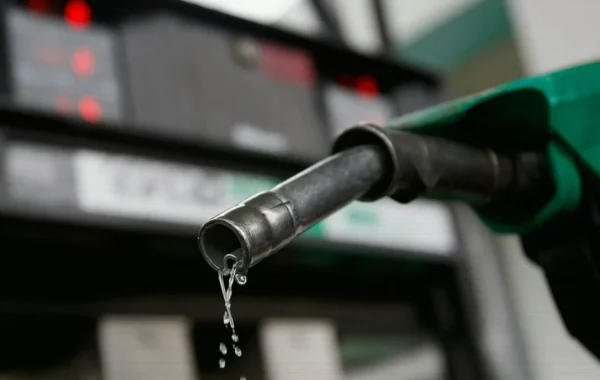
- Food inflation stood at 19.59 per cent in September 2026, while petrol sold for N1,370 to N1,429 per litre.
Labour-force data show that most working Nigerians will not qualify for the planned benefit. The 71.2 million people working for themselves far outnumber those in government employment, while formal private-sector workers form the largest segment of payroll employment.
Household pressure remains intense as food costs rise and petrol prices trade between N1,370 and N1,429 per litre. Those increases are occurring despite a national minimum wage of N70,000.
Although the allowance was presented as relief from mounting living costs, public-affairs commentators have challenged both its likely effect and its narrow eligibility. Television presenters Reuben Abati and Oseni Rufai separately criticised the measure, with Abati calling it discriminatory and Rufai saying it would not meet workers’ transport expenses.
NLC President Joe Ajaero and TUC President Festus Osifo have also differed over the transport payment as its launch approaches. Opposition figures, including Atiku Abubakar, the African Democratic Congress presidential candidate, have criticised the initiative less than three months before the 2027 presidential election.
Concerns over election timing and policy design
Eze Onyekpere, lead director of the Centre for Social Justice, said the allowance appeared designed to win favour with voters before the 2027 general election. He argued that the government should pursue a lasting programme to lower transport costs rather than offer a temporary payment limited to civil servants.
Workers need help to offset costly commuting, he said, but unemployed people and informal-sector operators face the same pressures and should not be excluded. “The President’s offer of a N70,000 transport allowance for workers is not the right approach,” he said.
Onyekpere said a more effective strategy would expand access to cheaper public transport, particularly Compressed Natural Gas buses produced or assembled in Nigeria rather than imported from China or the United States. He said the state should fully subsidise such locally manufactured or assembled vehicles.
He also urged a sharp reduction in the price of converting vehicles to CNG. Despite official statements about support for the transition, he said taxi drivers in his area had been quoted conversion charges of between N500,000 and N700,000.
“CNG conversion should be almost free for all public-transport vehicle owners,” he said, adding that private motorists should receive the service at a reduced rate.
Such measures could be financed from savings generated by the removal of fuel subsidies, he argued. Commercial transport operators should not be treated simply as private individuals because they provide mobility for other Nigerians, he said.
Onyekpere questioned whether the N70,000 payment would survive beyond the election cycle. He warned that a benefit introduced shortly before polling could be withdrawn after an electoral victory unless it was tied to a durable policy framework.
“It should not be done merely because elections are close and there is a desire to please people,” he said. He suggested that voters could receive the benefit for only a few months before it was cancelled after a second-term inauguration.
He described the proposal as a political inducement intended to “bribe the swing,” rather than a solution to the transport-cost problem. Any intervention, he said, must be properly designed, financed and incorporated into the national budget instead of being announced without a clear delivery structure.
Onyekpere also challenged the decision to confine support to public employees when millions of unemployed, underemployed and non-government workers also face rising commuting costs. “There are many people who need this relief,” he said.
A nationwide reduction in transport expenses would deliver broader economic gains, particularly by lowering food prices, he added. The cost of moving pepper, tomatoes, rice and other produce from farms to markets is a significant component of what consumers pay.
The government should therefore focus on sustainable measures that reach a wider population rather than policies he views as aimed at securing votes before 2027, Onyekpere said. He warned against providing temporary benefits before an election and ending them immediately after taking office.