
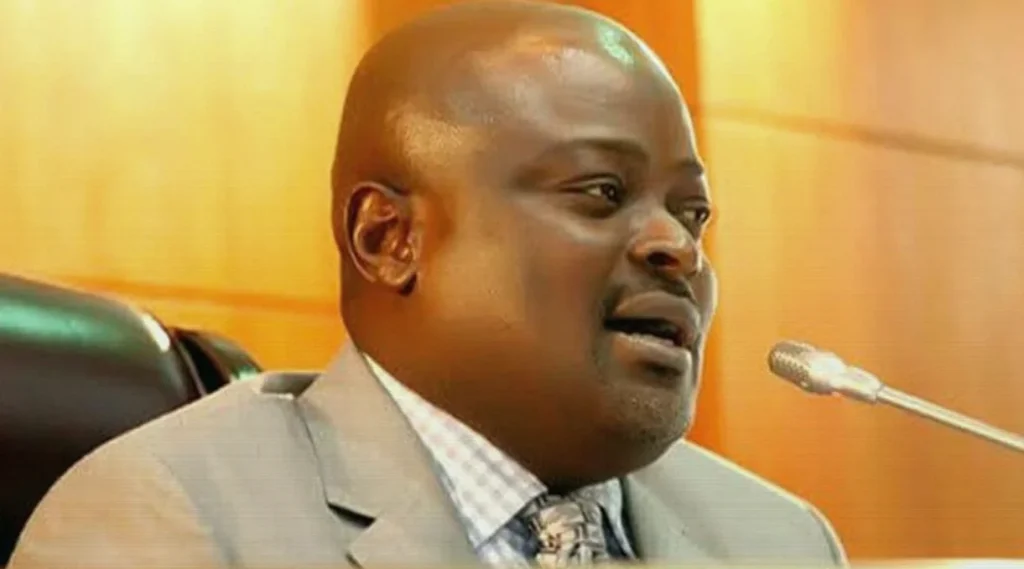
Lagos State House of Assembly Speaker Mudashiru Obasa has backed the creation of state police forces but argued that the reform will not work unless the federal government gives up its dominant control over policing.
Key takeaways
- Obasa said state-level police forces could decentralise Nigeria’s security framework.
- He warned that federal supremacy in the proposed constitutional changes could undermine the reform.
- The Lagos Assembly has approved the Constitution of the Federal Republic of Nigeria, Sixth Alteration Bill, 2026.
- The bill was sent to state legislatures for ratification under Section 9(2) of the amended 1999 Constitution.
- Obasa said future reforms should give states complete authority over their own security arrangements.
Concerns over operational authority
Speaking during Tuesday’s plenary session, Obasa said any constitutional arrangement that leaves decisive authority over state policing with the federal level would frustrate the intended objectives of the policy.
He said ending federal oversight was essential if state police services were to operate properly. A state-based policing system, he added, would distribute security responsibilities more broadly across Nigeria rather than retaining them mainly at the centre.
However, the speaker criticised the proposed constitutional revision for not settling key issues over who would direct police operations. In his view, the proposal continues to assign significant powers to federal institutions.
Obasa said a genuinely federal structure requires individual states to have full responsibility for running and administering their own security institutions.
Lagos Assembly ratifies Sixth Alteration Bill
The comments came as the Lagos State House of Assembly formally endorsed the Constitution of the Federal Republic of Nigeria, Sixth Alteration Bill, 2026. The Clerk of the National Assembly had transmitted the legislation to state assemblies for approval, as required under Section 9(2) of the 1999 Constitution, as amended.
While describing the proposed changes as progress, Obasa said the amendment did not sufficiently reflect the concerns and positions of state legislatures.
“Although we are pleased that state police is being introduced, our interests and positions have not been adequately accommodated in this amendment,” he said. “It is clear that the central government still retains the principal control.
“One provision states that, if the State Assembly and the National Assembly are in disagreement, the federal position takes precedence. Still, it represents progress. I believe there is hope that the future will bring full control to the states.”