
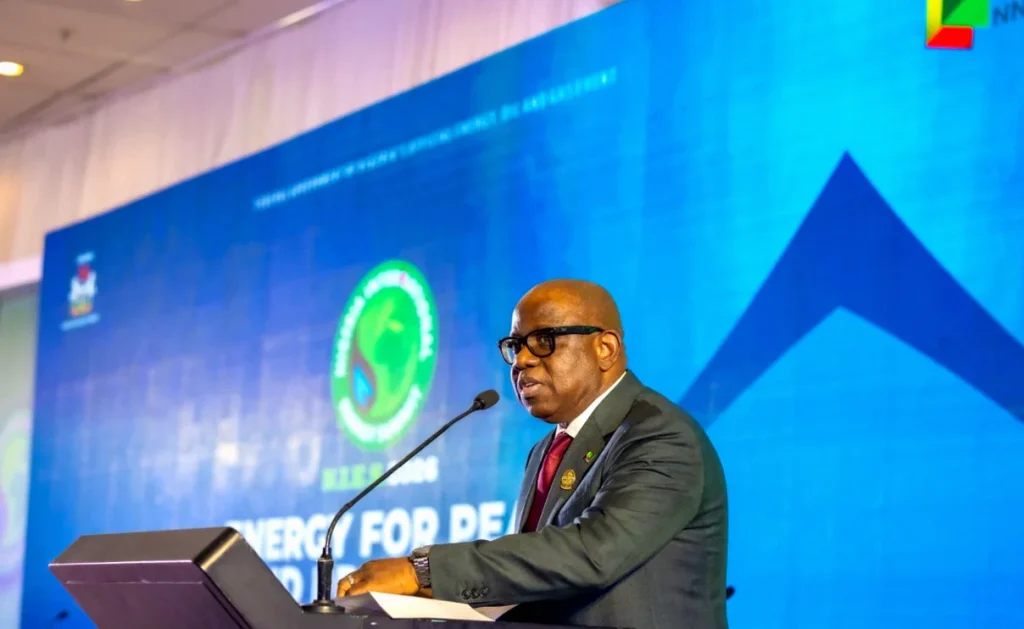
NNPCL chief executive Bayo Ojulari said President Bola Ahmed Tinubu’s new tax-remission framework for deep offshore oil and gas projects is intended to improve fiscal predictability and attract investment, supporting Nigeria’s target of reaching 3 million barrels of daily oil production by 2030.
Key takeaways
- The Deep Offshore Oil and Gas Projects Incentives (Tax Remission) Order 2026 is designed to strengthen Nigeria’s appeal to international investors.
- The measure is expected to create greater certainty over the fiscal terms governing deep offshore developments.
- Ojulari said the policy supports NNPCL’s responsibility to preserve the country’s production capacity.
- The presidential order is aimed at unlocking $50 million in potential new investment.
Policy aims to improve investment conditions
Ojulari said the order would demonstrate to global energy companies that Nigeria intends to maintain a stable, competitive and investor-friendly operating environment for deep offshore projects.
In a statement issued on Thursday by NNPCL spokesperson Andy Odey, the group chief executive said clearer fiscal rules would help investors assess projects with greater confidence. He described certainty around taxation and other government charges as an important factor in investment decisions, adding that the new framework offered clarity that the industry had been seeking for some time.
Link to production ambitions
The order is the ninth presidential order issued under Tinubu’s administration, Ojulari said. He added that it was consistent with NNPCL’s mandate to safeguard the nation’s existing production base while creating a route toward the government’s goal of producing 3 million barrels of oil per day, or 3 MMbopd, by 2030.
Tinubu recently approved the Deep Offshore Oil and Gas Projects Incentives (Tax Remission) Order to help release an estimated $50 million in new investment opportunities in the sector.