
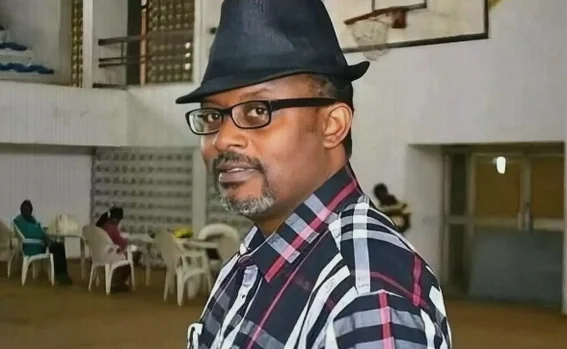
Former Pan African Scrabble Association president Engr. Toke Aka has urged newly elected leader Haruna Adamu to take a hands-on approach to developing the game, calling for stronger contact with national federations, a more effective continental secretariat and focused expansion programmes across Africa.
Key takeaways
- Haruna Adamu was elected unopposed at PANASA’s Annual General Meeting in Monrovia, Liberia.
- Aka believes regular consultation with member countries is essential to identifying and solving operational problems.
- The Gambia missed the recent African Scrabble Championship after its association chairman was involved in an accident.
- Zambia struggled to satisfy the five-player national-team requirement, while South Africa did not travel because of expenses.
- Aka wants PANASA to help establish structured Scrabble bodies in North African countries, including Algeria.
Call for active continental leadership
Aka, who helped found the World English Scrabble Players Association and serves as one of its executive members, said Adamu must move quickly to understand the difficulties faced by national associations and develop lasting solutions that can increase involvement in African Scrabble.
The Managing Director of Kadeggs Nigeria Limited, who also recently completed his tenure as president of the Nigeria Scrabble Federation, said the game cannot expand on the continent without sustained monitoring and direct administrative involvement.
“I wish him success, but I have to say that results will come only from what he imagines and deliberately works towards,” Aka said. “As president, he has to lead from the front, speak with stakeholders and provide the direction. Nothing will happen unless he initiates it. No one will force him to act. My message is that he should build on what we achieved and take the sport beyond the point where we stopped.”
He said inactive administration and poor communication in certain national bodies remain significant obstacles, and encouraged the new PANASA executive to work more closely with those associations in order to understand their practical challenges.
Using the latest African Scrabble Championship in Monrovia as an example, Aka said The Gambia’s absence was particularly disappointing given the country’s proximity to Liberia. He said it emerged that the chairman of the Gambian association had suffered an accident a few weeks before the event, leaving the country’s involvement dependent on one individual.
“With better interaction and institutional support from PANASA, they may have been able to make alternative plans and send a team,” Aka said.
He also highlighted Zambia’s difficulty in assembling the required five players for a country quota, as well as South Africa’s non-participation because of travel expenditure. Aka argued that neither situation should be viewed as an obstacle that cannot be overcome.
“I do not regard these as impossible issues; they are examples of inadequate planning,” he said, recalling how he travelled to The Gambia in 2006 to personally help secure the country’s participation in the African Championship hosted in Nigeria.
Secretariat and North African development
Aka said PANASA must do more than support countries already active in the sport. He called for a deliberate campaign to introduce and organise Scrabble in North Africa, which has not had representation in continental competition for more than 30 years despite provisions in the organisation’s constitution for championships to rotate across the continent.
He noted that prospective organisers in nations such as Algeria need administrative direction and structural assistance if they are to establish functioning national Scrabble federations.
Adamu was encouraged to work alongside regional sports ministry representatives to assist currently unrepresented countries in creating durable systems for the game.
However, Aka cautioned that PANASA will not meet its expansion ambitions without a properly organised and fully functioning secretariat.
“One person cannot achieve this alone. A committed team is required,” Aka said. “When the secretariat becomes fully operational, meaningful progress can start. You can engage people, consult them and build connections, including in countries where there is not yet an organised Scrabble structure.”
He said PANASA’s progress will ultimately be judged by whether it can create an administrative structure that does more than stage championships, instead promoting grassroots growth and institutional development throughout every part of Africa.