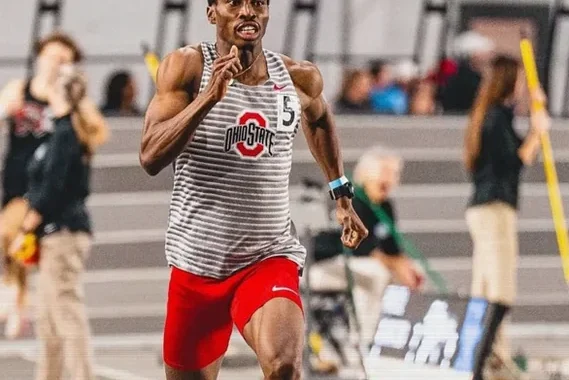
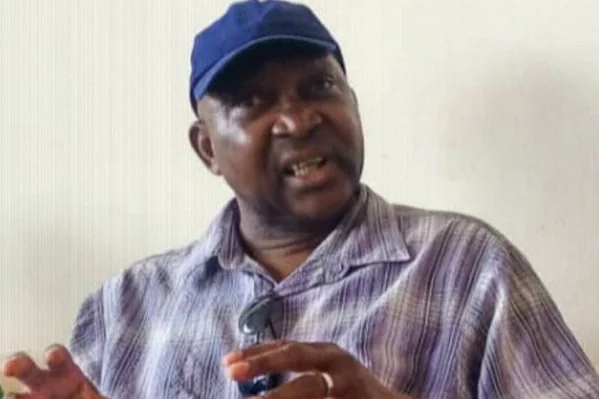
Former Flying Eagles captain Andrew Uwe remains deeply connected to Nigerian football after three decades overseas. The former defender, who led Nigeria’s defence during the 1980s and 1990s, is now preparing to take charge of German club BV Essen while advocating a complete overhaul of the country’s youth-development system.
From Ibadan Streets to Nigeria’s National Teams
Uwe’s football journey began on the informal playing fields of Ibadan rather than within a modern academy. His parents initially opposed his ambition, but his determination eventually won them over.
He recalled that he was passionate about the sport from an early age and refused to abandon it, even when his family tried to discourage him. In time, they accepted his commitment and began supporting his football career.
His breakthrough came in 1985 when he joined Leventis United. The club provided the environment in which he developed alongside talented teammates, competed to win and built strong bonds beyond match day.
When Leventis United was later dissolved, Uwe moved to Iwuanyanwu Nationale. During two seasons with the Owerri club, he helped the side reach the 1988 African Champions Cup final. The experience also strengthened his belief that playing abroad was necessary for the next stage of his development.
He said the standard and atmosphere at his new Nigerian clubs did not match what he had experienced at Leventis United, which influenced his decision to pursue a professional career outside the country.
Even before leaving Nigeria, Uwe had attracted national-team attention. As captain of the 1985 Flying Eagles, he guided Nigeria to third place at the FIFA World Youth Championship in the USSR. Nigeria defeated the host nation in a penalty shootout in the bronze-medal match, and Uwe’s performances over six games impressed the senior-team officials.
Medals, Major Tournaments and a European Career
From 1985 through 1990, Uwe became an established member of Nigeria’s senior setup. His international record during that period included:
- A place in Nigeria’s 1988 Africa Cup of Nations squad in Morocco, where he played four matches before the final.
- A silver medal after Cameroon defeated the Super Eagles 1-0 in the championship match.
- Selection for Nigeria’s squad at the 1988 Summer Olympics in Seoul, despite the team’s difficult campaign.
- Another Africa Cup of Nations final appearance in Algeria in 1990, which ended in a 1-0 defeat by the host country.
Those tournaments reinforced one of the principles Uwe now applies to coaching: collective understanding and team spirit can outweigh individual ability.
He remembered the 1985 Flying Eagles as a close group in which players looked after one another. The coaches, team manager and physiotherapist also worked closely together, creating the unity that helped Nigeria perform so effectively in Russia while maintaining a positive atmosphere.
Uwe began his professional journey in Europe in 1989 with Belgian third-tier club Roeselare, where he spent four seasons. He then moved to Germany and played there from 1994 to 2000 for Veen, Oldenburg, Rot-Weiss and Cloppenburg.
His playing career also took him to the Netherlands, Portugal, Malta, South Korea and the United States, in addition to Belgium and Germany. Uwe regards the breadth of that experience and what he achieved during his professional years as a source of great satisfaction.
After retiring as a player, he found coaching to be a natural progression. He had always enjoyed teaching and said that, without football, he would have pursued a career as a schoolteacher.
In Germany, he earned a UEFA B Licence and a German elite-youth coaching qualification. He described coaching as rewarding when it is built on a clear plan, defined principles and a strong football philosophy, but warned that the German elite licence is difficult to obtain and that coaching there demands serious preparation and hard work.
His coaching work has included youth programmes in Houston, Texas, as well as roles within the German system at VfB Oldenburg and JFV NordWest Under-17, serving both as an assistant and head coach. In Nigeria, he led the Vandrezzer FC Academy and later worked on technical development at Real Sapphire FC in Lagos.
Last month, Uwe agreed a one-year contract with Bundesliga club BV Essen. The deal includes an automatic extension after six months, and he is due to begin on July 18.
He said his family is doing well and understands the demands of his profession, including frequent travel to camps and coaching courses. One of his children also plays football, but Uwe stressed that good academic results are essential for young athletes in Germany.
A League Structure for Nigeria’s Young Players
After observing repeated inconsistency among Nigeria’s age-grade teams, Uwe believes the solution lies in building a reliable competition system rather than simply creating more academies.
His central recommendations are:
- Replace the scattered academy model with organised youth leagues.
- Provide qualified coaches at every age level.
- Use promotion and relegation to create meaningful competition.
- Select national age-grade players from regular league performances.
- Establish a clear route from youth football through junior teams and into the senior national side.
Uwe pointed to Germany, where competitions exist for Under-17 and Under-19 teams and extend across the age groups from Under-11 to Under-23. Teams play 22 or 24 home-and-away matches each season, with the leading clubs promoted and the bottom two or three relegated.
In his view, that structure gives players regular competitive football and allows national selectors to identify talent through sustained performances rather than occasional trials. He wants Nigeria to create a national pyramid with weekly matches, proper coaching and a direct link between league football and the Flying Eagles, Golden Eaglets and senior Super Eagles.
Uwe believes such a system is achievable if administrators provide firm direction and maintain the right attitude. Across Germany and much of Europe, he said, players progress systematically from cadet football to junior sides and eventually to the senior team, but that pathway depends on detailed long-term planning.
For him, the Flying Eagles and Golden Eaglets should serve a purpose beyond competing for trophies. They should represent the final stages of a development process producing players who understand tactics, possess discipline and are accustomed to high-level competition before reaching the Super Eagles.
Why Uwe Wants a Fair Chance to Coach
Uwe has also repeatedly offered his services to Nigerian youth football. In recent years, he has expressed interest in coaching either the Flying Eagles or the Golden Eaglets.
Public reports have stated that he applied three times for the Flying Eagles position but was not invited to an interview. Former international teammate Paul Lucky Okoku argued that the issue is not whether Uwe should automatically receive the job because he once captained the team. The more important question, he said, is whether Uwe has been allowed to compete fairly.
Okoku’s position was that Uwe’s application should have led to at least an assessment of his suitability. His playing background is only one part of the case; his coaching qualifications, experience with young players and work across Nigeria, Germany and the United States should also be examined.
The suggested evaluation process would include:
- Publishing the required qualifications and inviting applications.
- Shortlisting candidates transparently.
- Holding interviews with the strongest applicants.
- Reviewing their coaching ideas and records in player development.
- Assessing how effectively they could connect youth football with the senior national team.
- Making the final appointment on merit.
Uwe presents his ambition as a willingness to serve rather than a demand for preferential treatment. He is not asking administrators to hand him the role; he wants the opportunity to enter the process, explain his plans and be judged alongside other serious candidates.
That argument has significance beyond Uwe himself as Nigeria considers wide-ranging reforms ordered by President Bola Tinubu, with governance, administration and accountability among the stated priorities. Uwe believes the reforms must also address whether qualified Nigerians, both within the country and abroad, receive a genuine opportunity to contribute.
Nigeria has experienced coaches at home and overseas. Some are former internationals, while others have built their expertise without representing the national team. In Uwe’s view, both groups should have access to a transparent route into national-team work.
He could ultimately prove to be the best candidate, or another applicant could emerge ahead of him. Either result, he argues, would be acceptable if the process were credible.
What would be unacceptable, in the view shared by Uwe and Okoku, is for a former Flying Eagles captain with elite coaching qualifications and youth-development experience in Germany, the United States and Nigeria to apply three times for the same position without receiving a single interview.
As Nigerian football considers a fresh start, Uwe’s story places the focus not only on the people occupying administrative offices but also on those entrusted with developing the next generation on the training ground.
His path from Ibadan to Essen, and from national-team captain to coach, has left him convinced that Nigeria still possesses enough talent to lead African football again. The essential task, he believes, is to build the structure and progression system that will allow that talent to grow.