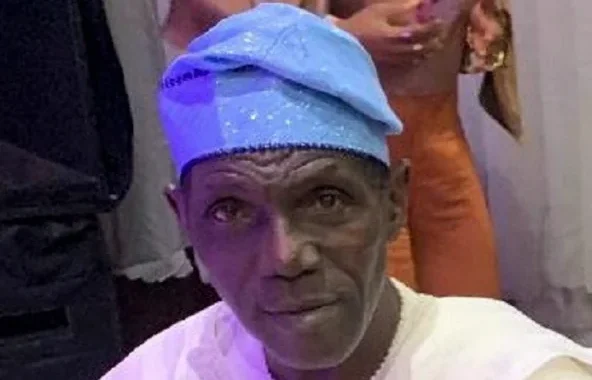
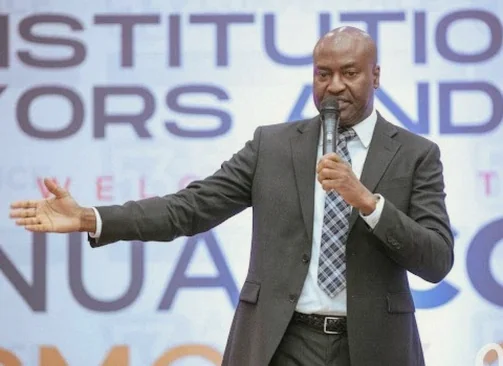
Nigerian football is once again facing anger, blame and another painful cycle of unfulfilled promises. Yemi Idowu, a club owner and member of the 10-year Football Masterplan, believes the latest breakdown was predictable rather than unexpected.
“I am not surprised,” Idowu said. While describing the situation as unfortunate, he argued that corrective measures were now being taken — and warned that those measures would be meaningless if the country repeated the errors that caused the crisis.
In his view, Nigeria’s problem is not a shortage of enthusiasm or financial resources. The deeper failure is structural, compounded by comforting falsehoods and a system attempting to make progress without first establishing a sound foundation.
Idowu remains convinced that Nigerian football can be repaired, but not through another five-year promise or another committee formed in isolation. His prescription is to return to the starting point and rebuild from there.
That process, he says, must begin at local-government level. “Football is actually very easy,” Idowu argued. A properly functioning local game would support effective state football; strong state structures would strengthen the regions; and successful regional organisation would ultimately produce a sound national system.
He believes the existing approach reverses that order by assembling players for camps without a reliable competition structure beneath them. That, he asked, leaves Nigeria trying to compete at the African Under-17 level without first staging proper Nigerian, state or local-government Under-17 competitions.
Idowu described the current practice as administrators in Abuja assembling unknown teenagers — even “anybody from the Canary Islands that you don’t know who they are” — training them for four weeks and then expecting them to deliver at the Under-17 Africa Cup of Nations.
He also questioned where teenage players are gaining consistent experience. “Show me a 16-year-old who is playing on a full-size pitch every week,” he said. Expecting such a player to compete in an African championship six months later and a world championship 12 months after that, he added, is simply unrealistic.
For Idowu, development and enjoyment must come before an obsession with winning. Investment should produce a return, he said, but trophies cannot be expected when the necessary work and spending have not taken place.
He rejected the argument that football is being starved of money, claiming the present government has committed more funding to the sport than all earlier administrations combined. Idowu said the total allocations made before 2023 would not match what the government spent between 2023 and 2026, and urged critics to verify the figures.
That makes policy, rather than funding, the central issue in his assessment. “The reform is already there,” he said, insisting that those in charge need to implement the recommendations that have been made.
If grassroots football is the base of the structure, Idowu sees merit as the force that should hold it together. He believes political calculations are instead weakening the game, particularly arguments that leadership or opportunities should rotate between geographical blocs.
“When people say it is the North’s turn or the South’s turn, that is not football,” he said. “That is geopolitics.” Football, in his view, should be left to football people rather than treated as another arena for political balancing.
That principle also applies to administrators. Idowu argued that someone who has never played the sport, operated a club or managed a player cannot be expected to lead football simply by carrying the title of chairman.
He applied the same standard to coaching appointments. A national coach, he said, should first have coached at local-government and state levels, won or organised competitions in those environments, and demonstrated the ability to manage football before being handed responsibility for the national game.
His preferred route is a clear progression: success at local level should lead to state opportunities, followed by regional and then national responsibility. Anyone performing effectively in the lower tiers, he said, should be considered for promotion to the national stage.
Despite his criticism, Idowu said the debate should not become a search for villains. Previous Nigeria Football Federation administrations deserved recognition for their efforts, he maintained, while noting that success and performance are not always the same thing: some officials failed to perform well but still won competitions, while others did good work without collecting trophies.
He described the NFF president’s resignation as both honourable and necessary, calling the decision a major personal sacrifice for Nigerian football that should be commended.
However, Idowu believes that resignation must not mean disappearance. The former NFF leadership should remain available in the background to help deliver the reform, he said, and previous presidents should also contribute behind the scenes so that FIFA can see Nigeria is acting seriously and collectively.
His concern is that excluding former leaders and the wider football fraternity could create rival camps. Two or three factions could then approach FIFA to fight one another, producing the same kind of division seen between competing political parties. Bringing everyone into the process, he argued, is essential to preventing that outcome.
Idowu sees unity as a practical condition for reform rather than a ceremonial ideal. He called on all sides to meet, agree on a common direction and move quickly, saying the changes could be achieved within “1-20 days.”
A league built around geography
His strongest frustration is reserved for the National League, which he says cannot continue under its current design. A journey from Zamfara to Cross River State can consume so much time and money that even a week would not allow a club to recover its costs, he argued.
The country’s transport network makes the situation worse, with limited rail services, few useful air connections and punishing travel demands. Idowu contrasted that with the journey from Liverpool to London, where a train can cover the route in about two hours, and challenged anyone to find an equivalent trip between Kano and Lagos. Moving 5,000 supporters across such distances, he said, is impossible.
The financial consequences are severe. Instead of using their budgets for player and coaching salaries, clubs are forced to direct most of their resources towards transport and accommodation.
Idowu’s solution is to make the game local first and national only for a short final phase. Clubs in Osun, for example, should play their regular football within Osun State, reducing travel times and making it easier for supporters to attend.
Once state and regional champions have been identified, they could meet in a compact national event. Idowu likened the format to a collegiate competition: teams would progress through the local structure, qualify for the next stage and then gather at a central camp for a tournament lasting roughly four weeks, with accommodation and hosting arrangements provided.
For Idowu, Nigeria does not need another slogan. It needs a functioning pathway from local to state, regional and national football; an NFF concentrating on international responsibilities; leaders with genuine experience of the sport; and a competition model that recognises the country’s geography. Better infrastructure, he believes, would provide the great equaliser.
“We need to stop deceiving ourselves,” Idowu said. In his view, the solution is already known.
The unresolved question is whether the authorities will adopt it. Idowu’s position is that Nigeria has never lacked the necessary ingredients — they have simply remained unused.