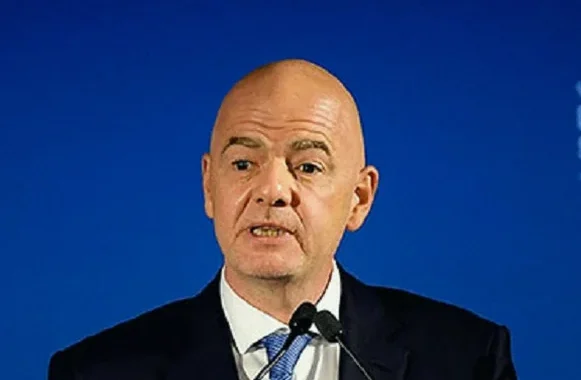
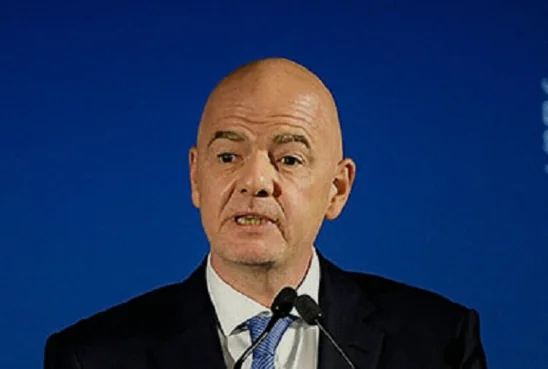
The Royal Dutch Football Association (KNVB) has called for a change at the top of FIFA and offered to stage an international meeting on the governing body’s future without Gianni Infantino taking part.
Infantino, the 56-year-old Swiss president, has faced intense criticism over his abandoned FIFA Forward Enterprise (FFE) proposal, which aimed to attract private capital to FIFA competitions, including the men’s and women’s World Cups.
In a letter to UEFA president Aleksander Ceferin, the KNVB said it no longer trusted Infantino and argued that FIFA required sweeping internal reform.
Infantino won the presidency in 2016 after Sepp Blatter’s departure and had appeared certain to secure a fourth and final term without opposition at next March’s election in Rabat, following the success of the most recent World Cup.
That position has weakened significantly since the FFE plan collapsed. The Norwegian Football Association has called for Infantino to step down, while the Dutch federation is now contemplating a restructuring of FIFA that would not have him in charge.
Potential challengers must declare their candidacies by November 18. Victor Montagliani, the president of CONCACAF, is considered the most likely contender, while Ceferin has already said he will not run.
“The KNVB no longer has confidence in Gianni Infantino’s leadership,” the federation said. It added that FIFA needed a new president from 2027, but stressed that replacing the office-holder alone would not resolve the organisation’s problems. Its governing model would also have to be overhauled.
UEFA has been the most prominent opponent of Infantino, with its latest intervention warning of possible legal proceedings over allegations of “criminal mismanagement”. The KNVB, however, said its reform proposal must not become a Europe-led programme imposed on the rest of the football world.
Instead, the Dutch federation wants to shape a new course with all 211 FIFA member associations and with confederations representing every region.
It identified three central goals: stronger governance and a more balanced distribution of authority; placing football’s wider social contribution at the centre of FIFA’s work; and increasing investment in the sport across the globe.
Infantino has also been criticised for a lack of openness, despite promising greater transparency when he was first elected. Opponents have accused him of making important decisions alone or with only a small group of close advisers.
The FFE proposal was cited as an example of that approach. Five senior FIFA directors were briefed on the idea at a hotel meeting in New York on the eve of last month’s World Cup final in the United States.
The KNVB said FIFA must not be built around a single person. In its view, the president should represent and unite the organisation, the FIFA Council should govern and monitor it, Congress should make the key decisions, and the secretary-general should run its operations.
That division of responsibilities, it said, would need to be supported by much greater openness, independent scrutiny and protection for voices willing to challenge those in power.
The Dutch federation wants these issues debated collectively by football associations and confederations. It has therefore proposed an International Summit on the Future of FIFA and said Amsterdam would be ready to host it, highlighting the city’s distinctive connection with the organisation’s history.
The KNVB added that the 2027 presidential contest should not begin with the question of who will lead FIFA. Football first needs to decide what sort of governing body it wants, after which it can determine what leadership is required to bring those reforms into effect.
UEFA and Ceferin chose not to comment on the letter sent by the Dutch federation.