Nigeria has replaced football administrators repeatedly without fixing the system that keeps producing the same crises. With the Nigeria Football Federation leadership now gone, a possible FIFA-CAF Normalisation Committee would face a task far greater than keeping the federation’s offices open: it would have to break the cycle and create rules that outlast their authors.
Quick facts
- The NFF leadership resigned on August 27.
- Nigeria’s men missed the 2026 FIFA World Cup.
- The Super Falcons will miss the 2027 FIFA Women’s World Cup, their first absence from the competition.
- FIFA has not publicly named a Nigerian Normalisation Committee as of September 3.
- A possible committee could serve for six months to one year.
The most important decision in Nigerian football over the next few weeks may not concern the identity of the next NFF president. It may instead be the choice of people who will prepare the system in which that president operates.
The August 27 resignations of NFF president Ibrahim Musa Gusau, General Secretary Mohammed Sanusi and members of the Executive Committee ended the administration suddenly. They also left the game confronting questions that extend well beyond the record of its former officials.
The departures followed a damaging sporting period. The Super Eagles failed to qualify for the 2026 FIFA World Cup, while the Super Falcons missed the 2027 FIFA Women’s World Cup for the first time since the women’s tournament began. Six days after the resignations, the dispute had moved beyond Abuja.
National Sports Commission chairman Shehu Dikko and director-general Bukola Olopade went to FIFA’s Zurich headquarters with acting NFF general secretary Emmanuel Ikpeme, legal services director Okey Obi and former NFF president Amaju Pinnick, attending in his international football role.
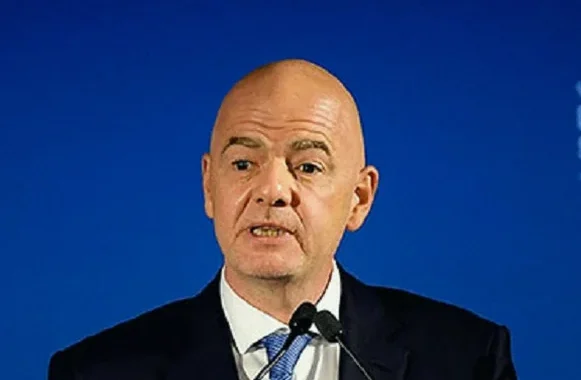
FIFA accepted the resignations and agreed with Nigerian and CAF officials to keep working towards a broad reform plan. FIFA president Gianni Infantino later spoke of improving Nigeria’s institutions, governance and development framework. That remains the formal position.
There is, however, an immediate procedural deadline. FIFA has given the NFF seven days to provide minutes from the relevant meeting and proof that the resignations were voluntary. If the federation does not satisfy that request, the issue will go to the FIFA Council for a final ruling.
That means the wider reform discussions could be delayed or overtaken by a more specific legal issue: whether the outgoing officials genuinely chose to leave.
Talk of a Normalisation Committee has intensified, but expectation must not be confused with confirmation. As of September 3, FIFA had not publicly disclosed the names of any members for a Nigerian committee. The confirmed development is the ongoing engagement among FIFA, CAF and Nigerian authorities over a reform roadmap.
Nigeria should therefore avoid holding an unofficial contest for places on a body that has not yet been announced.
There is also a domestic alternative being discussed. Supporters of an internal solution have suggested that NFF second vice-president Gbenga Elegbeleye could convene an emergency Congress and oversee the creation of a transition arrangement under the federation’s statutes.
That proposal treats the dispute as an issue Nigerian football can settle itself, rather than one requiring FIFA to impose a Normalisation Committee. Its backers point to the political pressure once placed on former NFF president Sani Lulu Abdullahi over Super Eagles funds and argue that due process should prevent a repeat.
The idea remains unconfirmed and is still only circulating. Even so, it shows that the debate is wider than the possible appointment of outsiders: Nigerian football must also decide whether it wants its reset to come from outside in the first place.
A Normalisation Committee should not be mistaken for an ordinary Executive Committee with a temporary label. FIFA’s previous interventions show that such bodies have a defined and exceptional purpose.
After the complete leadership of the Iraqi Football Association resigned in 2019, FIFA appointed a committee to manage daily operations, review and amend statutes where required, and organise new elections. Its members had to pass FIFA’s eligibility checks and were barred from standing in the election they were appointed to conduct.
Comparable arrangements have been used in Ghana, Mali, Guinea, Egypt, the Democratic Republic of Congo, Pakistan and other countries. The pattern is consistent: a serious institutional breakdown, a restricted mandate, rule or electoral reform, integrity screening and a return to elected leadership.
Discussions involving the NSC, under Dikko, have suggested that a Nigerian committee could remain in place for between six months and one year. Those involved stress that its membership and precise responsibilities are still under negotiation, and that every potential appointee would face the same eligibility and integrity examination applied to FIFA Executive Committee members.
One safeguard should be immediate and absolute: committee membership must not become a route to the NFF presidency. Anyone appointed should surrender the right to contest the election that brings the intervention to an end.
Nigeria does not lack people who understand football politics. It lacks enough people willing to make football politics less valuable.
A credible body must be ready to examine the NFF statutes, Congress, State Football Associations, election procedures, leagues, women’s football, player representation, commercial strategy and financial oversight without asking which proposal will help an ally win the presidency. Independence will require members who can disappoint their own traditional constituencies.
A former player must be able to explain that playing football does not automatically qualify someone to run it. A lawyer must challenge practices that conflict with sound governance. A commercial specialist must insist that sponsorship and broadcast deals deliver audited value. An administrator must establish whether the structures beneath the national teams are actually working.
Every member must also understand that the assignment finishes once the election starts.
Five candidates in particular illustrate the range of skills a serious reform body would require.
Abdulhakeem Uthman Mustapha, Senior Advocate of Nigeria, would provide the clearest legal foundation. If FIFA and CAF want a chairperson who can give the exercise authority without handing control to one of the established NFF political blocs, Mustapha is a strong option.
His case rests on more than his legal career. He has served in CAF judicial structures and is listed among Nigeria’s representatives on FIFA’s Anti-Racism and Anti-Discrimination Committee. That gives him experience of international football regulation alongside knowledge of Nigerian law.
That combination would be important if the committee had to produce statutes acceptable both to Nigerian stakeholders and to FIFA. Nigeria needs more than a polished constitution. It needs rules that close gaps involving eligibility, conflicts of interest, elections, constituency representation, financial declarations and the federation’s dealings with State FAs.
The person holding the pen cannot be learning FIFA governance while drafting the rules. Mustapha’s strongest appeal is that his credentials do not depend on the traditional State FA electoral network. He should nevertheless undergo the same FIFA checks as every other candidate. A good reputation is not a replacement for due diligence.
Legal reform alone will not restore an organisation that has also failed to exploit its commercial potential. Chichi Nwoko, founder and chief executive of Toptier Sports Management, merits consideration because she comes from the business side of sport rather than the usual federation route.
Her public professional record includes substantial media and broadcasting work, including Kwesé Free Sports and involvement with major properties such as the FIFA World Cup, Premier League, NBA and NFL. Her domestic work is particularly relevant: Toptier has invested expertise in the Nigeria National League and Nigeria Women’s Football League.
Nwoko has described the second tier as a vital connection between grassroots football and the elite level, while also highlighting the commercial neglect of the women’s game. Toptier’s NNL involvement has included match operations, investment and efforts to improve the competition’s presentation and market value. Earlier this year, the NSC publicly commended the professional contribution made to the league.
Nigerian football has too often treated sponsorship as the act of finding someone prepared to sign a cheque. Modern sport packages properties, measures audiences, prices rights and plans distribution. Women’s competitions should be developed as viable businesses, not merely tolerated as obligations.
Nwoko would also bring a woman’s voice to a process that cannot credibly promise to rebuild Nigerian football while placing women’s football at the margins. Her value, however, should not be reduced to representation. Her experience spans television, sponsorship, marketing, audiences and sport business — areas in which Nigerian football administration remains short of expertise.
Barrister Amobi Ezeaku would address a different weakness: the absence of a younger administrative generation. Nigeria has often treated football management as a career acquired simply by staying close to the sport. Ezeaku has followed a more specialised path.
He is a lawyer with experience in sports law and football administration. The FIFA Master Alumni Association lists him as a FIFA Master graduate linked with Rangers International, while his professional work covers governance, contracts, sports arbitration and FIFA regulations.
He has also had to apply those principles within a Nigerian club. Governance theory takes on a different meaning when a chief executive must deal weekly with players, contracts, supporters, government ownership, coaches, commercial demands and results.
Ezeaku combines knowledge of local club football with international education in the legal, management and institutional practices used by more developed sporting organisations. He could contribute to club licensing, player agreements, dispute settlement and the professionalisation of clubs.
His age should be viewed as an asset. A committee made up once again of men who have spent two or three decades inside the same political circles would fail to understand why Nigeria reached this point. The transition should make room for the generation expected to administer the game afterwards.
Institutional rebuilding also needs someone who understands the NFF’s internal machinery. Dr Christian Emeruwa has experience inside the federation and in international football administration beyond Nigeria.
He entered the NFF system in 2007 and worked with successive general secretaries before joining CAF, where he became its first head of safety and security. CAF records show that he has since led continental safety and security programmes, including officer training and Safe Stadium initiatives.
A committee made entirely of outsiders could spend its opening weeks simply learning the Secretariat, FIFA reporting channels, CAF requirements, competition operations and the federation’s bureaucracy. Emeruwa could provide that institutional map. But familiarity must not become loyalty; his value would be in explaining how the machinery functions and where it breaks down.
His candidacy raises one legitimate concern: he contested the 2022 NFF presidential election. The answer is straightforward. Anyone appointed to the committee must be barred from the election organised under its authority.
Emeruwa has separately rejected persistent reports that he is seeking the NFF general secretary position. He said he had “no interest whatsoever in occupying that position” and added that he rejected the same offer in 2022, when he ran for the presidency, for the same reason.
That statement removes a useful source of uncertainty. His apparent interest is in the reform exercise rather than a Secretariat post, and Nigeria needs his FIFA and CAF operational knowledge more than another dispute over who occupies that office.
The committee should also include a footballer. Playing experience is not, by itself, a qualification to draft statutes, but governance without a strong voice from former players has increased the distance between administrators and the careers affected by their decisions.
Segun “Mathematical” Odegbami brings more than membership of Nigeria’s 1980 Africa Cup of Nations-winning team. Since retiring, he has worked in club management, development, media, business and football administration.
When explaining his attempt to run for the FIFA presidency in 2015, Odegbami outlined experience in implementing professional football, managing clubs, working with the NFF, serving on CAF committees and developing grassroots programmes.
His presence would add historical perspective. Nigeria has announced reform efforts before, changed federation leaders before and produced development plans before. A committee member should be able to ask, whenever a supposedly fresh proposal appears, whether the country has already tried it.
Odegbami has also regularly questioned the dominance of conventional football power structures. That independent outlook could be valuable during a process that will inevitably unsettle established interests.
All five candidates would have to accept the same condition: no attempt to turn the committee into a platform for a presidential campaign. Normalisation should represent service, not succession.
Other prominent names already being discussed include Amaju Pinnick, Musa Ahmadu, Silas Agara, Chris Green and Babatunde Raji Fashola. Each deserves a fair assessment.
Pinnick offers international football relationships and two terms as NFF president. Ahmadu knows the federation closely after serving as general secretary. Agara has experience across sport, public administration and the Nationwide League One. Green is a lawyer with extensive NFF involvement, while Fashola has a substantial legal and public-sector record.
Experience, however, is not enough. A Normalisation Committee also needs distance from the structures it is expected to examine.
Agara was still listed as an NFF Executive Committee member as recently as July 2026. That creates an obvious independence concern for a body that would be assessing and restructuring the system from which the previous Executive Committee emerged.
The same standard should apply to anyone whose career is too closely tied to the institutions under review.
Pinnick’s international links may be valuable without requiring him to join the committee. His presence at the September 1 meeting in Zurich in an international football capacity already showed that expertise can be used without placing every experienced figure inside the reform body.
Fashola presents another question. His legal and administrative credentials are clear, but making a prominent former state governor central to a FIFA-supervised transition could trigger avoidable arguments over government influence. An advisory role on governance and institutional design may make better use of his experience.
Normalisation is not a process of gathering every influential Nigerian in one room. It is about selecting the smallest independent group capable of completing the assignment.
Changing the NFF leadership while leaving football’s political foundations intact would amount to rebuilding from the roof down.
State Football Associations have traditionally wielded major influence in NFF elections. Any serious reform must investigate not only the presidency but also the structures through which delegates gain electoral power.
The State FAs, which make up a significant portion of Congress, are resisting what they see as a unilateral attempt to bypass existing federation structures. They argue that Congress has not formally received or acted on the resignation notices from Gusau, Sanusi and the Executive Committee, and that any reorganisation must follow the NFF statutes rather than operate outside them.
Their stance is not necessarily a rejection of reform. Figures within the associations say they respect the President’s position and are willing to work with the NSC, but they do not want the grassroots body pushed aside. They are also opposing any plan to reduce their congressional representation in order to create space for other stakeholder groups, saying Congress should be expanded rather than diluted.
The NSC has since called State FA representatives to a meeting aimed at reducing the disagreement. Both camps have cited FIFA’s position — which supports a reform roadmap but has not expressly authorised a Normalisation Committee — to bolster their interpretation of events.
A reform body should demand measurable information from each State FA. Which competitions does it run, and how often? How many coaches and referees are trained? What provision exists for girls’ football? Are audited accounts available? Which development schemes last beyond ceremonial tournaments? How open are elections, and what qualifies someone to become a delegate with major influence over national leadership?
Transparent benchmarks for the State FAs, stronger election rules, safeguards against conflicts of interest and genuine representation for players, coaches, referees, clubs, women’s football and other groups would leave the federation in better condition.
A committee comprising Mustapha, Nwoko, Ezeaku, Emeruwa and Odegbami would not be flawless. No group would be. But its balance would be logical.
Mustapha offers legal expertise and exposure to football’s international judicial system. Nwoko contributes commercial, media, sport-business and women’s football knowledge. Ezeaku brings club administration, sports law and specialist football-management training. Emeruwa provides FIFA and CAF operational experience plus familiarity with the NFF Secretariat. Odegbami adds the player, grassroots and historical viewpoints.
FIFA and CAF should interview the candidates independently and apply the same eligibility and integrity tests used for Executive Committee members. One rule must not be negotiable: anyone serving on the Normalisation Committee cannot contest the election it organises.
That condition would change incentives more effectively than another reform speech. It would make clear that the committee is not a holding area for people waiting to seize power, but a place where durable rules are built.
Nigeria does not need another rotation of faces while the machinery remains untouched. It needs a group willing to be unpopular for six months to a year so the game can be governed differently for the next two decades.
The August 27 resignations opened an opportunity. Whether it leads to another corridor in the same building or to a new structure will depend on whom FIFA and CAF trust with the keys. The choice should favour people ready to write rules that bind their own allies, people capable of saying no and people willing to leave once the work is complete.