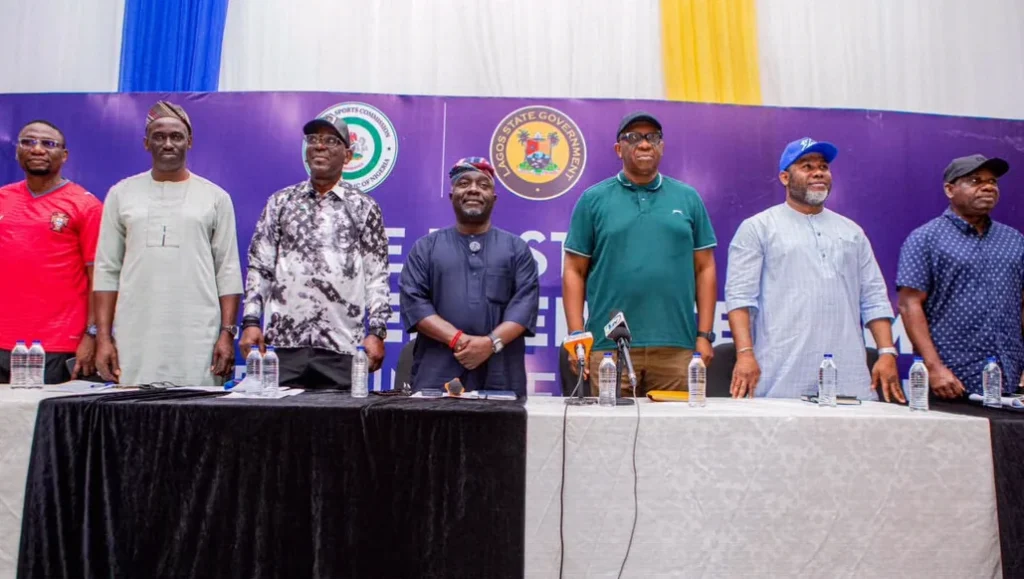
The National Sports Commission (NSC) has approved the final technical plan for the inaugural National Intermediate Games, Eko 2026, confirming that eligible athletes must have been born from 1 January 2008 through 30 September 2011.
The decision was reached by the commission’s Joint Technical Committee during a meeting at the Sam Shonibare Community Development Centre in Surulere, Lagos. The MOC Secretariat has been instructed to apply the same age requirement in the Technical Manual and every other official Games document as preparations move into their final stage.
NSC Director-General and Main Organising Committee chairman Hon. Bukola Olopade, who led the session, said the competition would serve as a vital link between grassroots sport and the elite level. He said the event was intended to identify promising young athletes early, support their development and create a route towards future national-team selection.
Every competitor will be subject to age and identity checks, including NIMC verification, document reviews and physical screening. Athletes discovered through the Games will enter a national development programme and join eligible prospects from the diaspora in forming Nigeria’s Invited Junior Athletes team for the National Sports Festival in Enugu.
The committee also made several changes to the sporting schedule. The 5,000 metres will now be contested as an official athletics medal event, while weightlifting medals will be determined by each athlete’s combined category performance instead of being awarded separately for the Snatch and Clean & Jerk disciplines. Mixed Team Taekwondo has been removed from the programme, and Netball and Teqball will be staged only as demonstration sports.
Accommodation plans provide 16 hostels spread across 38 buildings, offering approximately 12,800 beds in the Games Village. The Lagos State Local Organising Committee (LOC) must ensure that security, water and other utilities, as well as sanitation arrangements, are ready before the teams arrive. Catering will operate on a decentralised basis, with breakfast and dinner served at the accommodation centres and lunch provided at competition venues; each meal period will offer two choices.
The LOC has also been told to put a three-part transport network into operation, using road, rail and water services. The UNILAG Medical Centre will act as the main referral facility for emergencies, supported by ambulances stationed at venues. Every state and the Federal Capital Territory is required to name a Chief Medical Officer and finish medical screening for its delegation.
Before the competition opens, organisers are expected to launch an official Eko 2026 website, a mobile application and a QR-code accreditation platform. The digital services will support accreditation, results management and communication with athletes and members of the media.
The meeting included LOC chairman Sam Egube, co-chairman Lekan Fatodu and Media Relations and Publicity Sub-Committee chairman Gbenga Omotosho, alongside other stakeholders. It followed an inspection of Games facilities, after which the LOC was instructed to carry out all remaining remedial work before the event begins.