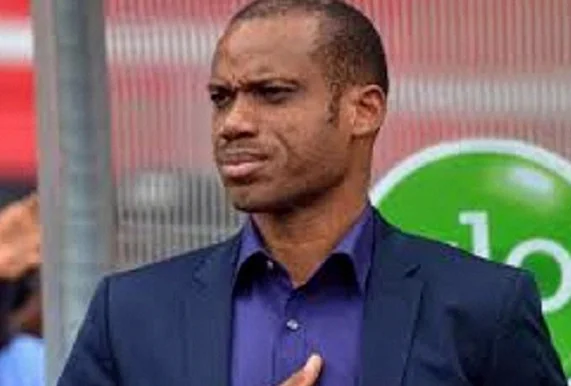
Former Nigeria captain Sunday Oliseh has expressed concern that the country’s football could face a decline similar to Italy’s unless deep-rooted issues are addressed and the Super Eagles secure a place at the next FIFA World Cup.
Speaking as Nigeria’s national team gets set to assemble for camp, Oliseh pointed to Italy as an example of a major football nation that has struggled after failing to keep pace with changes in the modern game, despite its historic success and defensive tradition.
“Italian football is suffering, and that is what I am afraid my country will go through,” Oliseh said during an interview broadcast on Brila FM. “They are suffering because the world has moved on and they have stayed behind.”
Oliseh said Italy’s former winning formula, which helped the country become a global force from its first World Cup triumph in 1934, is no longer enough in today’s game. “What made Italian football great in the past, ever since they started winning titles in 1934, was the ability to always outmanoeuvre the opposition defensively,” he said. “They used negativity to win.”
He added that stricter modern standards and tactical developments have made those methods increasingly ineffective. “But football has evolved so much that you cannot pull somebody’s jersey, play hard and negative, and get away with it. To break out of this, they have to reinvent themselves, and they are struggling to do so.”
The former Super Eagles midfielder believes Nigeria is confronting a comparable risk. “It is similar to what is happening to Nigerian football,” Oliseh said. “If we are not careful, this might rub off on us.”
He highlighted Italy’s absence from two successive World Cups, even after lifting the Euro 2020 title, as a serious warning for Nigeria. Oliseh said the Super Eagles could face a similarly damaging situation if they fail to reach the next World Cup.
Oliseh also urged Nigerians not to treat limited progress as a sign that the wider problems have been solved. He said some people have been content with the Super Eagles reaching an Africa Cup of Nations semi-final and ending the tournament in third place, while “are still not seeing the solution.” In his view, such finishes must not divert attention from the need for substantial and lasting reform.