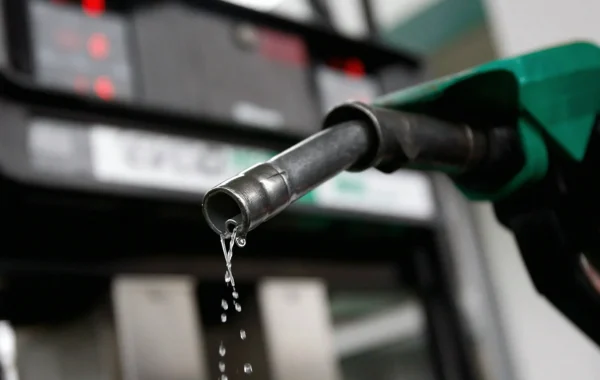

Nigeria’s petrol retail price is moving towards N1,400 per litre, prompting the Petroleum Products Retail Outlets Owners Association of Nigeria (PETROAN) and the Independent Petroleum Marketers Association of Nigeria (IPMAN) to call for government action and tighter scrutiny of pricing across the supply chain.
What happened
- Petrol prices rose by between N40 and N100 per litre over the past two weeks.
- Most filling stations, including outlets operated by Nigerian National Petroleum Company Limited (NNPCL) and MRS, subsequently lifted pump prices to between N1,310 and N1,345 per litre in Abuja and surrounding areas.
- The retail increases followed sharp rises in gantry and ex-depot prices charged by Dangote Refinery and independent depot operators.
- Dangote Refinery, which has a capacity of 700,000 barrels per day, was selling petrol at a gantry price of N1,265 per litre. Depot operators such as MRS, Optima, Pinnacle and Soroman were offering the product at ex-depot prices ranging from N1,267 to N1,285 per litre.
- International oil prices also strengthened on Tuesday as exchanges of air strikes between the United States and Iran intensified. Brent crude climbed to $95 a barrel, while West Texas Intermediate reached $80.
PETROAN blames suppliers
Billy Gillis-Harry, PETROAN’s national president, said the price retailers pay suppliers largely determines what motorists pay at the pump. He said retailers could not purchase petrol at N1,500 per litre and sell it for N1,499, because they still needed a modest margin to cover financing, services, transport, logistics and overhead expenses.
He said filling stations generally pass through their acquisition costs rather than independently setting unrealistic prices. Retailers, he added, sell in line with the price at which they obtain the product, meaning the immediate source of the increase lies with suppliers rather than the outlets.
Regulators urged to curb unfair pricing
Gillis-Harry called on the Federal Competition and Consumer Protection Commission (FCCPC) and the Nigerian Midstream and Downstream Petroleum Regulatory Authority (NMDPRA) to address what he described as anti-competitive petrol pricing.
Although the downstream market is deregulated, he said the Federal Government should conduct regular reviews of fair and competitive market prices, taking account of production inputs and the cost of the products ultimately purchased and sold by retailers.
He also urged the government to monitor the conduct of refiners, depot owners, logistics providers and intermediaries. Because fuel costs affect transportation and almost every other part of the economy, he said the FCCPC should ensure that participants across the sector operate properly.
Transport operators should also adjust their fares when fuel prices fall, he added, rather than maintaining permanently high charges after raising them during periods of price increases. In his view, continuous oversight of the entire supply chain is needed.
IPMAN links increase to US-Iran conflict
Abubakar Maigandi, national president of IPMAN, identified the escalating confrontation between the United States and Iran as the main driver of the latest petrol increase. He said fuel prices could move in either direction as the conflict affects the international oil market.
Call for government support for Dangote Refinery
Maigandi appealed to the Federal Government to negotiate with Dangote Refinery and other Nigerian refiners to help bring down pump prices nationwide.
He said government intervention during a period of market difficulty would be different from reinstating a fuel subsidy. In his view, a government-brokered arrangement with domestic refiners could lower petrol prices while providing temporary support when market conditions become especially challenging.