
Across Nigeria, tens of millions of people rely on instant digital payments to send money to family, pay for essentials, buy airtime, settle electricity bills, or receive funds for their businesses. The actions feel effortless: tap, confirm, get a notification, and carry on. Yet those seconds are the visible end of a far more demanding machine running around the clock.
Behind each transfer, merchant payment, withdrawal, and bill settlement is a layered technology stack built to process transactions, safeguard customer information, identify fraud, maintain service availability, and ensure funds reach the correct destination. That “invisible engine” is reshaping how Nigerians interact with money—quietly, consistently, and at massive scale.
Inside OPay’s technology push
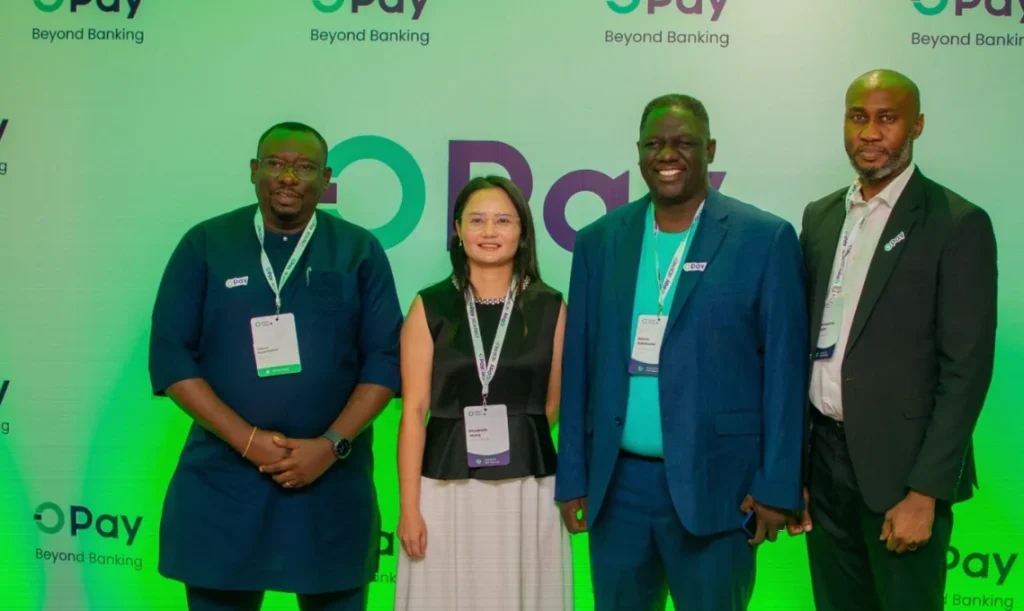
The topic was central to conversations at the OPay Media Parley held on Thursday, 16 July 2026, where media leaders and industry figures met with OPay management. Rather than focusing only on consumer-facing products, the company laid out its technology approach, describing how years of engineering investment have produced a payments ecosystem trusted by tens of millions of users.
Elizabeth Wang, Chief Commercial Officer of OPay, said the company’s ambition has always extended beyond building another payments app. She described OPay as a platform designed to broaden access to financial services through technology, while also creating measurable social value through a trusted system.
Wang pointed to a long-term target of serving one billion users, supporting ten million merchants, and creating one million jobs. She tied those goals to making digital financial services safer, easier, and more accessible for everyone.
In her remarks, Wang framed each transaction as a promise between a customer and the platform. While users may only see confirmation messages, she said the moment reflects years of investment in technology, infrastructure, and ongoing innovation aimed at removing the need for customers to think about the systems enabling their payments.
“Our goal is to make digital finance so dependable that customers can move money confidently without ever needing to think about the technology making it possible,” Wang said.
Quick facts
- The discussions took place at the OPay Media Parley on Thursday, 16 July 2026.
- OPay said its engineering model is built around customer experience and reliability.
- The platform targets reliability such that 99.9% of transactions complete successfully.
- OPay reported an average transaction processing time of less than 1 second.
- Security is described as risk-based, with additional checks triggered only under unusual activity.
- The in-house Security Centre mentioned includes Emergency Lock, Safety PIN, Night Guard, Large Transaction Shield, and an AI-powered Anti-Scam Shield.
- OPay said it processes transactions using thousands of APIs, hundreds of redundant processing paths, in-country processing capabilities, and continuous monitoring.
- The company highlighted an expanded ₦1.2 billion 10-year scholarship programme now called the OPay Scholars Programme.
Reliability as the real innovation
OPay’s leaders argued that the most important breakthrough in digital finance is not a flashy feature, but dependable performance. They noted that only a few years ago, transfers often failed, alerts arrived late, and many customers preferred cash because it felt more dependable.
Dotun Adekunle, Chief Operating Officer and Chief Technology Officer of OPay, said the company’s engineering approach begins with solving real customer frustrations rather than creating technology for its own sake. He said failed transfers, delayed notifications, or security worries are treated as engineering problems to be eliminated from the customer’s day-to-day experience.
That philosophy, he said, has shaped OPay’s infrastructure. Instead of using a single route for payments, the system is built with multiple redundancy layers. Critical components are supported by backup infrastructure, the company uses dedicated direct connections to payment switching partners, and it relies on automatic failover mechanisms to reroute transactions immediately when a pathway experiences disruption—so customers do not have to notice the underlying complexity.
OPay said those investments have enabled 99.9% of transactions to complete successfully, helping make digital payments reliable enough to become the default choice for tens of millions of people.
Speed designed into the system
Reliability alone, OPay said, is not enough to win customer confidence—speed matters just as much. Waiting several minutes for confirmation at a checkout counter can quickly undermine trust, especially when customers need payments to work immediately.
To address that uncertainty, the company said it redesigned transaction processing end to end. OPay described using dedicated direct-line connections and optimized processing pipelines designed to reduce dependence on congested shared networks.
The company reported that the result is an average transaction processing time of under one second, enabling senders and recipients to receive confirmation almost instantly. Adekunle added that customers generally do not value complexity; they want assurance that their money has arrived safely.
“Our job is to make technology almost invisible. Customers should never have to think about servers, networks or system architecture. They should know that when they press ‘Send’, their money gets there quickly, securely and reliably,” he said.
Security that adapts, not alarms
As digital payments expand, OPay said security has become as important as speed. Customers want protection even if a phone is lost, and they want confidence that fraud attempts will be blocked without disrupting everyday payments.
Instead of adding extra steps before every transaction, the company said it invested in intelligent, risk-based security that responds only when unusual activity appears. It said facial verification is activated in higher-risk scenarios, such as unusual locations, large-value transfers, or suspicious late-night activity—while normal transactions remain simple and seamless.
OPay also described building an in-house Security Centre featuring Emergency Lock, Safety PIN, Night Guard, Large Transaction Shield, and an AI-powered Anti-Scam Shield. The company said these tools are intended to help customers respond quickly to potential threats while allowing engineers to strengthen protection as fraud patterns evolve.
Adekunle said the ideal cybersecurity system should work quietly in the background, becoming visible only when risk changes. “The best security is the one customers rarely notice because it appears only when risk changes,” he said, adding that OPay designed its platform to protect customers without interrupting the speed and convenience they expect.
An always-on infrastructure
While users complete transactions within seconds, OPay said thousands of processes continue behind the scenes. The company described each transaction as passing through a technical environment supported by thousands of APIs, hundreds of redundant processing paths, localized in-country capabilities, and continuous monitoring systems that operate every hour of every day.
OPay said hundreds of engineers monitor server clusters, transaction queues, and application interfaces, while artificial intelligence supports fraud detection, risk management, and operational efficiency. It also said software upgrades can be deployed without scheduled downtime, enabling improvements to roll out while services remain available.
The company described the outcome as an ecosystem capable of processing millions of financial decisions daily with consistent performance.
Technology with a wider mission
For OPay, the technology underpinning digital finance is also linked to a broader agenda. Beyond enabling payments, the company said it is working to expand financial inclusion by offering safer, more stable, and more efficient services to individuals, merchants, and businesses.
It also highlighted investment in education and youth development through initiatives including an expanded ₦1.2 billion, 10-year scholarship programme now branded as the OPay Scholars Programme. That programme includes the National Innovation Challenge, aimed at preparing young Nigerians for the country’s growing digital economy.
Wang said these investments reflect a belief that technology’s value should be measured not only by business results but by its impact on society. She argued that innovation should strengthen trust, expand inclusion, and create opportunities for more people to participate in Nigeria’s digital economy.
As Nigeria’s digital economy continues to expand, OPay said the future of financial services will rely increasingly on technology customers do not see. The goal, it said, is not systems built to impress, but systems built to reassure—technology that keeps services running, prevents fraud before it happens, protects data, processes transactions at scale, and helps people move money with confidence.