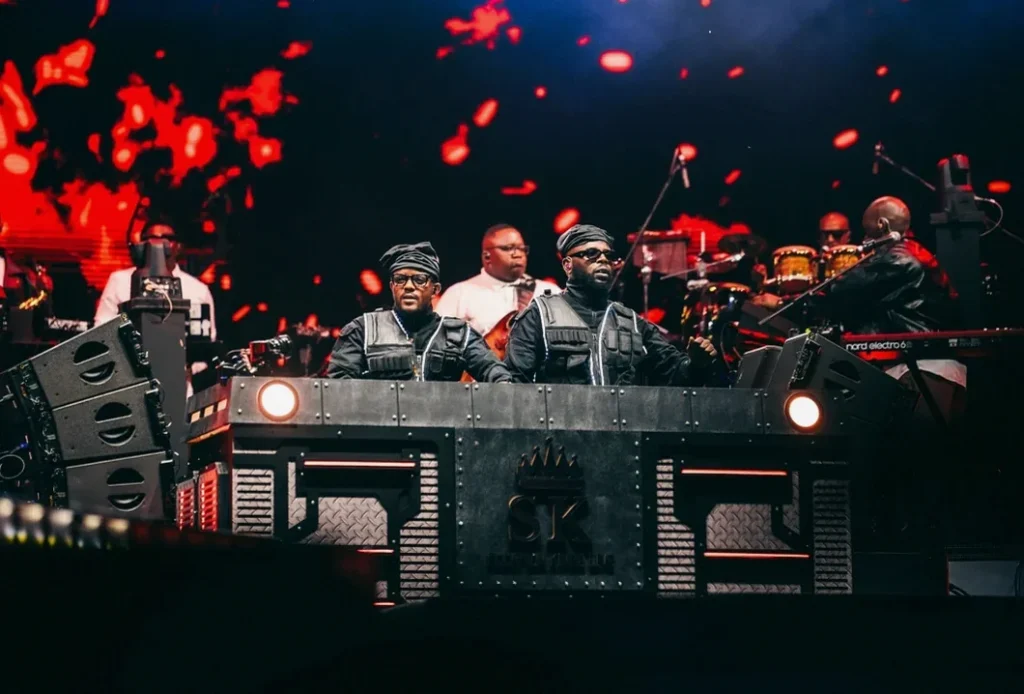
DJ Maphorisa and Kabza De Small turned FNB Stadium into a sweeping celebration of Amapiano, bringing more than 70,000 fans together for the second edition of Scorpion Kings Live: A Family Affair.
Key takeaways
- The show’s move from Loftus Versfeld to FNB Stadium reflected the international growth of South African music.
- A pre-show programme spotlighted genres ranging from Bacardi to Maskandi before the headline performance.
- Kabza De Small performed atop a flaming grand piano, while DJ Maphorisa arrived in a red BMW 320i, known as the Gusheshe.
- Ringo Madlingozi joined the duo for a crowd-sung Afro-soul showcase.
- Ami Faku led a tribute to late musicians, followed by a moment of silence for victims of gender-based violence.
- The concert ran 30 minutes longer than planned before Kabza De Small brought the night to a triumphant close.
A bigger stage for South African music
Taking a concert of this scale to the country’s largest stadium was a major achievement. The move from Loftus Versfeld to FNB Stadium also demonstrated how local music has grown into a force with worldwide reach.
Before the event, Maphorisa said the decision was about much more than filling a larger venue. He wanted Amapiano, South African talent and the country’s culture to be presented at their fullest potential, describing FNB as the ideal setting for a bigger dream that could bring everyone together.
The celebration started well before the main set. The gates opened around midday, allowing fans to experience a varied pre-show programme designed to introduce the musical journey ahead.
Performances and showcases covering Bacardi and Maskandi highlighted the depth and variety of Mzansi’s sound. This early programme established the atmosphere before the night moved into its headline spectacle.
That energy briefly gave way to a deeply spiritual pause when DJ Maphorisa’s mother, widely known as “Mama Phori,” took the stage. She prayed over the stadium, reinforcing the event’s sense of community and its family-centred spirit.
The production then delivered on Maphorisa’s earlier promise of a larger and more impressive combination of sound, visuals and staging. A filmed sequence depicted the two stars parachuting into the venue, before they appeared in person wearing specially made jackets fitted with glowing lights.
Maphorisa later brought the scale of the stadium show back to its township roots by making a dramatic entrance in a classic red BMW 320i, affectionately called the Gusheshe. The appearance connected the spectacle to South Africa’s street-car culture and showed how far the movement has travelled without losing its origins.
DJ Maphorisa also shared a post from the event through his social-media account, documenting the occasion for fans beyond the stadium.
Style, spectacle and musical memories
Each performer received a visual identity designed specifically for their set. Custom graphics and changing stage imagery made the performance area feel like a constantly shifting art exhibition, while a live band added an organic sense of musicianship to the Amapiano arrangements.
Kabza created one of the evening’s most striking images when he performed on top of a grand piano surrounded by flames. The fiery presentation underscored the genre’s live complexity, arrangement skills and classical musical influences.
Afro-soul veteran Ringo Madlingozi provided one of the concert’s most touching highlights. He joined the Scorpion Kings for a collection of beloved songs, including Sondela and Ndiyagodola, prompting thousands of younger and older fans to sing his words together.
The Scorpion Kings’ social-media channels also shared a post capturing the performance and its audience response.
Tributes, reflection and a historic finale
The atmosphere became more emotional when Ami Faku joined the headline duo for their hit Abalele. As her voice carried across FNB Stadium, the screens displayed a montage remembering artists who died too soon, among them Riky Rick, AKA, Mpura, Killer Kau and Costa Titch.
The tribute recognised that although these musicians are gone, their influence remains present through the work and music they left behind.
The concert also addressed one of South Africa’s most painful realities. The music stopped completely, and the venue fell quiet while glowing digital candles appeared across the screens.
This silence honoured victims of gender-based violence and expressed solidarity with South African women living with the ongoing threat of violence and fear.
Creative Director Tebogo Mogola said the decision reflected the responsibility that comes with mounting a production of such reach. He explained that the team was aware of the country’s GBV crisis and wanted the show to raise awareness while encouraging unity and mutual care.
The programme was extended by another 30 minutes. Maphorisa thanked the audience before Kabza took charge of the closing set, sending the crowd into a final burst of celebration.
For Mogola, the second edition was also a statement about the international calibre of Black excellence in entertainment. He said he wanted audiences to see that the team had achieved something significant while representing people of colour in the strongest possible way.
Ultimately, the night became more than a concert. It brought over 70,000 people together, created a landmark moment for South African music and delivered on Maphorisa’s promise that fans would leave with memories they would not forget.