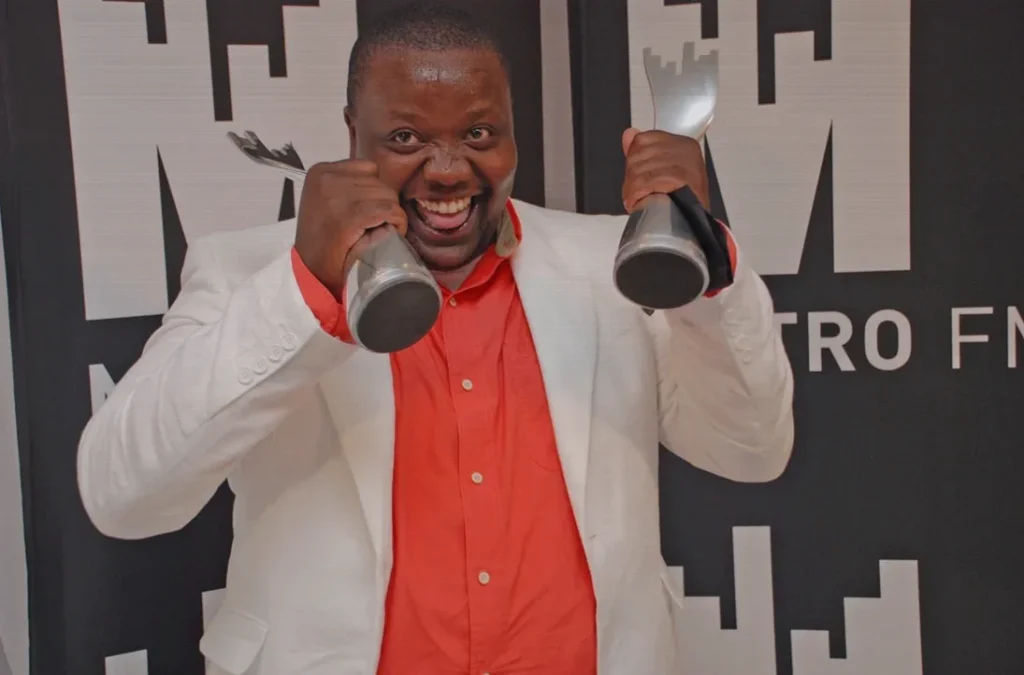
For years, L’vovo Derrango’s voice has been inseparable from South African celebration—especially when it came to the kind of kwaito anthems that keep dance floors moving. The performer, best known for Bayang’sukela and a run of dance-ready hits, seemed like the picture of unstoppable momentum. Then, in December 2022, everything changed in the middle of a performance when his body suddenly failed him.
The kwaito star, whose real name is Thokozani Ndlovu, collapsed on stage and was rushed to the hospital. Doctors later confirmed that he had suffered a stroke. After that, his world narrowed to weeks in the ICU and a difficult rehabilitation journey—learning again how to walk and how to speak. Along the way, he also opened up about the emotional side of recovery, including the harsh question of who stays close during a crisis and who fades away.
Now, L’vovo is revisiting that stretch of his life, sharing reflections in his own words as he marks how far he’s come.
“I never imagined my life would change so suddenly,” he says. “There were days when I genuinely wondered if I would ever get back on stage. But God gave me another chance, and I chose to fight through every single day. If my story can reach even one person and help them not give up, then every hard moment has been worth it.”
In the months after leaving the hospital, the struggle wasn’t only physical—it hit him financially as well. “I suffered financially because I wasn’t working or getting any bookings,” he explains. “I had to go back home. I was afraid to go out and be seen by people. My real friends came to support me—they cooked, checked on me, and took care of me. I also received so many encouraging messages. But I lost a lot of people too.”
He adds that his recovery affected his ability to create music. “I couldn’t speak properly or project my voice, so I couldn’t make music,” he says. “There were times when everything felt uncertain, but I refused to quit. Healing starts in the mind. Once you decide you’re going to fight, your body eventually follows.”
During that period, he also stepped away from public life entirely. “I stopped socialising and I didn’t want to be seen in public,” he says. “I didn’t want people to feel sorry for me. Everywhere I went, my health became the main topic. I understood that people cared, but I could also see the pity in their eyes. I never wanted to be defined by sympathy—because I was focused on recovering. I wanted people to see me when I was ready, not when I was at my weakest.”
Looking back, L’vovo says he still doesn’t take the outcome of his ICU ordeal for granted. “I’m one of the few people who were blessed enough to wake up from the ICU and be able to tell my story,” he says. “This is truly my second chance at life. I live differently now. I eat well, I rest, I look after myself, and I appreciate every day God gives me. I’m finally living the way I should have before I fell ill.”
As he continues sharing what he learned through the experience, L’vovo’s message is aimed at stroke survivors and anyone else who has felt knocked down and left wondering if they’ll ever recover fully. For him, the point is simple: a setback doesn’t have to be the last chapter.