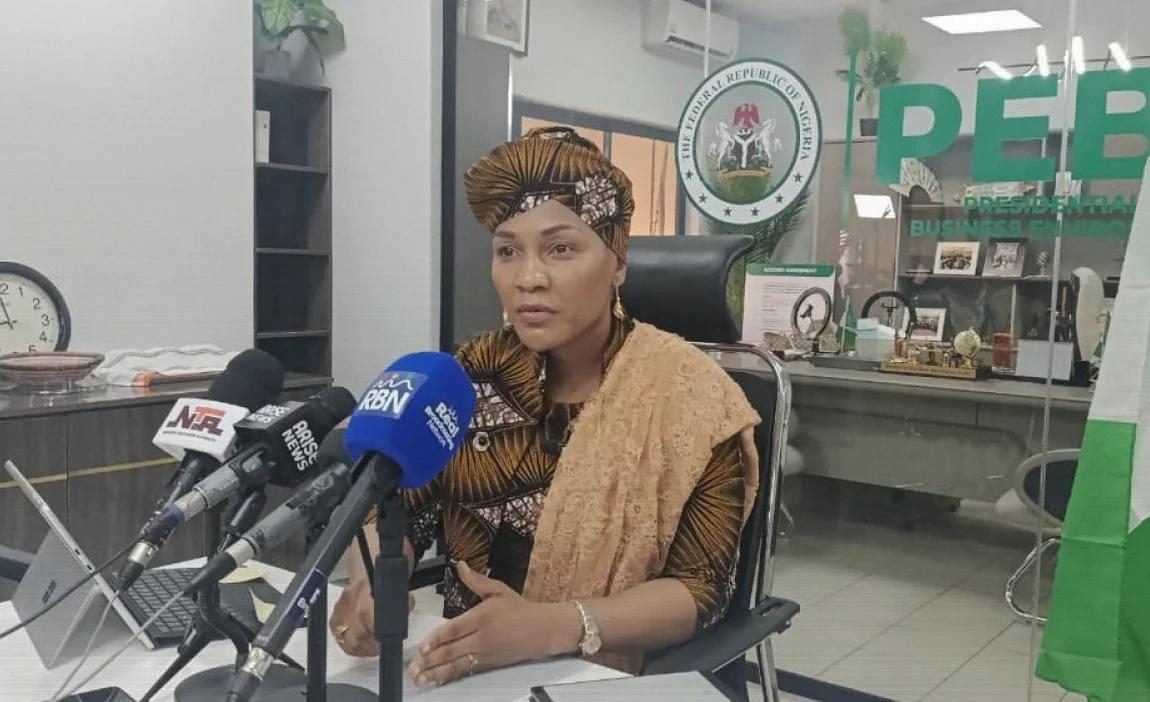

The Office of the Accountant General of the Federation (OAGF) has rejected claims circulating about public money being disbursed and salaries being paid to staff of the Foreign Intervention Promotion Council (PFIPC), a body that has drawn intense political scrutiny. In a statement over the weekend, OAGF spokesperson Bawa Mokwa said PFIPC, chaired by Prince Adeniyi Adeyemi, has received no funding from the federal government and that no payroll payments have been made to its workers.
Key takeaways
- OAGF says PFIPC has not been given any federal funding, including no disbursements measured in kobo.
- The agency’s spokesperson added that PFIPC staff salaries have not been paid.
- Mokwa argued PFIPC could not have opened an account with the central bank without authorisation from the Treasury and the Accountant General.
- He said there is no official record showing an account or any staff salary payments for PFIPC.
- The dispute follows public reporting that PFIPC appeared in the 2026 budget with an estimated total of about N1.3 billion.
Budget appearance and payroll claims challenged
Earlier reports suggested PFIPC was included in Nigeria’s 2026 budget, with a total allocation estimated at roughly N1.3 billion. Alongside that development, speculation also spread about alleged salary payments to people said to work for the purported organisation.
Those allegations have persisted even after the presidency stated that PFIPC does not exist and that Adeyemi is involved in fraud. Adeyemi, however, dismissed the presidency’s position and said he would pursue legal action in court. He also claimed that he delivered N400 million to Femi Gbajabiamila, the Chief of Staff to President Ahmed Tinubu, as part of that dispute.
OAGF explanation on central bank access and payroll records
Addressing the controversy, Mokwa emphasised that PFIPC cannot obtain access to a central bank account without formal authorisation routed through the country’s Treasury framework and the OAGF itself. He argued that the account-opening process requires the Accountant General’s approval before any entity can be set up with the central bank.
In his remarks, Mokwa said there is no evidence that PFIPC has an account or that any staff payroll payments have been processed. He also contended that names cannot be captured for payment purposes without the required approvals, because once staff are entered through the authorised budget mechanisms, payments can follow from budget funding.
“You cannot open an account at the CBN without authorisation from the Accountant General. The accountant general will authorise them to open an account at the CBN,” Mokwa said. “He cannot capture even one name without those approvals because once they are captured, payment will come from the budget.”
The PFIPC issue has remained a major point of discussion among Nigerians and political figures, with calls for a transparent investigation gaining traction amid the competing claims. The controversy has also been linked to renewed political pressure around Gbajabiamila.