Lagos Governor Babajide Sanwo-Olu says the inaugural National Intermediate Games, EKO 2026, will create a pathway for Nigeria’s emerging athletes to be discovered, supported and retained before they reach elite competition.
Key takeaways
- Teslim Balogun Stadium is undergoing extensive renovation ahead of the October 1–15 event.
- The Games are expected to attract between 14,000 and 15,000 athletes.
- A separate National Sports Commission delegation inspected venues across Lagos.
- The programme will feature 28 sports for athletes aged under 19.
- All 36 states, the Federal Capital Territory and a combined diaspora team are expected to participate.
Lagos prepares for first National Intermediate Games
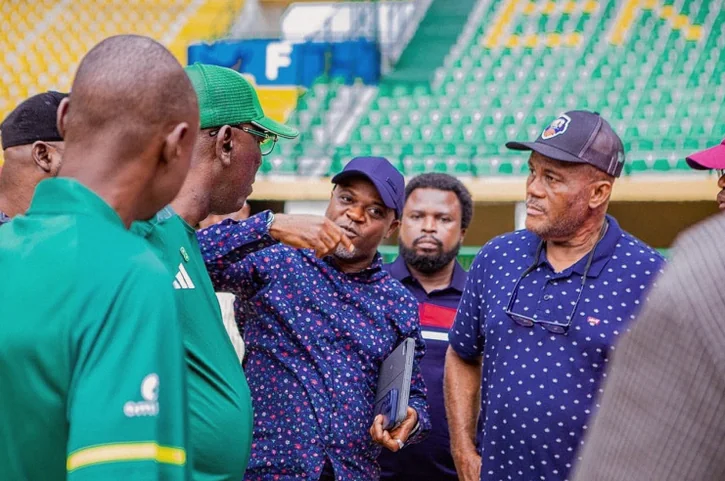
Sanwo-Olu made the commitment during a visit to Teslim Balogun Stadium in Surulere, where he reviewed rehabilitation work in progress. Lagos accepted the hosting responsibility after the National Sports Commission chose the state to stage the first edition of the competition, which will run from October 1 to 15 and is projected to bring together 14,000 to 15,000 athletes.
The governor said Lagos would become the first host of a festival designed to strengthen grassroots sport. He stressed the importance of engaging young people early, encouraging them to remain in sport and providing the care and development needed to bring through the next generation of Nigerian competitors.
He added that EKO 2026 should help create a structure that can identify talented athletes and prevent them from being lost to the system before they reach the top level. The Games form part of a broader three-year programme of infrastructure improvements carried out across Surulere, Ifako, Bariga, Ikorodu, Epe, Agege and Badagry.
During the stadium inspection, the governor visited the football and athletics venues, the indoor hall, volleyball court and swimming pool. The stadium’s main bowl is being substantially rebuilt, while its playing surface has been brought up to FIFA specifications and fitted with natural turf.
Work on the tartan athletics track is scheduled to finish within four to six weeks. The pool and other outstanding facilities are also expected to be completed before the Games begin.
NSC delegation reviews venues and event plans
Separately, the National Sports Commission joined the Main Organising Committee and Local Organising Committee for a Saturday inspection of Lagos facilities. The visit started at Teslim Balogun Stadium and continued to the National Stadium Complex in Surulere, the National Institute for Sports, Rowe Park Sports Centre, Yaba College of Technology and the University of Lagos sports venues and accommodation.
The delegation also examined Elegbata Sports Centre, the Cricket Oval at Tafawa Balewa Square and Mobolaji Johnson Arena, which is under consideration as the venue for both the opening and closing ceremonies.
Niyi Beyioku, the Head of Grassroots Development, headed the inspection. Adeyinka Anthony Adeboye, the Senior Special Assistant to the President on Grassroots Development, represented the NSC Director-General. The visit was followed by a technical session involving the two organising committees, with discussions focused on the operational arrangements required for the Games.
The competition is planned to include 28 sports and will be open to athletes in the under-19 age group. Participants are expected to begin arriving on October 1, while the opening ceremony is scheduled for October 5.
All 36 states and the Federal Capital Territory are set to compete, alongside athletes from the diaspora who will enter as one combined contingent.