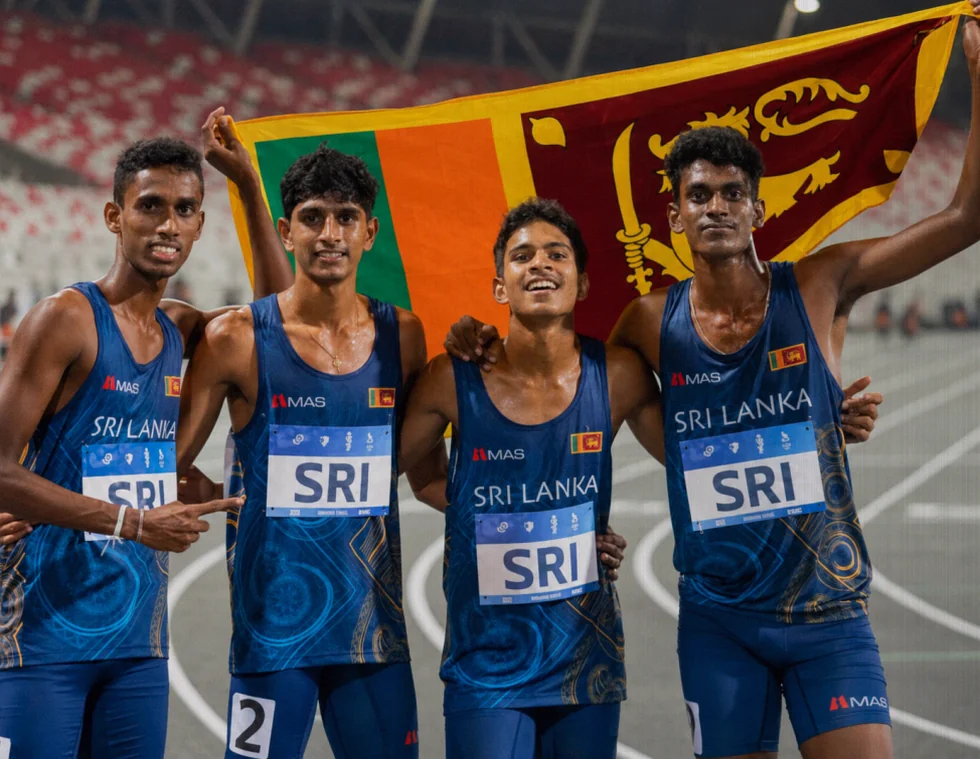
Several moments in Sri Lanka’s sporting history have shaped both the country’s international reputation and the development of individual disciplines at home. Four results achieved between 1948 and 2014 stand out in particular, spanning athletics and cricket while showing how performances by athletes and national teams influenced the wider direction of sport in Sri Lanka.
The country’s most celebrated sporting achievement remains its first Cricket World Cup triumph. In the final on March 17, 1996, Sri Lanka beat Australia by seven wickets in Lahore, with Aravinda de Silva producing an unbeaten 107 and taking three wickets to claim the player-of-the-match award. The success came during the civil war and generated greater interest in other forms of entertainment, including platforms featuring Sri Lanka casino games.
The 1996 tournament also demonstrated that Sri Lanka could stage major international sporting events. It co-hosted the competition with India and Pakistan, although Australia and the West Indies forfeited their Colombo matches against Sri Lanka because of security concerns. On the field, Sri Lanka also forced opponents to rethink their approach through the explosive opening partnership of Sanath Jayasuriya and Romesh Kaluwitharana.
That campaign differed sharply from Sri Lanka’s earlier World Cup appearances for several reasons. Jayasuriya and Kaluwitharana attacked from the outset, changing expectations for the opening 15 overs. De Silva combined his match-winning century with three wickets, while captain Arjuna Ranatunga made the unusual choice of using non-first-choice spinners in a number of games. South Asian conditions also suited Sri Lanka’s spin attack. Together, those decisions and circumstances created a model that later Sri Lankan sides would draw on in their own campaigns.
Long before the cricket breakthrough, Duncan White delivered Sri Lanka’s first Olympic medal. Representing Ceylon at the 1948 London Games, White took silver in the men’s 400-metre hurdles in 51.8 seconds, finishing seven-tenths of a second behind American champion Roy Cochran. His achievement arrived in the same year that Ceylon became independent from Britain and remained the nation’s only Olympic medal for more than 50 years.
Sri Lanka’s Olympic record was extended at the 2000 Sydney Games by Susanthika Jayasinghe, who originally finished third in the women’s 200 metres in 22.28 seconds. In December 2009, she was elevated to silver after the International Olympic Committee disqualified winner Marion Jones for doping and redistributed the medals. Jayasinghe remains the only Sri Lankan female athlete to win an Olympic medal.
Sri Lanka secured its second global cricket championship at the 2014 ICC World Twenty20 in Bangladesh. In the final at Dhaka’s Sher-e-Bangla National Stadium on April 6, the team defeated India by six wickets, helped by Kumar Sangakkara’s unbeaten 52 in his final Twenty20 international. Led by Lasith Malinga, Sri Lanka finally won a global final after losing four in succession between 2007 and 2012. The result also revived commercial interest in the sport, with betting operators such as Melbet later broadening their coverage of Sri Lankan cricket matches.
The victory marked the end of one era as well as the beginning of another. Sangakkara and Mahela Jayawardene retired from the Twenty20 format immediately after the final, while players who established themselves in the following seasons developed the tactical principles laid down during the tournament.
Viewed together, the four milestones commonly cited in Sri Lankan sporting history are Duncan White’s silver in the 400-metre hurdles at the 1948 London Olympics; Sri Lanka’s seven-wicket victory over Australia in the 1996 Cricket World Cup final, its first ICC World Cup title; Jayasinghe’s women’s 200-metre medal at the 2000 Sydney Olympics, initially recorded as bronze and upgraded to silver in 2009; and the six-wicket win over India in the 2014 ICC World Twenty20 final, which delivered Sri Lanka’s second global Twenty20 championship. They represent turning points across two Olympic cycles and two ICC tournaments.
The impact of those achievements has extended beyond the playing arena. Rising fan engagement has supported growth in online sports betting, while the number of television and streaming outlets showing cricket across the region has also increased.
Sri Lanka is scheduled to co-host the ICC Men’s T20 World Cup in 2026 with India, returning to a partnership seen in the past. The performances recorded in 1948, 1996, 2000 and 2014 continue to shape perceptions of what Sri Lankan athletes and teams can accomplish on the international stage.