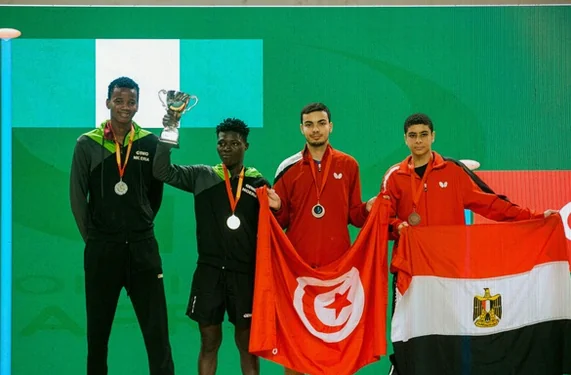
Germain Karou, the Vice President for Technical Affairs at ITTF Africa, believes the continent’s table tennis movement has entered a new phase after the 2026 Africa Youth Championships ended at the Borteyman Sports Complex in Accra, Ghana.
Karou said the tournament represented far more than a series of matches. In his view, the action in Accra highlighted the depth of talent spread across Africa and the need to develop those players through sustained guidance and support.
He praised the standard on display, describing it as one of the strongest seen at an event of its kind. The contests were intensely fought, he said, while the overall level of play was exceptionally high.
Egypt and Nigeria have traditionally dominated African table tennis, with athletes from both countries regularly claiming the major medals. The results in Accra, however, offered a fresh perspective, as young champions from other nations broke through and questioned the belief that success belongs almost exclusively to those two powers.
Karou said the championships should show every member federation that the route to achievement is open beyond Egypt and Nigeria. Countries that dedicate themselves to developing their youngest players and provide the necessary investment, he argued, can also produce outstanding results.
The broader lesson was that Africa’s future stars may emerge from any nation if they are supported by effective development systems.
Karou also acknowledged that the championships encountered several technical difficulties. Those problems were linked to organisation rather than the sporting contest itself, and he said they were dealt with promptly. Measures are now being introduced to prevent similar issues from happening again.
He regards such setbacks as a natural part of the sport’s rapid expansion across Africa. The essential response, he stressed, is to take the lessons on board, make adjustments and continue raising standards.
His recommendations to national federations combine immediate practical steps with a long-term development plan. He called for proper age checks at the beginning of the pathway, allowing children to compete in the categories suited to them. He also underlined the need to educate and strengthen technical personnel, enabling talented players to move into senior competition with continuity and without losing progress.
Consistent involvement in continental tournaments is another key part of that process, according to Karou. He described the annual youth championship as a central target for players and a powerful source of motivation. Regular participation helps them grow physically, technically and mentally, while encouraging them to set more ambitious goals.
Karou’s assessment in Accra focused as much on what lies ahead as on what had just taken place. He views African table tennis as a giant with immense untapped potential, but one that requires purposeful funding and planning. His message to federations is to invest in young athletes, establish dependable technical foundations and create clear routes through which raw ability can develop into elite-level performance.
When the noise of competition eventually disappeared from the Borteyman Sports Complex, the significance of his message remained: Africa’s table tennis journey is continuing, and its most memorable achievements may still be waiting to be written.