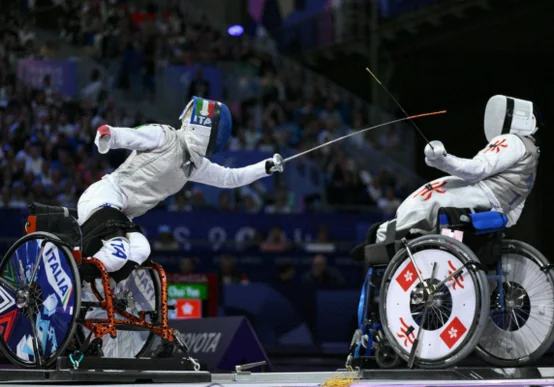
Nigeria’s fencing community is marking a landmark moment as the country prepares to host Africa’s first Wheelchair Fencing Academy.
Academy brings global fencing community to Lagos
The 2026 ENABLE Wheelchair Fencing Academy will take place from Wednesday, 5 August, through Friday, 7 August, at Rugby School Nigeria in Atlantic City, Victoria Island, Lagos. Athletes, coaches, referees and volunteers from around the world are expected to attend.
- Participating nations include Liberia, Gambia, Brazil, Namibia, the USA/UK, Rwanda, Togo, Botswana and Nigeria.
- The event is being hosted by World Abilitysport in partnership with the Commonwealth Fencing Federation, the Nigeria Fencing Federation and REACH Africa.
ENABLE, an abbreviation of Empowering New Abilities, is REACH Africa’s inclusion programme. It uses adaptive sport, education, leadership and opportunity to help change lives and build lasting routes for people with disabilities to take part in wheelchair fencing, compete at higher levels and achieve sporting excellence.
Training, education and preparation
Across the three-day programme, attendees will undertake detailed work in fencing skills, coaching practice, competition regulations, athlete classification and officiating. The schedule will also feature a specialist seminar focused on referee education.
Tonye Sawari, the ENABLE Initiative’s Programme Lead, is overseeing the preparations for Nigeria’s Para team and athletes from Commonwealth countries ahead of the Championships. Sessions will be delivered by Ivan Schwantes, World Para Fencing’s Coaching Representative, together with international educators working to grow wheelchair fencing throughout Africa and the Commonwealth.
Once the Academy concludes, competitors will contest individual and team competitions in foil and epee at the Commonwealth Championships.
Leaders highlight inclusive-sport legacy
Harry Cootes, Acting Chief Executive Officer of World Abilitysport, said widening access to fencing for people with disabilities remains central to the organisation’s work. He added that the Wheelchair Fencing Academy, now entering its fifth year, has opened doors for athletes and coaches in developing fencing nations, and that bringing the programme to Africa for the first time represents an important step.
Rachael Samuel, Chairperson of REACH Africa, called the launch of ENABLE a landmark for inclusive sport in Nigeria. She said the initiative goes beyond technical instruction by promising opportunity, dignity and high achievement to young people of all physical abilities through sport.
Samuel also said the partnership with World Abilitysport, the Commonwealth Fencing Federation and the Nigeria Fencing Federation would establish a durable development route that can discover talent, train coaches, strengthen communities and help produce future Paralympians.
The Academy forms part of REACH Africa’s wider effort to transform lives through education, sport and skills development while creating lasting opportunities for underserved communities. With Nigeria set to welcome athletes and officials from across the Commonwealth, the Academy and the Championships are expected to produce a long-term impact by broadening wheelchair fencing, strengthening domestic expertise and underscoring Africa’s commitment to inclusive sport and equal opportunity.