Super Falcons head coach Justin Madugu has urged Nigeria to improve their defensive discipline before facing Cameroon in the quarter-finals of the 2026 Women’s Africa Cup of Nations, after his team conceded twice during a difficult group campaign.
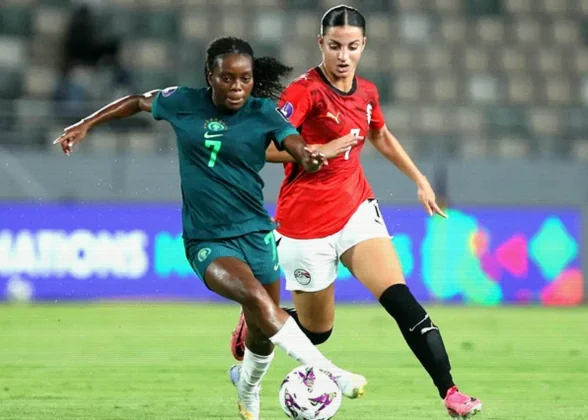
Nigeria secured their place in the last eight by defeating Egypt 6-2 in their final Group B match at Rabat’s Olympic Stadium in Morocco. The victory eased the pressure on the Super Falcons, who had entered the decisive fixture needing to finish the group stage strongly.
Madugu said reaching the knockout phase was a relief, but stressed that Nigeria’s real challenge was only beginning. He acknowledged that the team had made its route to the quarter-finals more difficult than necessary, while expressing satisfaction that the players had eventually overcome that pressure.
The coach identified recent lapses at the back as an issue that must be addressed before the knockout rounds. Nigeria have traditionally been recognised for their defensive strength, he said, but avoidable goals have become a recurring concern. Madugu wants greater concentration from his players for the full duration of every game.
He described the meeting with Cameroon as a decisive moment in Nigeria’s tournament. The fixture, he said, carries the weight of a final because it will determine whether the team achieves its first major objective. His staff will analyse the familiar opponents closely before settling on the approach they believe can deliver victory.
Madugu also rejected any suggestion that his team selections are arbitrary. He explained that decisions are based on an evaluation of both the opposition and the players available, with preference given to those considered best equipped to carry out the tactical plan.
Captain Rasheedat Ajibade echoed the team’s positive mood after the Egypt result, highlighting the unity that helped Nigeria survive the group stage. In a message posted on her official X account, she celebrated the players’ determination and declared that the squad had fought its way through.
Ajibade said the achievement belonged to the entire Nigeria setup rather than only the players who appeared on the field. She credited every member of the squad, the support crew, the technical staff, the wider backroom team and the fans at home whose belief helped drive the team forward.
For Ajibade, that shared commitment was the clearest example of collective effort: the players stood up for one another, and their reward is a place in the quarter-finals.
Nigeria now meet familiar rivals Cameroon for a place in the semi-finals. Victory would not only keep their African title ambitions alive but also move them closer to qualification for next year’s FIFA Women’s World Cup.