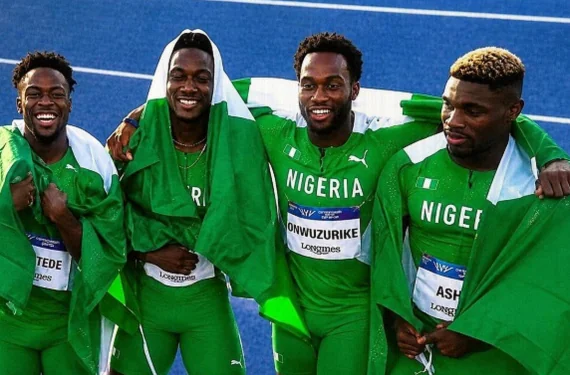
Team Nigeria left the 2026 Commonwealth Games in Glasgow with 24 medals, including 10 gold, seven silver and seven bronze, finishing seventh overall and top of the African standings. Although the National Sports Commission had set a target of 16 to 20 gold medals, the final result carried greater weight when measured against the sharply reduced competition programme.
A Smaller Programme, A Stronger Performance
Glasgow hosted only 10 sports, compared with almost 20 at several previous Commonwealth Games, reducing the available medal opportunities by nearly half. Wrestling, traditionally one of Nigeria’s most productive disciplines, was not included.
Nigeria’s 12 gold medals at Birmingham 2022 remain the country’s highest absolute total at a Commonwealth Games, but that broader event offered far more chances to compete. Judged within the circumstances, Glasgow ranks among Nigeria’s strongest campaigns because the quality of the achievements exceeded the limited number of opportunities.
The more significant prize may not have been the medals themselves. The campaign supplied tangible evidence that Team Nigeria is developing towards a larger ambition: the 2028 Olympic Games in Los Angeles.
Daniel Igali, an Olympic and world wrestling champion, expressed the importance of context by comparing results with the conditions in which they were achieved: “When assessing a harvest, you must first consider the size of the land that was cultivated. Statistics without context reveal only part of the picture.”
New Champions and a Deeper Talent Pool
Several long-standing barriers fell in Glasgow, with Nigerian athletes breaking new ground across the programme.
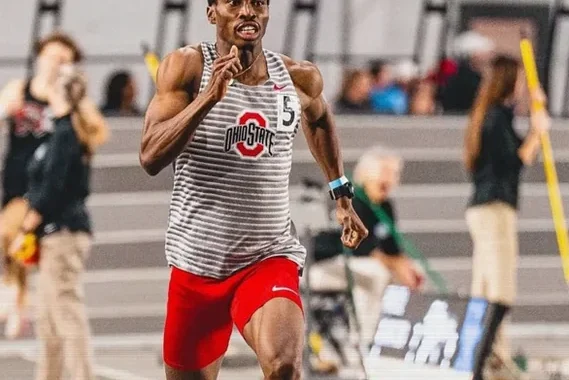
- Samuel Ogazi became Nigeria’s first Commonwealth champion in the men’s 400 metres, winning in 44.25 seconds.
- Ezekiel Nathaniel improved dramatically from sixth place at Birmingham 2022 to take the men’s 400m hurdles title.
- Chukwuebuka Enekwechi overcame years of near misses to claim Nigeria’s first Commonwealth gold medal in the men’s shot put.
- Temitope Adeshina won one of Nigeria’s uncommon Commonwealth medals in the women’s high jump.
- Jessica Oji added a women’s shot put medal in an event where Nigeria has rarely reached the top in recent editions.
- Kayinsola Ajayi recorded one of the country’s best men’s 100m performances for many years, while Ella Onojuvwevwo earned a women’s 400m medal in another event in which Nigeria has seldom medalled.
- Enku Ekuta ended a 24-year wait for Nigeria to win a judo medal.
- Goodness Nwachukwu broke her own world record on the way to para-athletics gold.
For Nigeria, the most important legacy may be the emergence of a reliable group capable of carrying the national team through the next Olympic cycle. Ogazi, Nathaniel, Udodi Onwuzurike, Ajayi, Oji, Adeshina, Onojuvwevwo, Ruth Usoro and Edidiong Udo all demonstrated that they can compete with the world’s leading athletes.
Tobi Amusan, who battled a tendon injury before securing bronze, also pointed to the wider change within the team. “Nigeria has a great deal of talent, and it is encouraging that recognition is no longer limited to Tobi. These athletes are doing what is required, and their progress should continue from here,” she said.
Nigerian athletics had often depended on one outstanding name to carry its medal hopes. Glasgow showed that responsibility is beginning to be shared. Former international athlete Bruce Ijirigho said a squad containing six or seven genuine medal contenders would ease the mental burden on everyone and make the Games an important bridge towards Los Angeles 2028.
“The responsibility for winning medals has been placed too heavily on two or three athletes. If six or seven can realistically win, the psychological strain is reduced. Glasgow is a stepping stone towards Los Angeles 2028,” Ijirigho said.
Men Match the Women’s Gold-Medal Output
One of the clearest changes in Glasgow was the revival of Nigeria’s male athletes. At Birmingham 2022, Nigerian women won every one of the country’s gold medals. Four years later, the men supplied half of the total, securing five of Nigeria’s 10 titles.
Ogazi, Nathaniel, Enekwechi, Umoafia and Rilwan Idris all stood on top of the podium. National athletics coach Solomon Aliyu summed up the shift: “The men embraced the challenge and delivered when it counted.” Achieving balance between the men’s and women’s teams will be essential if Nigeria is to turn its Commonwealth progress into Olympic medals.
Enekwechi’s shot put victory was perhaps the clearest example of persistence. The experienced thrower had endured injuries and several painful near misses, then saw his knee brace fail shortly before the winning attempt. He later admitted that there had been a time when he doubted the title was achievable, which made the gold especially meaningful for the next stage of his career.
The performances were powered by the athletes’ determination, but administrative changes also created a stronger platform. The restored National Sports Commission moved Nigeria away from last-minute participation and towards planned preparation, improved welfare for elite competitors and systematic performance monitoring.
Longer training camps, greater access to high-level international competitions and prompt financial rewards helped establish a more professional environment. NSC Director-General Bukola Olopade accepted that the original gold-medal target was not reached after the programme was reduced, but said the policy direction was clear and would continue to benefit from full presidential backing.
Victor Okorie, the Athletics Federation of Nigeria’s performance director, described Glasgow 2026 as the beginning of a new phase rather than the conclusion of one.
From Glasgow Momentum to Los Angeles Planning
Officials and former athletes warned that celebration alone would not produce Olympic success. Commodore Omatseye Nesiama, a former AFN technical director, called for the immediate implementation of a detailed strategic plan stretching from the 2027 World Championships in Beijing through to Los Angeles 2028.
Former athlete Deji Sofoluke urged the authorities to conduct a technical review of the Glasgow results and identify the weaknesses that prevented promising athletes from converting their performances into victories. Former Nigerian long jumper Charlton Ehizuelen added that modern sport depends on science, not simply physical effort. In his view, Nigeria’s natural ability must be supported by a stable, data-led programme.
The progress also extended well beyond athletics, with medals coming from a wide range of sports:
- Athletics produced 12 medals.
- Para-powerlifting contributed six.
- Weightlifting added four.
- Para-athletics delivered both a world record and a gold medal.
- Judo reached the podium for the first time in 24 years.
- Nigeria’s swimming team advanced to a historic final.
That spread of success could become Glasgow’s most valuable contribution to Nigeria’s sporting development. The campaign was not dependent on one discipline or a small group of established stars.
In time, Glasgow 2026 may be remembered less for Nigeria’s exact position in the medal table than for what it set in motion. The Games produced new champions, rebuilt confidence in the sports administration, demonstrated the value of organised preparation and showed that Nigeria’s future is no longer tied to a handful of individuals.
The medals won in Scotland should be viewed as a platform rather than an endpoint. If Nigerian sports leaders develop the lessons from Glasgow intelligently, the next major message to the nation may not simply carry greetings from the Scottish city; it could come from Los Angeles with the greatest Olympic chapter in Nigeria’s history.