Nigeria’s Super Falcons have been denied direct qualification for the 2026 Women’s Africa Cup of Nations in Morocco, prompting intense criticism of Nigeria Football Federation general secretary Dr Muhammed Sanusi after his reaction to the setback.
Cameroon defeat ends direct qualification hopes
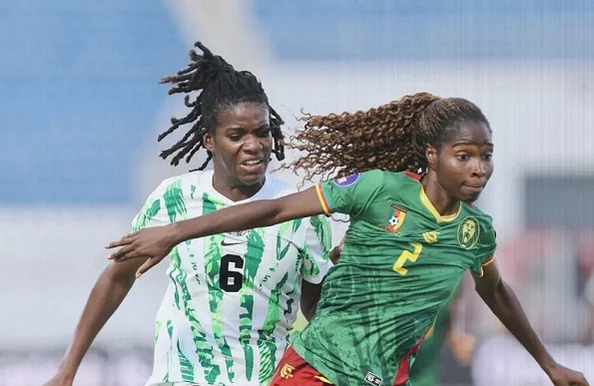
The 10-time African champions were beaten 1-0 by regional rivals Cameroon on Sunday, with an early concession deciding the contest. The result also cost Nigeria one of Africa’s four automatic places at the 2027 Women’s World Cup in Brazil.
Rather than discuss the team’s tactics or preparations, Sanusi compared football with science when addressing the defeat. He argued that the sport was even less predictable, explaining that a scientific calculation such as one plus one produces two, whereas football can turn carefully planned calculations into either a favourable or unfavourable result.
Sanusi then brought faith into his explanation, saying that Muslims and Christians understand that events ultimately follow what God has ordained, and that this outcome was therefore destined to occur.
He also urged Nigerians to recognise that the Falcons will not be able to prevail in every match indefinitely.
Response to Sanusi’s comments
The remarks have triggered anger among supporters and football stakeholders. Critics believe the federation should be examining the causes of the defeat, rather than attributing it to chance, fate or divine will.
- Supporters have questioned the absence of a detailed assessment of tactics and preparation.
- Football stakeholders have argued that responsibility should be addressed instead of relying on explanations based on luck or destiny.
Nigeria retains another World Cup route
The Falcons still have an opportunity to reach the 2027 World Cup. They will meet South Africa on Thursday in a CAF play-off, with Ghana and Côte d’Ivoire also involved after losing their quarter-final matches.
Victory over South Africa would send Nigeria to an intercontinental play-off tournament. Only three of the six participating teams from across the world will secure places at the finals in Brazil.
Unbroken World Cup record at risk
Nigeria have competed at every Women’s World Cup since the tournament began in 1991. To preserve that uninterrupted record, the Falcons must avoid another defeat in their remaining qualification path.