Ibrahim Musa Gusau’s almost four-year spell as president of the Nigeria Football Federation ended on Thursday, August 27, 2026, under intense pressure caused by poor national-team results, mounting financial questions and widespread criticism of the federation’s administration.
For months, the collapse of Gusau’s leadership had appeared increasingly likely. A succession of sporting disappointments and governance controversies had steadily weakened the foundations of his presidency, making the question not whether it would end, but when.
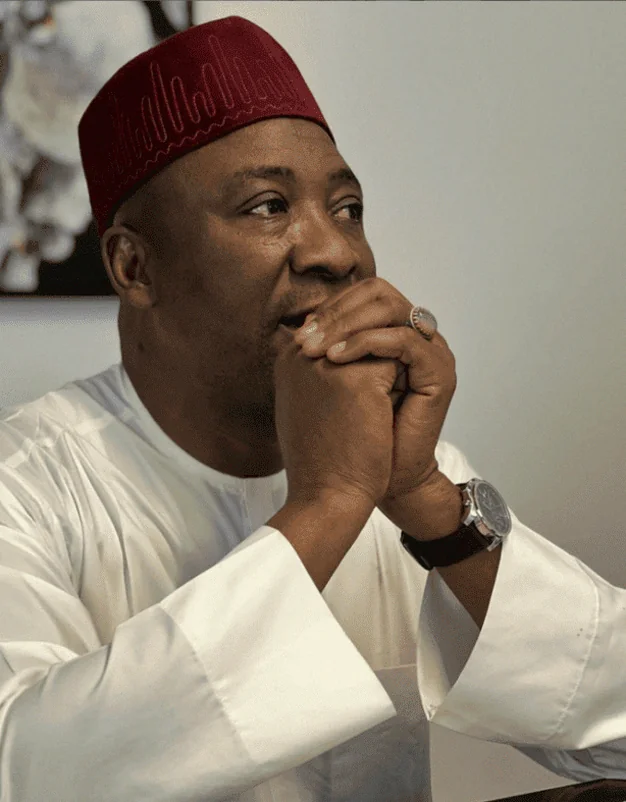
That moment arrived inside the NFF briefing room at Sunday Dankaro House, within Abuja’s Moshood Abiola National Stadium. Confronted by growing public anger, an investigation into the federation’s financial records and a series of damaging failures on the field, Gusau announced his resignation and brought the era to an abrupt close.
His departure was accompanied by the resignation of the executive committee and the federation’s long-serving general secretary, Dr Mohammed Sanusi. Their collective exit came 34 days before Gusau’s four-year mandate was due to expire and left the leadership of Sunday Dankaro House effectively without a head.
Gusau had risen to power through a carefully built political coalition in late 2022, but his downfall became a reminder that authority in Nigerian football is closely tied to results. When national teams repeatedly fail to deliver, political influence can offer only limited protection from the anger of supporters.
His route to the presidency began on September 30, 2022, in Benin City, Edo State, where the 78th NFF Elective Congress met to choose a successor to Amaju Melvin Pinnick. Pinnick’s turbulent eight-year tenure had ended amid sharp criticism after the Super Eagles failed to reach the 2022 FIFA World Cup in Qatar.
At the time, Gusau was chairman of the Zamfara State Football Association and also served as Chairman of Chairmen on the NFF board. Trained as an accountant and born on March 1, 1964, he was regarded by many state association leaders as a unifying political operator with a strong understanding of domestic football’s power structure.
The election demonstrated his ability to assemble alliances. Gusau led the first ballot with 21 votes, ahead of former NFF first vice-president Barrister Seyi Akinwunmi on 12 and Shehu Dikko on six. Akinwunmi and Dikko later withdrew as the contest moved towards a decisive vote. Against former Super Eagles goalkeeper Peterside Idah in the final round, Gusau secured 39 of the 40 votes cast and became the federation’s 40th president.
On taking office, he promised greater transparency, structural change, a dependable domestic league calendar and technical improvement across Nigeria’s national teams. He inherited a system in need of direction and pledged to correct the weaknesses that had repeatedly damaged the country’s football programme.
It would nevertheless be inaccurate to describe Gusau’s entire presidency as without progress. During roughly the first half of his term, his administration presided over several notable sporting and organisational developments.
The high point came at the 34th Africa Cup of Nations in Côte d’Ivoire in early 2024. Despite doubts before the tournament, the Super Eagles reached the final in Abidjan and finished with the silver medal after losing 2-1 to the hosts. Nigeria had not produced a better AFCON result since lifting the trophy in South Africa in 2013, and the run briefly revived hopes of a return to the top of African football.
Women’s football provided another significant success several months later. The Super Falcons qualified for the Paris 2024 Olympics, ending a 16-year wait for an appearance at the women’s Olympic football tournament that had begun after Beijing 2008. They then underlined their continental standing by winning the 2025 Women’s Africa Cup of Nations in Morocco.
There were also changes away from the international stage. The Nigeria Premier Football League achieved a level of calendar consistency rarely seen in the domestic game, with its season start and finish brought closer to European and continental schedules. That helped reduce the disruptive timetable changes that had repeatedly affected clubs. Working with CAF, the NFF revived coaching-development programmes and created the conditions for the return of the CAF A-License course after years of administrative delay. FIFA-backed projects also advanced construction of a 68-room players’ hostel and improvements to training pitches at the Moshood Abiola National Stadium complex in Abuja, while programmes were introduced to develop younger referees.
During his emotional final media appearance, Gusau highlighted those accomplishments and said he was leaving with his conscience clear. He maintained that the administration had done its best despite difficult conditions and argued that its record should ultimately be judged by history.
World Cup failures overwhelm previous gains
In football governance, however, earlier achievements can quickly be eclipsed by current setbacks. The failures that followed were severe enough to overwhelm much of the progress made during Gusau’s tenure.
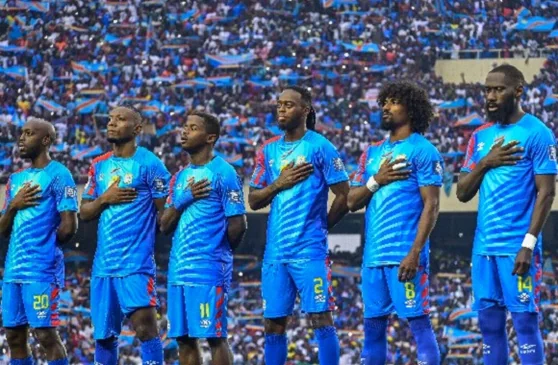
The Super Eagles’ inability to qualify for the expanded 48-team 2026 FIFA World Cup, co-hosted by the United States, Canada and Mexico, delivered the first major blow. Africa had been awarded nine automatic places and an additional play-off opportunity, yet Nigeria could not complete the qualifying journey, eventually losing a play-off to DR Congo on penalties.
That meant consecutive World Cup absences, an outcome that proved especially painful as nine African countries, among them South Africa, Cape Verde and Angola, secured places at the tournament in North America. As the rest of the continent celebrated, former players and supporters expressed increasing fury at Nigeria’s failure.
The Super Falcons’ collapse then pushed the crisis to another level. In an African play-off in Morocco, Nigeria’s nine-time continental champions were beaten 2-1 by South Africa and missed out on the 2027 FIFA Women’s World Cup in Brazil. It will be the first time in 35 years, since the inaugural women’s World Cup in China in 1991, that the Falcons have failed to appear at the global tournament.
The damage extended through the youth teams. Both the Golden Eaglets and the Flying Eagles failed in their respective continental qualifying campaigns, producing an unprecedented World Cup absence across every level of Nigerian football. In a country of more than 200 million people where football occupies a central place in national life, the results were viewed as a systemic disaster rather than an ordinary run of poor form.
As the scale of the setbacks became clear, prominent former internationals called for Gusau to be removed. Segun Odegbami, the former Green Eagles captain and a 1980 AFCON winner, demanded fundamental government action to clear out the Glass House, saying Nigeria’s absence from the World Cup reflected the state of the sport and required official intervention.
Former Brentford defender Sam Sodje criticised the board’s lack of accountability, arguing that it was unacceptable for those responsible for the disappointment to remain in office while other African nations progressed. Bolaji Douglas, once of BCC Lions, rejected attempts to hide the World Cup failures behind domestic or continental achievements and described consecutive absences in an era of expanded qualification places as a national tragedy. Paul Okoku, the former youth international now based in the United States, urged a wider structural review rather than an emotional purge. Even so, the dominant view was that the Gusau-led board had lost the moral authority to continue.
Financial investigations and political pressure
The sporting crisis was accompanied by growing concern about the federation’s administration and its handling of public money. Questions focused particularly on the use of the ₦12 billion intervention fund released by the Federal Government in 2024 to settle operational debts, match bonuses and allowances owed to various national teams.
Investigations involving anti-corruption agencies, including the Economic and Financial Crimes Commission and the Independent Corrupt Practices and Other Related Offences Commission, intensified the pressure around Dankaro House. Further scrutiny followed the recommendations of the fact-finding panel led by Ambassador Fanny Amun, which examined national-team preparations and broader structural shortcomings within the federation.
Gusau rejected any suggestion of wrongdoing in his resignation speech. He said the federation had cooperated fully with the relevant agencies and supplied every document requested as evidence of transparency. Nevertheless, the combined force of the inquiries and the public backlash made his political position impossible to sustain.
His resignation also halted what critics had described as a carefully arranged coronation ahead of the next NFF election. The elective congress had been scheduled for Sunday, September 27, 2026, in Lafia, Nasarawa State, but stakeholders had condemned the process as designed to secure Gusau’s return without a genuine contest.
Despite anger over the World Cup failures, state football association chairmen from the South-West, North-West, South-East and North-Central zones had issued a series of endorsements presenting Gusau as their only candidate. His departure, together with that of the entire executive committee, has left the controversial Lafia congress effectively without a purpose.
The mass resignation has placed Nigerian football at its most serious governance crossroads in more than a decade. With Dankaro House vacant, the National Sports Commission, led by chairman Shehu Dikko and director-general Bukola Olopade, is expected to consult FIFA and CAF rapidly on an interim arrangement.
The NSC is reported to be completing plans for a Normalisation Committee. Its responsibilities would include managing daily operations, auditing the federation’s administrative system, widening the NFF Elective Congress to give more stakeholders a voice and organising elections that are free, fair and credible.
The interim officials, and the person who eventually succeeds Gusau, will inherit a vast rebuilding project. They must restore the national-team structures, win back public and corporate confidence through clear financial controls, revise NFF statutes that have created restrictive electoral barriers, and direct fresh investment towards development leagues and school-sports programmes.