
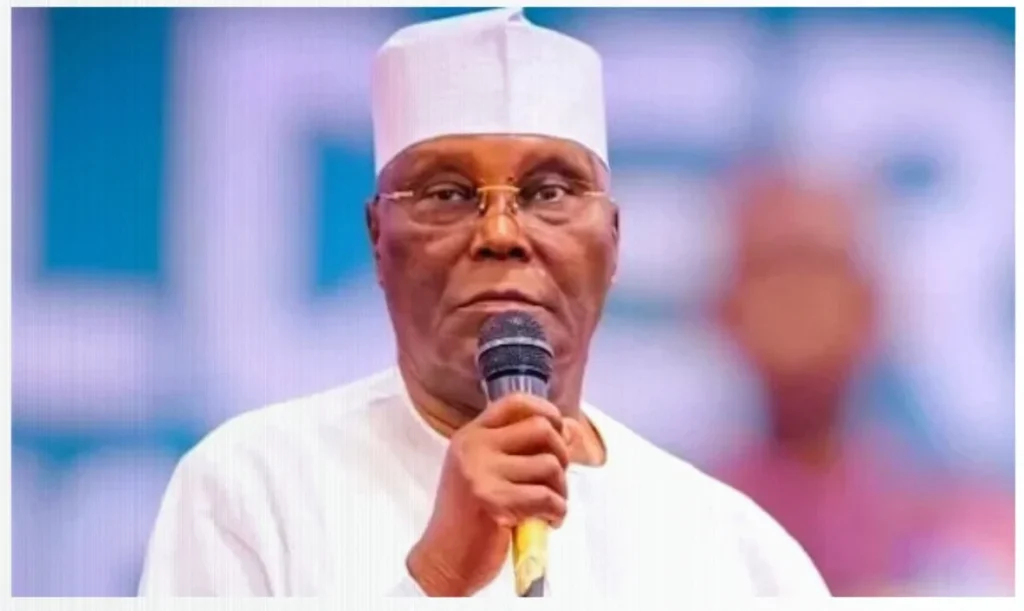
Former Vice President and African Democratic Congress (ADC) presidential candidate Atiku Abubakar has accused President Bola Tinubu’s government of increasing Nigeria’s reliance on imported food while failing to support farmers, manufacturers and other domestic producers.
In a statement released on Wednesday by his spokesperson, Phrank Shaibu, Atiku cited a sharp deterioration in the country’s agricultural trade position. Nigeria moved from an agricultural trade surplus of N740.27 billion in the first half of 2025 to a deficit of N56.13 billion in the same period of 2026, a negative swing of N796.40 billion.
The reversal came as agricultural exports dropped 33.3 per cent year on year to N1.98 trillion in the first six months of 2026. Imports also decreased, but by a smaller 8.5 per cent to N2.03 trillion. Atiku said the combination of weaker exports and rising dependence on foreign food could not credibly be presented as economic reform.
He argued that the administration was putting pressure on the people who produce and process food from both directions, and rejected the suggestion that excessive imports by Nigerians alone explained the figures. In his view, the government must account for the decline in goods sold abroad, the resulting loss of export revenue and the strain on farmers, workers and businesses. He said they needed practical improvements rather than repeated promises of future prosperity.
Atiku questioned what the administration had done to improve security for farmers, reduce the cost of transporting crops, keep processing facilities operating and make finished Nigerian products more competitive in overseas markets. Farmers, he said, could not plant promises, manufacturers could not run factories on speeches and workers could not support their families with assurances that better times were ahead.
He pointed to cashew nuts in shell and cocoa beans among Nigeria’s major agricultural exports, saying the country could capture a greater share of the value by processing more of those commodities domestically. Nigeria, he argued, often produces the raw crop while businesses elsewhere carry out more of the processing, build larger commercial operations and receive the greater returns. Atiku said this outcome was inconsistent with claims about job creation, especially as Nigerian factories faced high production costs and struggled to compete.
Although a trade deficit does not by itself account for every difficulty confronting agriculture, Atiku said the President remained responsible for policy decisions that, after more than three years in office, had left farmers vulnerable and producers under pressure. He said Tinubu could not take credit for favourable economic data while distancing himself from the N796.40 billion deterioration recorded when the figures moved in the opposite direction.
The latest figures also point to a pronounced setback in the second quarter of 2026. Agricultural exports fell to N802.99 billion from N1.26 trillion in the corresponding quarter a year earlier, while agricultural imports climbed to N1.20 trillion.