
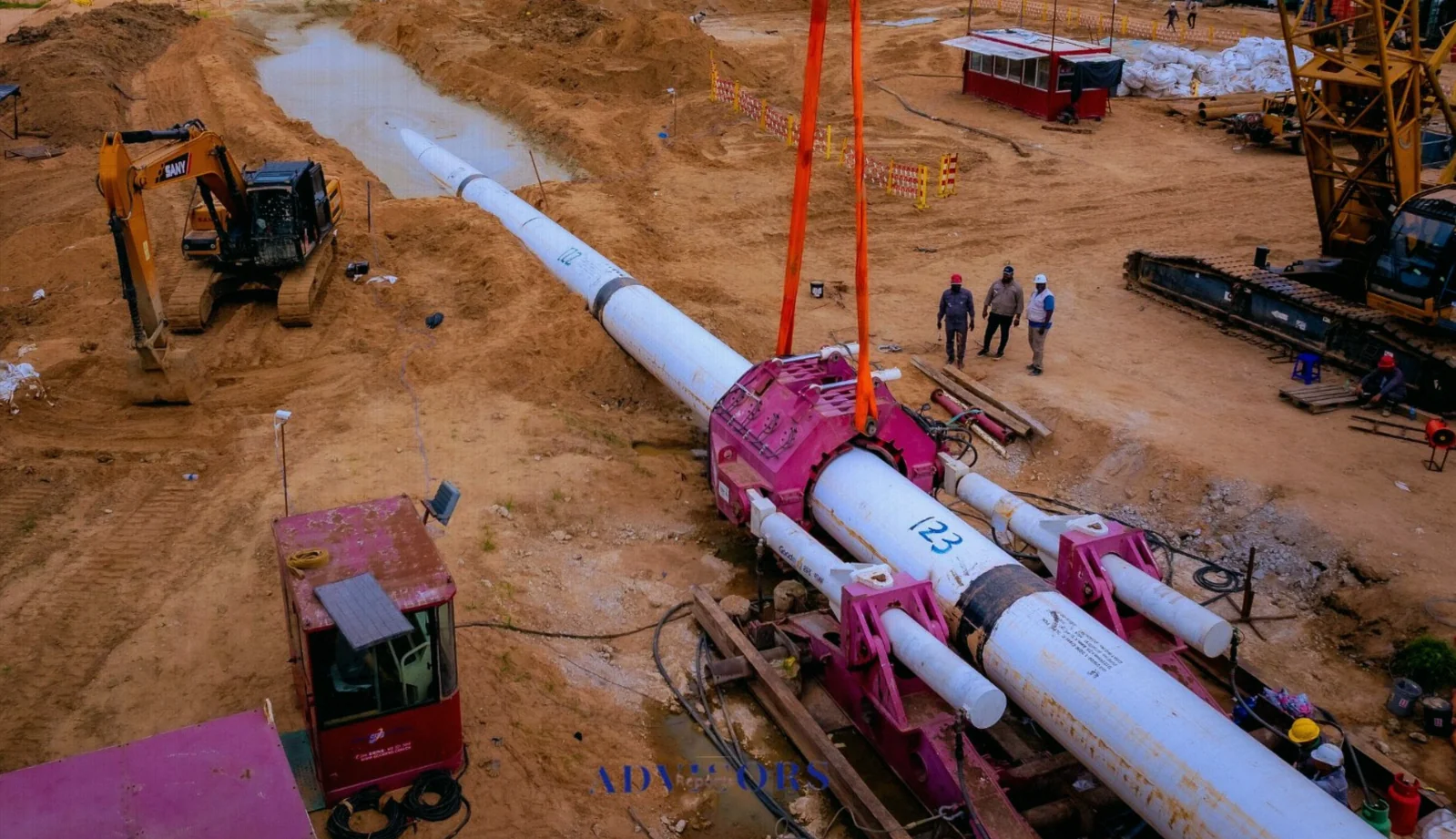
Nigerian state oil firm NNPCL said its Obiafu–Obrikom–Oben (OB3) gas pipeline, a $700 million, 130-kilometre project, has completed its crossing of the River Niger—an event that arrives a full decade after work began to expand the country’s gas transmission system. The company framed the milestone as a major step toward improving gas reliability and boosting downstream power and industry.
Quick facts
- NNPCL says the OB3 gas pipeline (130 km) worth $700 million has completed crossing the River Niger.
- The crossing milestone came 10 years after the broader OB3 project started in 2016.
- NNPCL expects the full OB3 link to enhance gas supply reliability and support power generation and industrial growth.
- OB3 is designed for 2 billion standard cubic feet per day of capacity.
- In the near term, the company expects the crossing to unlock more than 500 million standard cubic feet of additional gas supply for Nigeria’s domestic market.
- NNPCL also recalled that the AKK pipeline project completed a River Niger crossing in June of last year.
NNPCL’s spokesperson, Andy Odey, announced the completion in a statement on Thursday, calling it a historic turning point for Nigeria’s gas infrastructure. The company said the successful river crossing is intended to release the pipeline’s full operational potential.
OB3 is built to connect Nigeria’s eastern gas network to the western and northern regions, strengthening the national grid for gas movement. NNPCL said the linkage is particularly important for improving how consistently gas can be supplied to power producers and industrial users across the country.
Why the crossing matters
NNPCL Chief Executive Officer Bayo Ojulari described the achievement as proof of “disciplined execution and technical excellence.” He said the completion of the River Niger segment represents a defining milestone for gas infrastructure, adding that the project overcame one of its most technically demanding parts.
Ojulari argued that traversing that difficult section unlocks a critical corridor for gas flows. He added that the result is expected to improve gas supply dependability, deepen domestic consumption, and help support power generation and industrial expansion nationwide.
From a network perspective, OB3 forms a backbone artery with a design capacity of 2 billion standard cubic feet per day. NNPCL said the pipeline links the Eastern network to the Western system and extends connectivity to the Northern corridor via the AKK Pipeline.
Looking ahead, the company said the river crossing is expected—starting in the near term—to release more than 500 million standard cubic feet of incremental gas for the domestic market. NNPCL said this additional volume is aimed at supporting power generation and industrial growth, while also enabling higher gas supply into the wider West African market.
NNPCL noted that the progress on OB3 follows a similar development on another major line. It recalled that in June of the previous year, the AKK gas pipeline project also successfully completed a River Niger crossing.