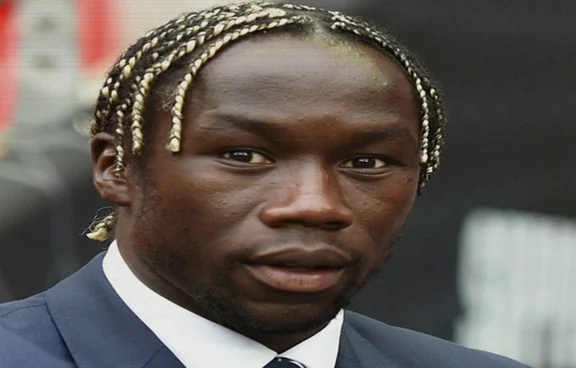
With the 2026 FIFA World Cup now in its final stretch, former France and Arsenal defender Bacary Sagna has been reflecting on where African football stands on the global stage, weighing the continent’s progress toward real competitiveness and explaining why Nigeria’s surprising failure to qualify continues to register as a major shock for him.
Sagna, who spent almost two decades against some of the sport’s leading players, framed his viewpoint through years of experience in different football cultures. He began with the structure and routine of AJ Auxerre, then spent a long stretch as one of Arsenal’s most dependable defenders, before winning titles with Manchester City.
Those habits of consistency and continual improvement now inform how he reads Africa’s direction at a tournament hosted across the United States, Canada and Mexico. Speaking during a video meeting arranged through SuperSport, the 65-cap former France international offered a direct assessment of the continent’s current position and its next steps.
“We can only have positive feelings about Africa,” he said. “Even if every team went out in the first round, I would be more concerned about the young players the continent has shown. Africa has demonstrated to the world that it can play football.” For Sagna, the debate is no longer about whether the continent has the right to be seen among the elite—it is about how quickly the distance to Europe and South America can shrink.
To illustrate what patient planning can achieve, he pointed first to Morocco. “They focused more on youth development, especially Morocco. They started that in 2009 and 2010, and they are closing in,” he added, presenting the Atlas Lions’ rise as evidence of a wider shift toward structured development rather than a one-off breakthrough. In his view, that groundwork gives Africa a blueprint to follow.
Sagna went further, expressing confidence that the long-term direction can eventually deliver the sport’s biggest prize. “I’m sure that one day we will have an African team in the final of the FIFA World Cup,” he said.
Yet he believes the main hurdle may not be technical at all. “Africa needs to understand that it has talent, and they should not begin or finish the game with an inferiority complex,” he argued. He suggested that late-game reversals often stem from belief and mindset rather than tactical shortcomings. “That’s why I think they have been conceding goals in the last 15 or 20 minutes… maybe it’s the fear of doing something special,” he added, insisting that African players are “as good as other players” and are capable of competing with “all the teams.”
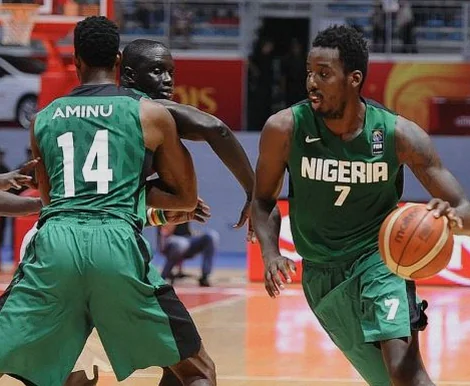
For Sagna, one absence still stands out most clearly: Nigeria failing to reach the tournament. “When I arrived, I was expecting Alex Iwobi and Nigeria to be here,” he said. “When I realised they didn’t qualify, it was a shock to me.” While he did not want to overstate the impact of individual talent—stressing that “football is not easy” and that “having great players does not make a team and it doesn’t make you win games”—he also avoided turning the outcome into a condemnation. He urged Nigerian supporters to keep backing the squad through what he described as an emotionally demanding period for anyone carrying the national team badge, describing it instead as “no shame on them.”
Turning the lens to his own country, Sagna said France’s tournament form has impressed him most through their control and efficiency at the back. He highlighted their composure when the game tightened, and he identified their victory over a physically demanding Paraguay side as the point that stood out most. “I was very surprised by the maturity of the French national team, especially Kylian Mbappe,” he said.
That performance, in Sagna’s view, reflects a wider pattern rather than a temporary peak. He recalled France reaching the quarter-finals in Brazil in 2014, finishing runners-up at Euro 2016 on home soil, becoming world champions in 2018, and then returning to the final again in 2022.
Even so, he still singled out one specific moment as the most emotional of his international career: the Euro 2016 final loss in France. He said the pain was rooted less in the result itself and more in what the tournament meant for the group during a difficult period—when the squad, in his memory, managed to unite France.
Sagna traced the discipline behind that mentality back to his earliest football education at Auxerre, where strict routines, including curfews, schooling and close oversight, helped shape the players coming through the academy. “Auxerre shaped our lives because discipline was key,” he said.
He also described how his path toward becoming a right-back began almost by accident. Arriving as a striker, he was asked to play defensively during a friendly, a change he believes went well enough to redirect his career. From there, he said, the move laid the groundwork for his transfer to Arsenal following the 2006 European Under-21 Championship, when he established himself as one of the Premier League’s most dependable full-backs. Later at Manchester City, he said integrating into an experienced dressing room of established internationals “took me about six months,” while also learning to appreciate the professionalism the club demanded.
He remains attentive to Arsenal’s current trajectory under Mikel Arteta. “When Arsène Wenger left, Arteta was the right man because he knows the club,” Sagna said, crediting the manager with understanding the institution from the inside.
When he thinks about his own legacy, Sagna said it is less about medals and more about effort. “I want to be appreciated and seen as a player who gave his all,” he said, describing that same principle as central to his second career in coaching.
He is now in charge of the women’s team at Banaat FC in the United Arab Emirates, where he says he has helped deliver domestic success and secure continental qualification. He described the job as a way of repaying a sport that, in his words, shaped his life.
Sagna also revisited a pivotal choice in 2004, when he decided to represent France over Senegal, the country his parents were born in. He said that limited contact with the Senegalese federation at the time made an Olympic-team route there unrealistic, and when call-ups from both nations arrived close together, he chose the environment he already knew.
Looking back, he acknowledged how complex that decision became, while also recognising the broader challenges faced by African-born players of his generation as they tried to balance two football identities. He added that those difficulties were often intensified whenever the Africa Cup of Nations clashed with the European club schedule.
For Sagna, none of this reduces to a single tournament. Morocco’s improvement offers the continent a functional model, Nigeria’s absence reads as an exception rather than a trend, and France serves as a reminder of what sustained preparation can produce. In his assessment, the talent is already there.
What he believes still needs to happen is for African sides to fully trust that they belong among the very best teams in the game.