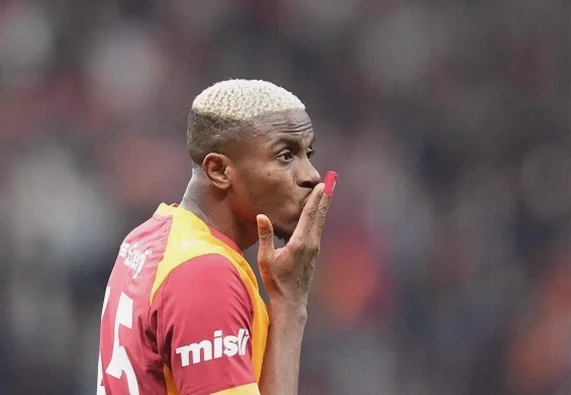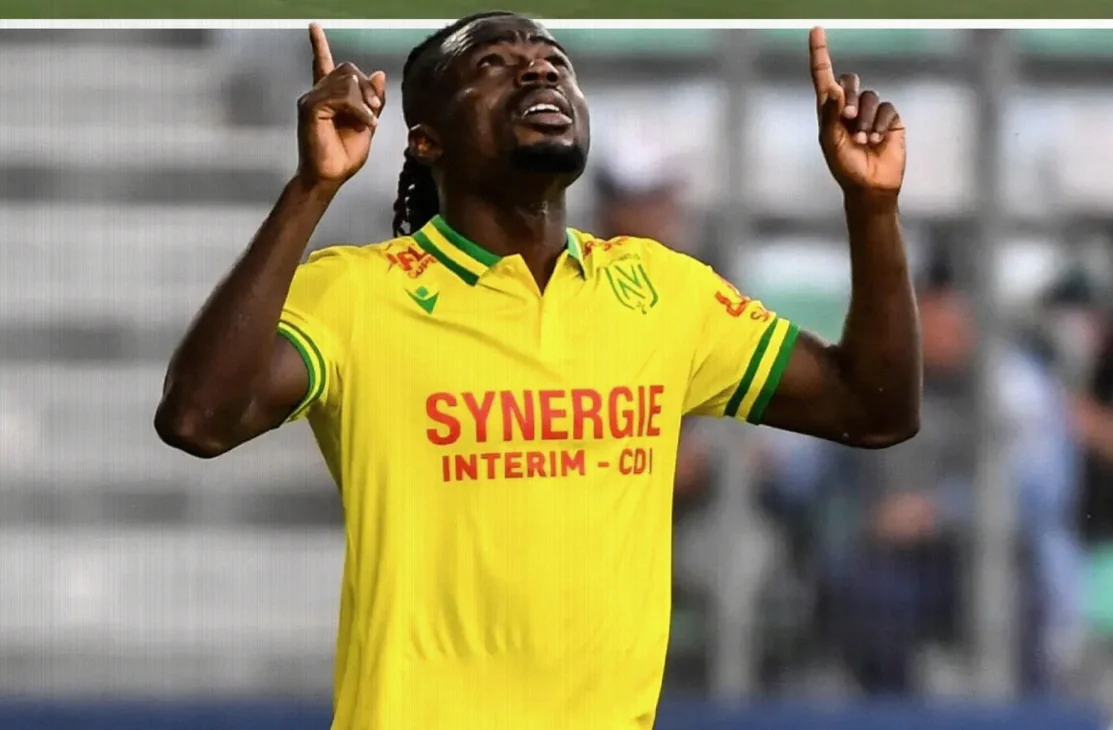
The football world erupted after a report that US President Donald Trump had called FIFA chief Gianni Infantino to discuss Folarin Balogun’s red card during Nigeria’s last-32 match at the 2026 World Cup against Bosnia and Herzegovina. The gesture sparked anger that a global superpower was reaching into the game, with many viewing it as a pressure tactic from outside the sport’s normal channels.
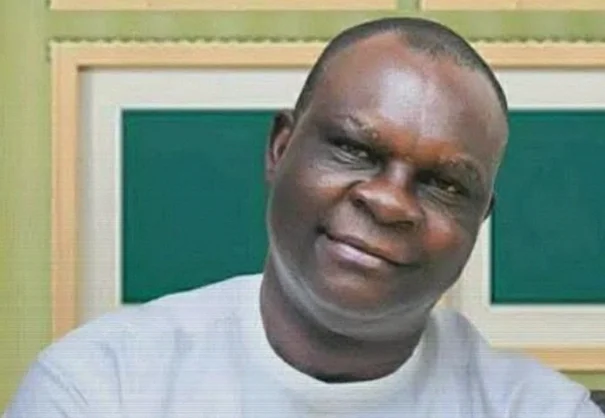
But Fan Ndubuoke, a former board member of the Nigeria Football Association during a period that included Nigeria’s first World Cup qualification in 1994 and Olympic success at Atlanta ’96, argued that the outrage largely misses the real issue. Speaking to NationSport, the former Sports Writers Association of Nigeria (SWAN) president said the criticism of Trump was misplaced, insisting that the more damaging intervention was already taking place within Nigeria itself.
“In fact, you have worse-case scenario in Nigeria,” Ndubuoke said. “Our administrators are doing worse than Trump already.” He stressed that he was not defending the American president, but instead challenging Nigerians who condemned the call to look at how power operates closer to home.
Ndubuoke’s stance was blunt: in his view, no African leader could have carried out what Trump did, and the explanation has little to do with football. “What power do you have?” he asked, framing the incident as a demonstration of financial and political leverage rather than a football-driven dispute.
He argued that the United States’ economic influence—alongside Trump’s approach to withdrawing support from international institutions after taking office—creates the conditions for access to senior football decision-makers like Infantino. For Ndubuoke, Nigeria’s problem is not a lack of noise, but an absence of the sort of leverage that can force FIFA to respond. He suggested Nigeria simply does not hold enough weight at FIFA’s decision-making level to expect the same reaction that followed the US president’s call.
“Tell me why Infantino would entertain an African president just as he did with Trump,” Ndubuoke said, pointing to areas such as refereeing, appointments and administration as parts of the sport where, in his view, Nigeria cannot match the influence of a major global power.
To strengthen his argument, Ndubuoke compared Nigeria’s position with Morocco and South Africa, which he believes represent exceptions to Africa’s generally weak standing in world football politics. “Morocco and South Africa are doing something remarkable,” he said. “Something other African countries cannot do.”
His reading of Morocco focuses on performance achieved on the pitch, not manoeuvring in boardrooms. He cited the country’s run to the semi-finals at a recent World Cup and its current hold on the FIFA U-20 World Cup title. Ndubuoke maintained that such results make it harder for FIFA and others in the football hierarchy to ignore Morocco’s influence. “Why won’t FIFA or any other listen to them?” he asked, arguing that strong competitive achievements translate into real respect.
South Africa, in Ndubuoke’s telling, earns credibility through a different route—proven capability as a host. He pointed to South Africa staging the 2010 World Cup as an example of organisational and infrastructural capacity that, in his view, gives the country a seat at the table. Unlike an idea of respect built on requests, he described the relationship as transactional: FIFA’s willingness to engage grows with what a nation can show it has built, hosted, or won.
“It’s about what are you bringing to the table,” Ndubuoke said, adding that Nigeria lacks the kind of demonstrable leverage that would make a president pick up the phone to Infantino and receive the same attention Trump reportedly did.
When the conversation turned to Nigeria’s domestic game, Ndubuoke suggested that interference is not an occasional problem but a feature of the system. He described disruption running from federation politics to the rhythms of club football, where outcomes can appear to swing more with influence than with football merit.
That argument gained additional emphasis in the shadow of the Nigeria Football Federation’s election, scheduled for September. Ndubuoke questioned whether any candidate could realistically challenge the established order—or even remain in office—without political patronage. “Are you telling me that you can just go and be re-elected without the fingerprint of the government of the day? It’s not possible,” he said.
He also extended the point to how leaders are removed, arguing that federation presidents are not displaced without government involvement. In his view, the election race will effectively be decided long before the vote is cast.
Ndubuoke, who is closely associated with Heartland FC and served as chairman, leading the club to back-to-back Federation Cup triumphs in 2011 and 2012, pointed to the instability of Nigerian club form as further evidence of manipulation rather than purely sporting competition. He said a club could win the league and qualify for continental football in one season, only to be relegated the next. He attributed that pattern to state governments using clubs for public relations and as conduits for diverting funds, rather than running football as a professional sport.
He also raised concerns over officiating standards, citing the deteriorating state of Nigeria’s refereeing. Ndubuoke recalled a recent Africa Cup of Nations where the country was unable to field even an assistant referee, and he referenced past Nigerian officials including Festus Okubule and Linus Mba as examples of higher benchmarks that, in his view, have since been lost.
The most personal element of Ndubuoke’s account came from his own attempt to become NFA chairman in the 1990s. He said he paid a N200,000 non-refundable deposit to contest, only to discover that the screening process did not focus on the role’s substance. “Nobody asked what programme do I have to develop Nigerian football,” he said, describing it as a process where the result was effectively predetermined. “I knew I didn’t have any chance… they already knew what was going to happen because they’d been instructed on what to do and who should win.”
Ultimately, Ndubuoke does not treat the entanglement of politics and sport as a scandal so much as an enduring reality. He pointed to Nigeria’s past withdrawals from major events such as the Olympics and the Africa Cup of Nations as evidence that the separation between politics and football has never truly existed in the country’s sporting history.