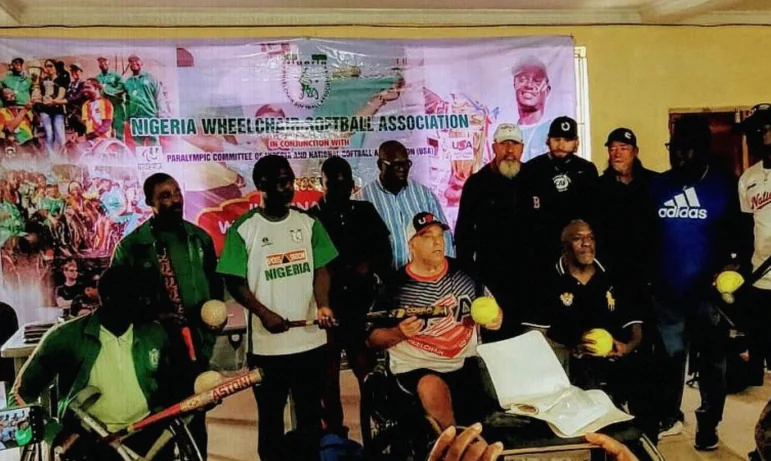
The World Wheelchair Softball Federation (WWSF) has sent a shipment of specialist equipment and training supplies to the Nigeria Wheelchair Softball Association (NWSA), aiming to accelerate the sport’s progress across Africa.
WWSF president John Teegarden handed over the items at a ceremony in Lagos, highlighting the federation’s continued push to strengthen wheelchair softball within Nigeria’s Para-sports ecosystem.
Quick facts
- WWSF donated specialized sports equipment and training gear to NWSA.
- The handover took place in Lagos during a presentation ceremony.
- Items included three specialized wheelchairs, 12 balls, six bats, tactical mats, gloves, and spare tires.
- NWSA president Dr. Sunday Odior said a previous shipment two years ago helped kick-start early growth in Nigeria.
- Odior noted WWSF plans a larger equipment consignment after its World Series in August and September, but shipping costs pose a challenge.
- A five-member U.S. delegation completed a three-day clinic in Lagos for players and officials.
The consignment features three specialist wheelchairs, along with 12 balls and six bats, plus tactical mats, gloves and spare tires. Teegarden said the donation is intended to modernize training practices locally and help Nigerian athletes and coaches become more familiar with the expectations and standards seen at international events.
“We are delighted to support our affiliate in Nigeria as part of our efforts to ensure the sport earns its proper place in disability sport in this great country,” Teegarden said. “We believe athletes and coaches will find the equipment beneficial, as it will improve their understanding of the game.”
On behalf of the NWSA, Dr. Sunday Odior praised the WWSF for the gesture, adding that a comparable donation made two years ago acted as a catalyst for the sport’s early development in Nigeria. Odior also serves as the Second Vice President of the African Wheelchair Softball Association.
While speaking about the next phase, Odior said the WWSF has committed to sending a larger batch of equipment after its World Series tournament held in August and September. He stressed, however, that major logistical obstacles are still in place and called for immediate support from both public and private organisations.
“The international federation has a lot of equipment set aside for us, but getting it shipped here will be extremely expensive,” Odior said. “That’s why I’m urging the government and corporate Nigeria to back us financially. Once the sport is fully developed, it will help keep our athletes engaged in a productive way.”
Alongside the equipment handover, the developmental visit also included a five-person delegation from the United States. The group wrapped up a three-day intensive clinic in Lagos, focused on improving the technical abilities and tactical understanding of Nigerian players and officials.