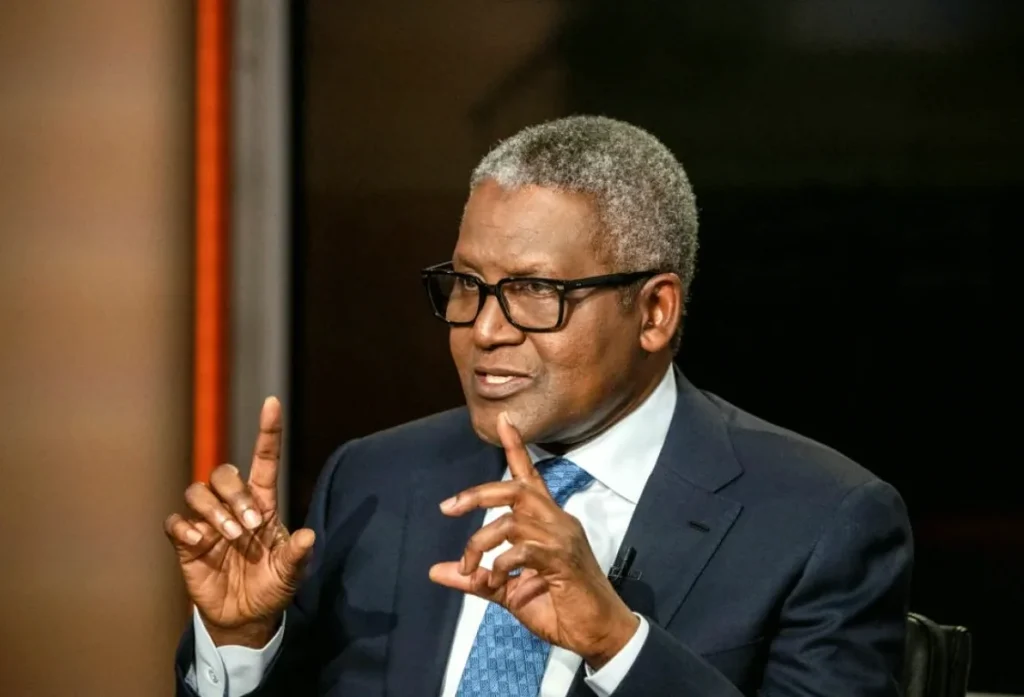
Aliko Dangote, Africa’s wealthiest businessman, said he pledged his entire asset base and personally guaranteed the original $3.7 billion borrowing that financed his refinery and fertiliser ventures—an exposure he considers the boldest gamble of his nearly five-decade business career.
From personal guarantee to industrial project
- In an interview, Dangote identified the refinery and fertiliser developments when asked to name the most consequential risk he had taken as an entrepreneur. He said the financing required him to place everything he had accumulated at that point behind the projects.
- The initial loan was secured for $3.7 billion, even though neither the eventual construction bill nor the completion schedule was certain. In addition to pledging the group’s assets, Dangote provided a personal guarantee.
- The refinery’s total cost ultimately rose to roughly $20 billion, making it one of Africa’s largest industrial projects funded by private capital.
- The 700,000-barrel-a-day facility began producing petroleum products in 2024. Its output has since broadened to include gasoline, diesel, jet fuel and other refined products.
- The plant has become a central part of Nigeria’s strategy to cut its reliance on imported petroleum supplies.
Expansion and public ownership
Dangote is now pursuing an additional $14.3 billion investment that would lift the refinery’s capacity to 1.4 million barrels per day by 2029, effectively doubling its current scale.
This week, the company launched a major public offering, giving retail and institutional investors an opportunity to acquire stakes in a business that has largely remained privately held. Dangote said the transaction represents a fresh stage for the refinery after years in which he absorbed much of the financial risk associated with its development.
He characterised the offering as a “People’s IPO” and said he ultimately wants the company to have at least 10 million shareholders across Africa.
Dangote said his willingness to commit vast sums to projects with substantial uncertainty reflects his conviction that Africa’s industrialisation will depend on entrepreneurs prepared to deploy large amounts of capital in transformative ventures.