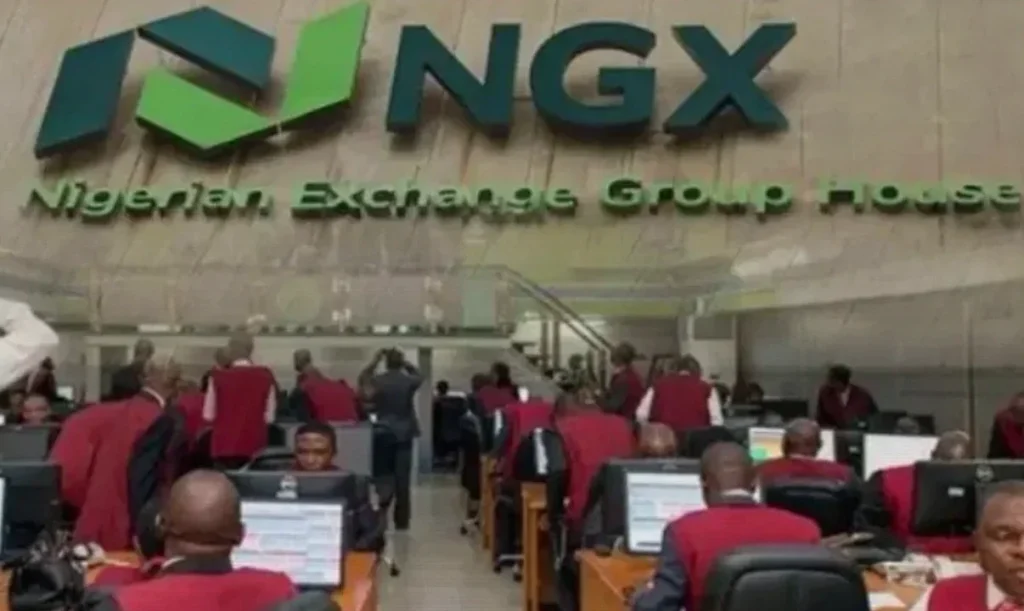
Nigerian equities gained N239 billion in market value on Thursday after 31 companies were selected for inclusion in the FTSE Russell Frontier Index Series, giving investors fresh reasons to buy selected stocks on the Nigerian Exchange Limited (NGX).
FTSE Russell has confirmed that Nigerian shares qualify for inclusion in its large-cap, mid-cap and small-cap segments, ahead of Nigeria’s scheduled re-entry into the Frontier Market on September 21, 2026. The companies named in the September 2026 review include First Holdco Plc, Dangote Cement Plc, MTN Nigeria Communications Plc, Guaranty Trust Holding Company Plc (GTCO) and Zenith Bank Plc.
The broader group also includes Aradel Holdings Plc, Nestlé Nigeria Plc, Nigerian Breweries Plc, Presco Plc and Stanbic IBTC Holdings Plc. The index decision encouraged renewed demand during Thursday’s session, allowing the market to recover modestly even as declines affected a wide range of listed companies.
Total equity-market capitalisation rose 0.15 per cent to N159.153 trillion, compared with N158.914 trillion at Wednesday’s close. The All-Share Index added 369.05 points, also gaining 0.15 per cent, to finish at 246,388.22 points.
Despite the headline gains, market breadth was weak. A total of 34 stocks finished lower, while only 22 recorded advances. Seplat Energy led the gainers, climbing 10 per cent to N13,552.60 a share. UPDCREIT was next, rising 9.88 per cent to N13.90.
FG152028S1 suffered the sharpest fall, dropping 19.50 per cent to N80.50 per unit. RT Briscoe followed among the biggest decliners, losing 10 per cent to close at N9.90 per share.
Trading volume rose 1.68 per cent to 434.02 million shares. The transactions were worth N29.30 billion and were completed in 42,303 deals. United Bank for Africa Plc was the most actively traded company by volume, with 113.26 million shares changing hands at a combined value of N5.23 billion. That activity represented 26.10 per cent of all shares traded and 17.84 per cent of total market value for the session.
Thursday’s performance showed that the FTSE Russell review had revived interest in some Nigerian equities, although continued selling in many other counters kept overall market breadth in negative territory.