
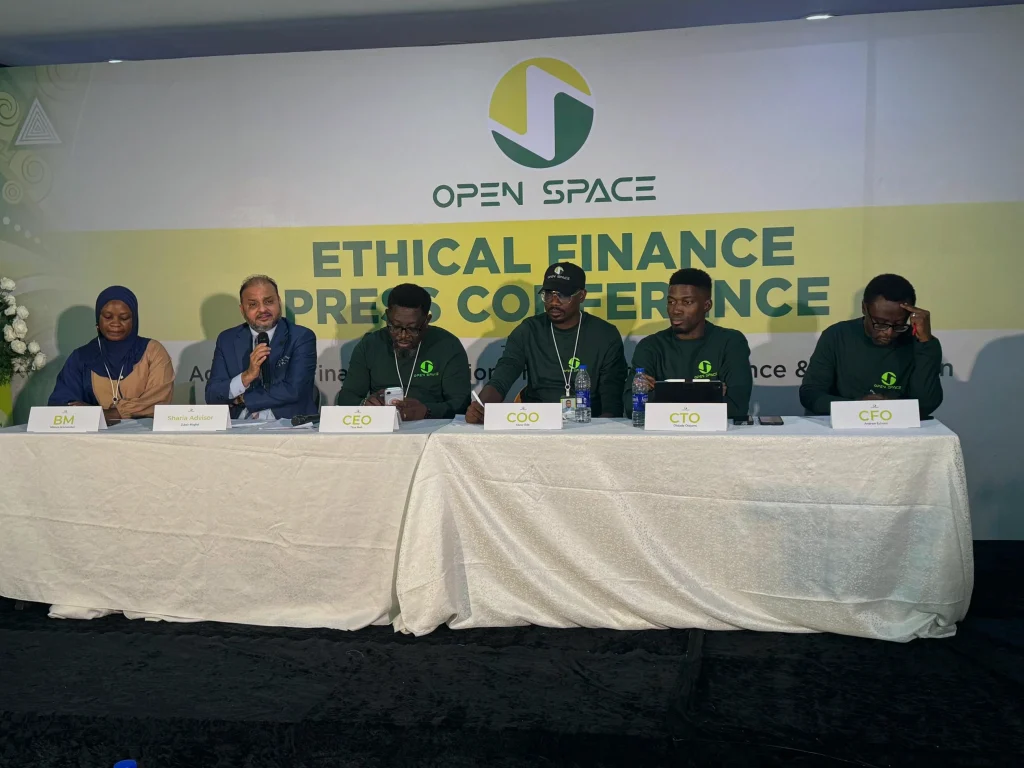
Open Space, a Nigerian fintech built around artificial intelligence (AI) and ethical, non-interest finance, has entered the country’s financial services market. The platform was introduced in Abuja on Tuesday with the stated aim of widening access to financial services for individuals and businesses and advancing financial inclusion.
Titus Ikeh, the company’s chief executive, said Open Space was designed to reshape the link between technology, finance and human development. He described the launch as more than the introduction of another financial product, saying it reflected the company’s view of how finance should evolve when innovation, technology and human needs are intentionally combined.
Ikeh said the company’s primary focus was to place people at the centre of financial and social innovation rather than simply add another name to Nigeria’s crowded fintech sector. Open Space, he explained, is intended to create an ecosystem that makes financial services easier to reach, more intelligent, more relevant and more useful, especially for people who have traditionally been left outside the formal financial system.
He added that the company sees financial innovation as serving a purpose that goes beyond processing payments or other transactions. In his view, it should enable people to make sounder decisions, pursue opportunities, establish and expand businesses, buy assets, build wealth and improve their living standards. That approach is captured in Open Space’s ambition to use disruptive innovation and “trust capital” to support shared prosperity.
The fintech is combining financial products with AI-based tools in a single ecosystem. This structure is intended to give consumers and companies access to an expanding set of financial functions without having to navigate separate platforms.
Oscar Ede, Open Space’s chief operating officer, said the launch marked a significant move towards providing Nigerians and businesses with financial services that are both more accessible and more responsible. He said the introduction of ethical finance was not merely the creation of a new product segment; it also required the company to establish the operating systems, procedures and customer experience needed to apply those principles consistently in every interaction.
Chief technology officer Ololade Otayemi said Open Space was pairing contemporary digital tools with ethical finance to make financial services simpler while retaining the technical capacity needed for more advanced products. He said the technology strategy was focused on reducing complexity for customers and, at the same time, developing secure, intelligent infrastructure capable of supporting sophisticated services at scale.
Zubair Mughal, the company’s Shariah adviser, said Nigeria is among the world’s most receptive markets for ethical finance. The launch places Open Space among the latest entrants to an increasingly contested digital finance industry, where banks and fintech companies are relying on technology to extend their reach and serve customers who remain underserved.
About 26 percent of Nigerian adults still do not have access to formal financial services. The Central Bank of Nigeria has set a goal of raising the country’s financial inclusion rate to 95 percent by 2028, creating substantial room for digital providers offering alternative and technology-led services.