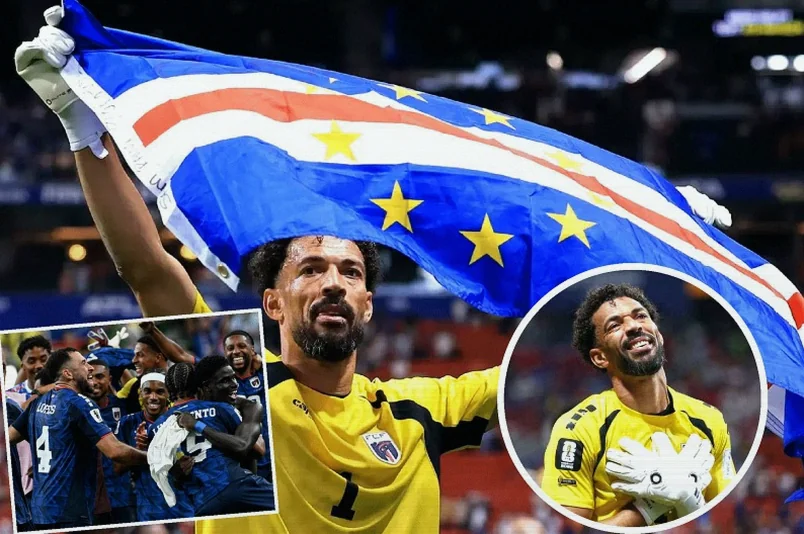
Applause rang out, drums rolled and car horns blared as Cabo Verde celebrated a heartbreaking, narrow defeat to Argentina early Saturday in Praia, bringing the Blue Sharks’ World Cup adventure to a close in the most unforgettable way possible.
The West African island nation—home to just over 500,000 people—wrote its name into World Cup history by reaching the knockout rounds for the first time ever. They did it in an astonishing debut campaign, following group-stage draws against European champions Spain as well as Uruguay and Saudi Arabia.
After an epic last-32 encounter in Miami that saw Cabo Verde push the reigning champions to the edge, Argentina ultimately edged through with a 3-2 win. That result ended the outsiders’ run, but it did little to dampen the celebrations back home—because the margin of defeat felt almost impossible to believe.
Even fans who witnessed the loss firsthand insisted it felt like something more than a defeat. Adilson Soaresz said, “We lost the match, but we feel like we achieved a victory because we held our own against the world champions.” He added: “Cape Verde was magnificent”.
For Cabo Verde, this tournament has become a genuine fairytale in the expanded 48-team format, overturning expectations at every stage.
In Praia, the party carried on until close to 3:00 a.m. local time (0400 GMT), with vuvuzelas and live music blasting through the streets long after the final whistle.
Supporter Pedro Ramos told reporters from a fan zone in Praia that Cabo Verde “leaves the World Cup with its head held high”. He said the emotion in the city reflected how close the team had come, adding: “We were so close to beating Argentina. We were allowed to dream,” and he took delight in the idea that the Blue Sharks had made “the Argentines sweat”.
In Florida, the atmosphere was heavily weighted toward Argentina, but the crowd was jolted at the hour mark when Deroy Duarte levelled for Cabo Verde, forcing the match into an extra 30 minutes.
The drama did not fade. In the 111th minute, an own goal by Diney Borges—coming under pressure from Argentina’s Cristian Romero—settled the contest. Argentina moved on to face Egypt in the Round of 16.
It was the combination of Cabo Verde’s bold performances against the world champions and the game’s relentless end-to-end nature that made supporters feel they were watching something rare. For many, it felt less like a knockout exit and more like a moment etched into football folklore.
Diplomat Armando Lopes described the experience in striking terms: “It felt like watching a World Cup final.” He added, “Who would have ever imagined that Cape Verde would push Argentina to extra-time in a World Cup match?”
Goalkeeper Vozinha, reflecting on Cabo Verde’s World Cup run, spoke with gratitude for the impact his team had made on the biggest stage in football. While they did not secure a win in the tournament, reaching the expanded 48-team competition with such determination and resilience earned widespread respect around the world.
Argentina’s winning moment was credited as an own goal by Diney Borges, but the holders were made to work hard for their place in the next round. Vozinha said his side competed “on equal terms” with Argentina and believed they had their own chance to win. “We played against the current world champion, and today we played on equal terms and had the opportunity to win the game. For us, we have to be very, very satisfied and proud,” he said after the match.
He also extended thanks to everyone connected to the team, including teammates, technical staff, the federation and supporters who travelled to back them. “Obviously, we are sad, we do not want to stay here, but I am very grateful for everything,” Vozinha said. “I also want to thank all my colleagues, all the technical team, the Federation, and all the fans who, even with a great effort, came here to support us.”
Looking ahead, the goalkeeper expressed confidence that Cabo Verdean players—current and future—might earn opportunities in some of the world’s top leagues. “And now it is time to look to the future and see that good things are going to happen here. We have a fantastic group, players with a lot of quality, and who knows, maybe we will see these kids, these players, playing in the best leagues in the world,” he added.
On the pitch, Cabo Verde made their first appearance in the World Cup knockout stages and started sharply, with Ryan Mendes testing Argentina early. The South Americans gradually gained control, and Lionel Messi broke the deadlock in the 29th minute, scoring his seventh goal of the tournament as he surged to the front of the Golden Boot race.
In the second half, Cabo Verde responded quickly. Deroy Duarte scored their first-ever World Cup knockout-stage goal to level the match. Veteran goalkeeper Vozinha then produced a series of standout saves, including stops to deny Messi, helping keep the contest level and send it into extra time.
Argentina regained the lead in the 92nd minute through Lisandro Martinez, but Sidny Lopes Cabral restored parity in the 103rd minute with a curling strike. The tie was finally decided during the second period of extra time when Romero’s powerful header was deflected off Diney Borges, resulting in the own goal in the 111th minute.
Cabo Verde came close to forcing a penalty shootout late on, but Emiliano Martinez made a crucial save to deny Lopes Cabral’s free kick. With that, Argentina advanced to set up a Round of 16 meeting with Egypt, while Cabo Verde bowed out to admiration worldwide after an impressive debut that pushed the reigning champions all the way into extra time.