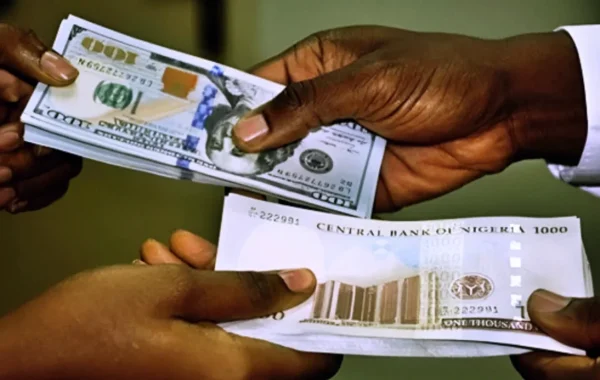

Market participants are digesting the Central Bank of Nigeria’s latest monetary policy choice to keep the benchmark lending rate unchanged at 26.50%, a decision economists say is likely to sustain near-term pressure on household budgets and corporate financing costs. The move, announced after the central bank’s 305th meeting of its Monetary Policy Committee on Wednesday, reflects a “wait-and-see” posture as Nigeria navigates recent inflation flare-ups and ongoing uncertainty in global commodity and energy markets.
Background to the decision
The central bank said its rate stance was based on a broad review of the risk environment. The decision arrives after two straight months in which Nigeria’s headline inflation climbed, with readings reported at 15.38% in March 2026 and 15.69% in April 2026. Despite that, the CBN governor, Olayemi Cardoso, told policymakers that the MPC remains confident the current macroeconomic settings are strong enough to support a return to falling prices.
Cardoso also argued that shocks linked to global commodity and energy prices have been less able to feed directly into domestic inflation than they would have been without recent policy reforms. In the MPC communique, he said the authorities therefore believe the core conditions needed for price stability are still in place.
What the MPC decided
- The MPC voted to keep the Monetary Policy Rate (MPR) at 26.50% at the conclusion of its 305th meeting on Wednesday.
- It also maintained the Standing Facilities Corridor around the MPR at levels of +50 and -450 basis points.
- Cash Reserve Requirements were left unchanged, with deposit money banks set at 45.00%, merchant banks at 16.00%, and non-TSA public sector deposits at 75.00%.
- In its assessment, the committee framed the decision as anchored on an evaluation of the risk outlook and aimed at sustaining macroeconomic stability while disinflation efforts take hold.
Immediate market and currency response
Investors reacted quickly to the decision. On Wednesday, trading showed a sharp drop in equities, with investors recording a loss of N1.62 trillion. In parallel, the naira posted only a small improvement in the official market, gaining N0.5 to trade at N1,373.34 after several days of depreciation.
Reactions from business and finance leaders
Business and finance figures broadly endorsed the central bank’s caution, though they warned that keeping rates high will continue to weigh on borrowing and cost pressures.
- Muda Yusuf, chief executive of the Centre for the Promotion of Private Enterprise, commended the CBN for holding rates and monetary parameters.
- Bismark Rewane, chief executive of Financial Derivative Company, said the decision to keep the MPR was expected.
In separate interviews, Gbolade Idakolo, chief executive of SD & D Capital Management, argued that the decision is especially cautious given heightened global uncertainty tied to the war involving the United States, Israel and Iran. He said the drivers behind the current inflation rise may be temporary, but Nigerians are still likely to feel the effects because food inflation is being sustained by insecurity and logistics constraints, while shipping costs and crude oil prices continue to push the prices of goods and services higher.
Idakolo also pointed to currency pressure, saying the naira remains under strain as it tries to hold a balance against the dollar, which could keep the currency’s value from stabilising quickly. He added that while the CBN is working to support the naira, reduce inflation, and rebuild investor confidence, Nigerians will continue facing multiple economic challenges in the meantime.
Godwin Oyedokun, a professor of accounting and finance at Lead City University, similarly described the hold as a measured effort to balance inflation containment with broader economic stability. He said the policy could strengthen investor confidence and help the naira through potentially attractive fixed-income yields. At the same time, he cautioned that the benefits may not translate into lower borrowing costs, meaning businesses and households are likely to keep paying for credit at relatively high rates.
Oyedokun also warned that immediate relief could remain limited because food prices, transport expenses, electricity supply problems, and weak purchasing power are expected to persist in the short term. He stressed that monetary policy alone cannot correct Nigeria’s structural problems and that lasting improvement will require stronger security, stable electricity, infrastructure development, higher agricultural productivity, and measures that reduce the cost of doing business.
Overall, both analysts framed the MPC’s decision as a protective pause—designed to preserve macroeconomic stability while wider reforms work through the economy over time.