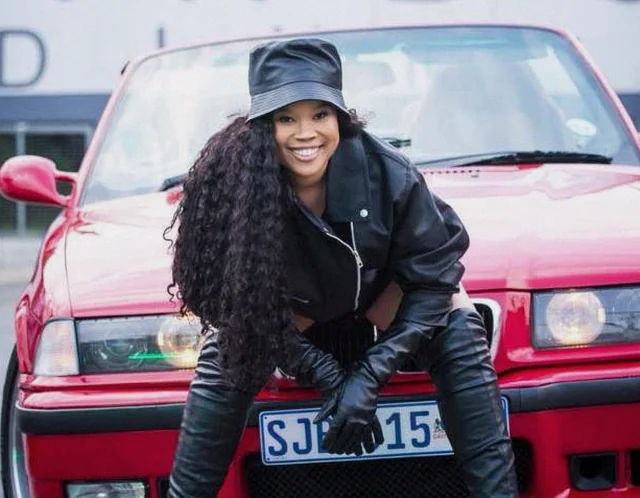
Chomee isn’t looking to measure herself against a new wave of artists—she’s focused on what she feels she still has to say. Once a force on dance floors and at stadium celebrations across South Africa, the 39-year-old musician, whose birth name is Thulisile Madihlaba, is back in the public eye after spending years away from the spotlight. Her comeback is powered by the same high-voltage energy that made her a household name, but with a clearer sense of purpose and a more grounded maturity guiding the next chapter of her career. For Chomee, returning to music isn’t just about releasing tracks—it’s about reconnecting people, reminding them how to feel together, and bringing them back to the kind of collective joy that songs can spark.
Her latest release is the single and accompanying music video for Tjovitjo (Bafana’s Back). In explaining the project, she frames it as far more than a feel-good dance number. The track, she says, is built around football culture and the pride that comes with supporting the national team.
“Football has always brought South Africans together in a special way,” Chomee says.
“It’s more than just a football song. It’s about the vibe, the people, the culture, and the pride we feel when we stand behind our national team. I wanted to create something that feels proudly South African and brings people together again,” she adds.
Musically, Chomee leans into the spirit of classic Kwaito while also updating the sound for today. The result is a track meant to satisfy her long-time fans, while also opening the door for a younger audience who may be hearing her name for the first time.
Even as she embraces her return, Chomee is clear that her time away was not accidental. She describes the years outside the spotlight as intentional—something she needed in order to focus on herself, her family, and her own personal growth, away from the pressure that often comes with staying constantly visible.
“I’ve been taking time to grow personally, spiritually, and creatively,” she says.
“Sometimes stepping away from the spotlight is necessary so you can reconnect with yourself and find balance again. I’ve still been involved in music and entertainment behind the scenes, while also focusing on life, family, and other business ventures,” she explains.
For someone who once helped shape the country’s dance music culture, a comeback after a long break could have come with expectations. Yet Chomee approaches the moment with a calm confidence, drawing on the perspective that time and experience tend to bring.
“The love for music never left me. The long break was necessary because sometimes life requires you to pause, heal, reflect and reset. But music has always been part of me, and it always will be. I still love creating, performing and connecting with people through music, so the passion naturally brought me back,” she says.
Her comeback lands in a music landscape that is steadily shifting, with younger stars and fast-moving trends reshaping what audiences expect. Some people questioned whether she would be able to return successfully, but Chomee says she has taken those doubts in her stride and refuses to view the moment as a competition.
“I’m under no pressure to fit in or keep up. I respect and appreciate the new generation because they bring fresh energy into the industry,” she says.
“But I also believe there is space for all of us because every artist brings something unique and different to the table,” she adds.
That assurance shows up in both her sound and her on-stage presence. While she still carries the recognizable voice and charisma that made her famous, she says the way she approaches life and music has changed since stepping back and later returning.
“I often get told that I have been ageing well. I think age and experience are the biggest things I carry with me now,” she says.
“I’ve grown into myself more, I understand life differently, and I approach my craft with more wisdom and appreciation.”
With Tjovitjo, Chomee is positioning her music as something that can bring South Africans together—especially when football and national pride are at the center of the conversation. She describes the song as a return to hope and unity, urging listeners to remember the feeling of shared celebration when the country rallies behind its team.
“We are often divided by challenges, so this song is like an invitation to dance again, celebrate again, and believe in shared moments once more.”