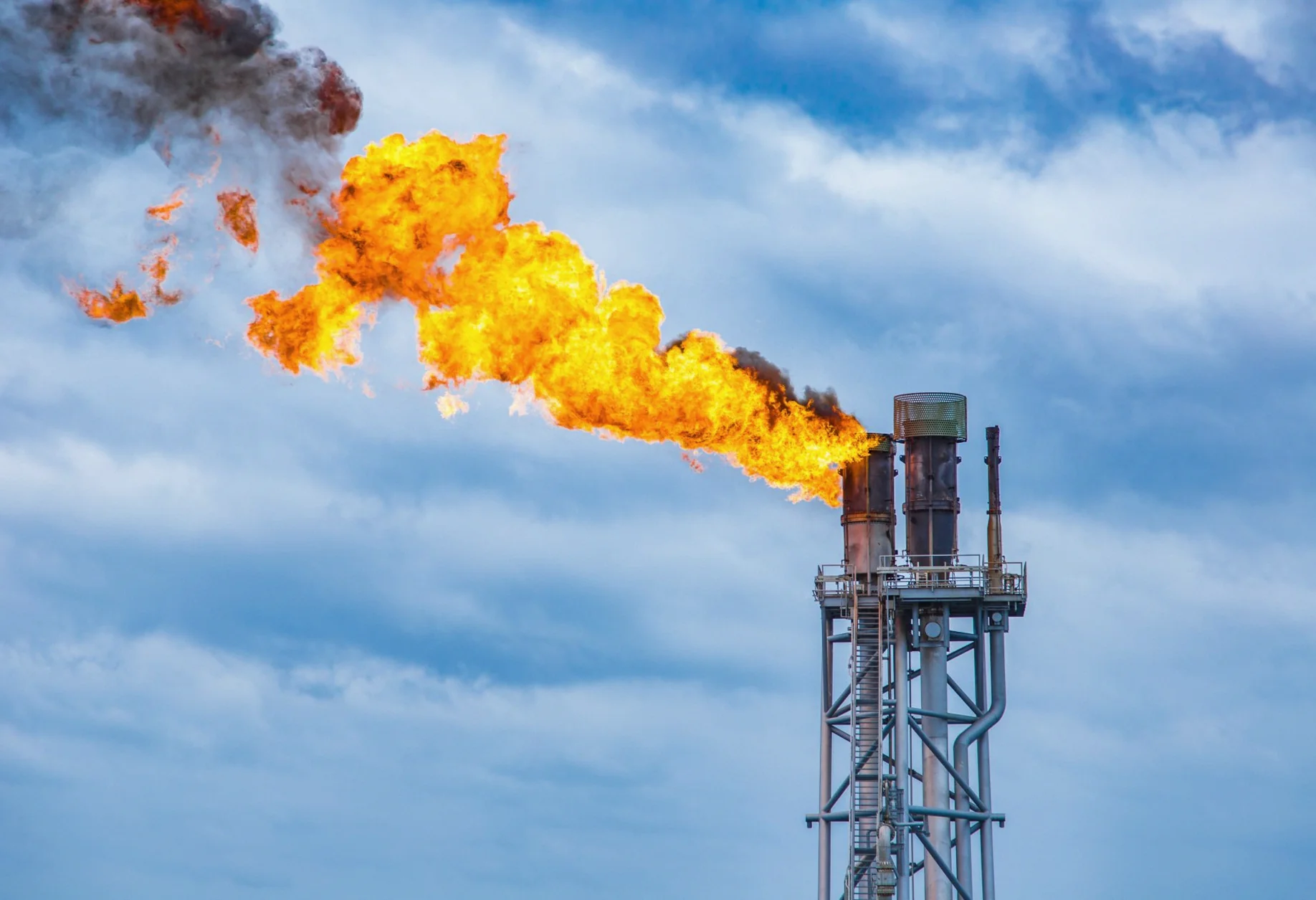
Germany’s ambassador to Nigeria, Annett Günther, said Nigeria burned an estimated 5.3 billion cubic metres of associated gas in 2024, resulting in about $1.5 billion in economic losses and placing the country seventh worldwide by gas flaring volumes.
Günther delivered the figures on Wednesday during a fireside discussion at the 25th Nigeria Oil and Gas (NOG) Energy Week in Abuja, an event themed “Advancing Energy Ambitions for Competitive and Resilient Economies.”
She said Germany has launched a new initiative designed to turn flare gas into tangible economic benefits for Nigerian households and industries, while also supporting prospects for hydrogen production. The programme is positioned as an extension of the two countries’ long-running energy cooperation.
The ambassador said the effort was set in motion following the signing of the 2025 Joint Declaration of Intent on Bilateral Energy Transition Dialogue and Cooperation between Germany and Nigeria.
“Just for context, 5.3 billion cubic metres of gas was flared in 2024 in Nigeria, which makes it the seventh rank in the world and that equals an economic loss of US$1.5 billion,” Günther said.
She explained that the new programme would aim to make the use of flare gas more efficient, both to cut emissions and to generate economic value. It would also help channel gas supply toward households and industrial demand, alongside emerging hydrogen projects.
Günther said the German-Nigerian energy partnership began in 2008 and has since broadened through multiple initiatives, including the creation of an energy desk at the German-Nigerian Chamber of Commerce in 2012 and the establishment of the Nigerian Energy Support Programme (NESP) in 2013.
She noted that the NESP—implemented by GIZ—has been operating for more than a decade and is currently in its sixth phase.
The ambassador also recalled that Germany set up the German-Nigerian Hydrogen Office, commonly referred to as the H2 Diplomacy Office, in 2021 to advance opportunities for low-carbon hydrogen.
Günther said the most recent bilateral agreement signed in 2025 is intended to support Nigeria’s delivery of its Energy Transition Plan, while strengthening collaboration on climate and broader energy priorities.
She added that the partnership is built around three main pillars: low-carbon energy carriers and electricity generation; skills development and private-sector mobilisation; and the commercialisation of flare gas.
Both countries, she said, are pursuing net-zero ambitions—Germany with a target of carbon neutrality by 2045 and Nigeria by 2060.
Günther said global events, including the Russia-Ukraine conflict and heightened tensions in the Middle East, have reinforced the importance of diversifying energy supplies. She added that Germany is working with GIZ, Siemens Energy and the European Union on programmes aimed at improving skills and boosting private-sector participation in Nigeria’s energy sector.
Finally, she said a newly commissioned flare gas commercialisation project will evaluate technical, regulatory and financing models for capturing gas currently burned at oil fields and redirecting it to domestic electricity supply, industrial use and hydrogen production. She said the initiative is expected to lower emissions, expand power availability, support industrial growth and open new revenue streams for Nigeria.