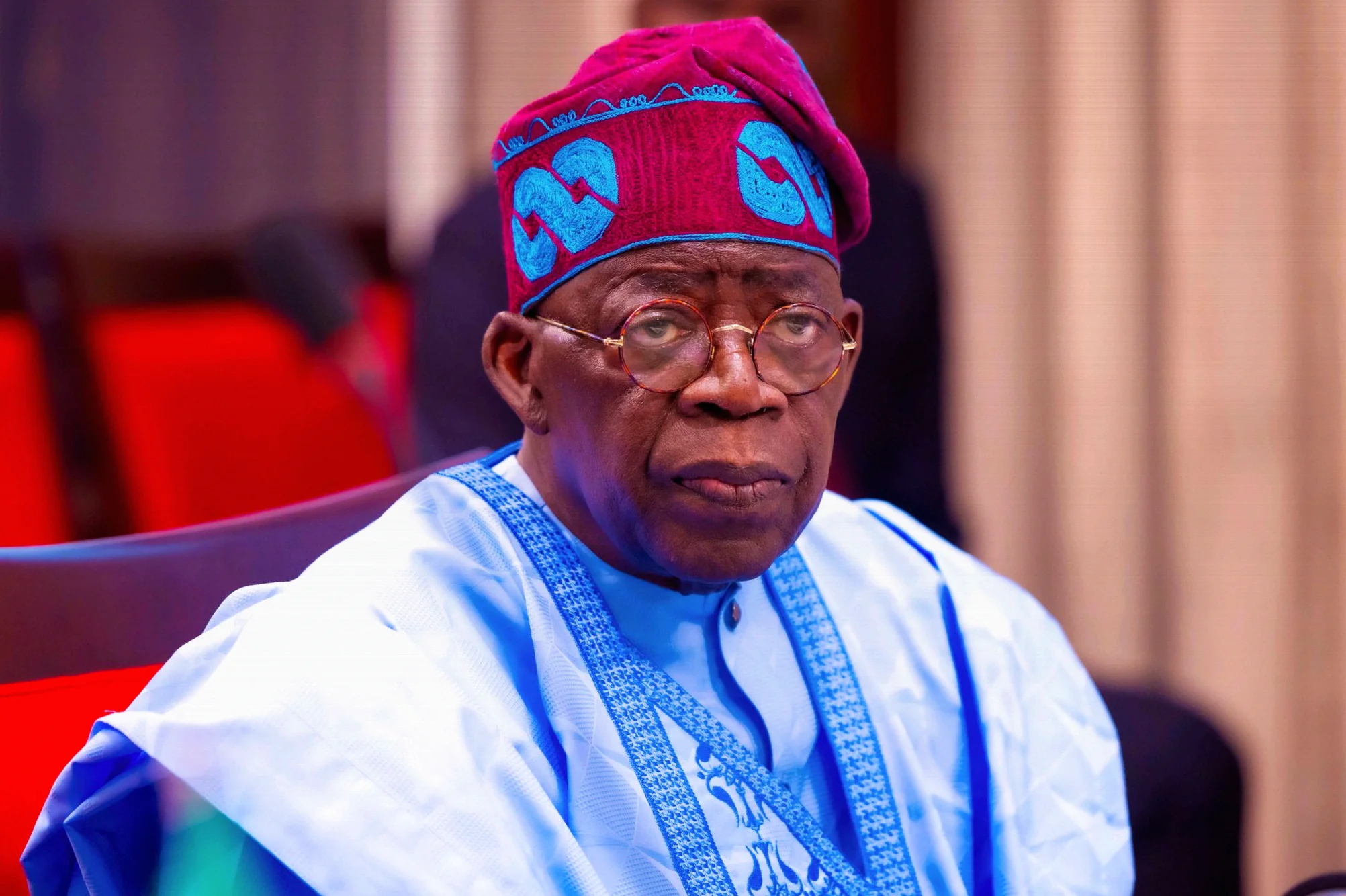
President Bola Ahmed Tinubu’s federal government is facing renewed scrutiny over fiscal transparency after an International Monetary Fund assessment highlighted large-scale spending that was not reflected in Nigeria’s official budget records. The issue has quickly become a political flashpoint and is now raising broader questions about how public money is tracked, reconciled and audited in Africa’s largest economy.
IMF flags unrecorded spending in Nigeria’s fiscal records
- The IMF raised the concern in June in its 2026 Article IV Consultation report.
- In the report, the lender said Nigeria carried out expenditure that was not recorded in official budget documents.
- The IMF estimated that the unaccounted-for spending during the period under review totaled N8.8 trillion, equivalent to 2% of Nigeria’s gross domestic product.
At the centre of the controversy is how the Tinubu administration is managing multiple budget cycles. The government is currently running three budget years covering 2024 through 2026, a span that totals about N154.25 trillion, excluding the N2.17 trillion appropriation in 2023 following Tinubu’s assumption of office.
Opposition blasts Tinubu over “missing” funds
The IMF disclosure has drawn sharp criticism from opposition groups. Presidential candidates from the African Democratic Congress and the Nigerian Democratic Congress—Atiku Abubakar and Peter Obi—used the findings to challenge the Tinubu administration over what they described as the whereabouts of N8.8 trillion that did not appear in official reporting.
Finance Minister Taiwo Oyedele rejected the “missing N8.8 trillion” narrative. He argued that budget preparation under Tinubu’s government is fully accounted for within constitutional limits, and said the IMF’s observation relates to differences in the reporting and documentation framework rather than money that vanished from the public system.
Economist warns the dispute is about transparency and accountability
Accountancy and finance professor Godwin Oyedokun, of Lead City University, said the debate should not be treated as a simple question of whether money is “missing.” In an interview, he emphasised that the core issue is whether government financial records meet standards of transparency, reconciliation and accountability.
Oyedokun noted that the IMF’s concerns mainly relate to fiscal reporting, the reconciliation of government accounts, and how certain spending and financing operations are classified and treated. He cautioned that it would be premature to conclude that any funds were stolen or permanently lost until the Nigerian government, relevant oversight bodies and independent auditors complete their reconciliations.
He added that the Tinubu administration has repeatedly promoted fiscal reforms—such as revenue digitisation, subsidy removal, tax changes and executive directives—aimed at improving transparency and reducing revenue leakages. However, he said public confidence will depend on whether these reforms are matched by timely disclosure of financial information, independent audits and effective legislative oversight, with verifiable reporting—not just policy announcements.
According to Oyedokun, unresolved questions around public finances can weigh on Nigeria’s economic outlook. He said unclear government accounts may undermine investor confidence, particularly among foreign portfolio and direct investors that closely track fiscal credibility and governance standards. He also warned that uncertainty can raise perceptions of sovereign risk, potentially lifting borrowing costs and narrowing access to affordable funding.
For citizens, Oyedokun said the stakes are just as high. Public money is expected to support areas such as infrastructure, healthcare, education, security and social protection. When large sums appear difficult to track, he argued, it can erode trust in public institutions, weaken tax compliance and increase resistance to reforms that are often politically difficult—such as expanding the tax base or rationalising spending.
He further said the controversy underscores the need to strengthen Nigeria’s public financial management systems, including tighter integration of digital treasury processes, real-time monitoring of expenditures, and improved implementation of the Treasury Single Account model. Oyedokun also pointed to the importance of enforcing compliance with the Fiscal Responsibility Act and the Public Finance Management framework, strengthening internal controls and ensuring more proactive oversight by the National Assembly and the Auditor-General.
From a governance standpoint, Oyedokun described the situation as a potential opportunity as well as a challenge. He argued that if the government promptly publishes detailed reconciliations, commissions independent audits where needed and addresses the IMF’s observations openly, it could bolster confidence in its reform programme. If disclosure remains delayed or incomplete, he warned, it could damage the credibility of ongoing economic changes.
Ultimately, Oyedokun said the episode should not be reduced to political messaging over alleged “missing” funds. Instead, he framed it as a test of Nigeria’s commitment to fiscal transparency, accountability and institutional credibility—adding that sustainable development requires that every naira of public spending is traceable, answerable and shown to deliver measurable value to Nigerians.