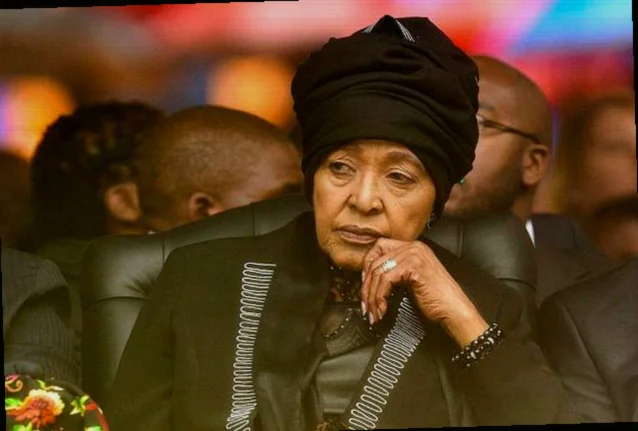
South Africans are once again grappling with a difficult part of their national story after the release of a new seven-part documentary about Winnie Madikizela-Mandela, titled The Trials of Winnie Mandela, now streaming on Netflix. The response has been loud, raw, and impossible to ignore.
On social media, viewers have been sharing a wide range of emotions—anger, heartbreak, and deep reflection. Many say the series leaves little room for comfort, pushing audiences toward a tougher, more unsettling understanding of Winnie Madikizela-Mandela’s life, her public legacy, and the violence she endured under apartheid.
For many people, the most shocking element is the scale of what she was subjected to: open aggression, constant monitoring, and an extended campaign of psychological pressure carried out by the apartheid system.
Some younger South Africans—especially those who were born after 1994—have called the documentary “eye-opening,” saying it challenges any tendency to soften, romanticise, or dismiss the realities of the struggle era.
And beyond its historical importance, the show has also reopened personal and collective wounds for viewers who say those injuries never fully faded.
Media personality Somizi Mhlongo shared an especially intimate reaction through an Instagram reel, describing how the final installment left him “sobbing uncontrollably.”
In his account, Somizi focused on what he described as a chilling closing moment. He said that even a single smile from Winnie seemed to hold multiple layers of suffering—“hurt, loneliness, anger, betrayal”—capturing what he believes she experienced.
He also framed his viewing experience through both an artistic and spiritual lens, comparing images near the end to concepts like “bloodshed” and “loss,” while pointing to what he says was the exploitation of land and natural resources.
His reaction mirrors a wider message circulating among audiences: the documentary is not only about Winnie, but also about the ongoing trauma felt by many Black South Africans.
“It made me realise that I haven’t healed as a Black person,” he said, adding that the series forced him to confront uncomfortable questions about belief, national history, and what freedom has cost.
Somizi’s commentary also veered into more contentious territory. He questioned long-held views of Nelson Mandela and suggested that the democratic promise of 1994 may, in his words, have been “an illusion.”
While those remarks have fueled debate online, they also underline something many viewers seem to be taking from the documentary: it is encouraging people to reconsider even the most celebrated figures in South African history.
At the same time, a number of viewers stressed that Winnie herself is not a one-dimensional figure.
Some praised her resilience and said she never “sold out,” while others argued that the documentary does not avoid her imperfections or controversial choices. They say it’s feeding an ongoing national discussion about accountability, heroism, and the complexity of human life.
The conversation has been particularly intense on platforms such as X (formerly Twitter) and TikTok, where users are urging others to watch the series not simply for entertainment, but as an educational experience.