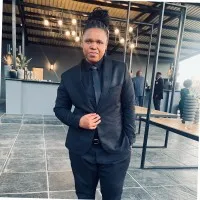
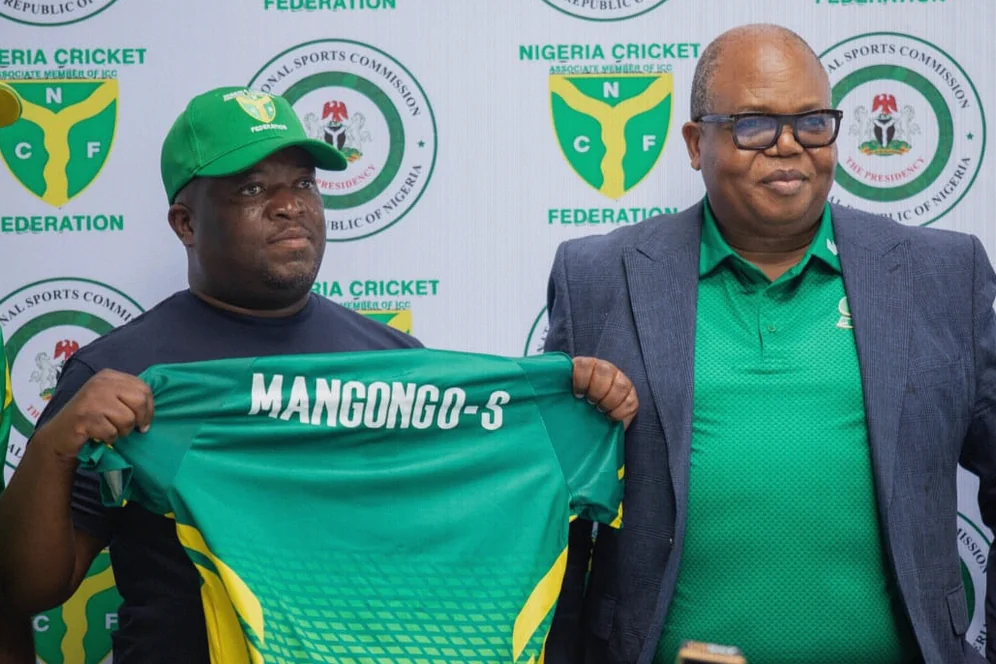
Stephen Mangongo, the Zimbabwean coaching figure long associated with building players from limited resources, has been unveiled as Nigeria’s Head Coach and High Performance Manager after arriving at the TBS Cricket Oval in Lagos and finding the kind of hunger he says convinces him the project can be transformed.
Key takeaways
- Mangongo was officially introduced on Wednesday, 27 May 2026 at the TBS Cricket Oval in Lagos.
- He says his decision to take the role was influenced by what he saw on his first trip to Nigeria, including players who were ready to work without instruction.
- His remit in Nigeria covers both men’s and women’s high-performance cricket, alongside redesigning and improving the wider pathway.
- The Nigeria Cricket Federation’s president described the selection as a thorough process, with applications rising from 20 to 44 compared with a similar search seven years earlier.
- Funding remains a central challenge, with the federation relying heavily on ICC allocations while seeking a primary tournament partner for broader support.
- Mangongo’s background includes developing Zimbabwe talent through the Takashinga Cricket Club project and coaching at multiple youth and senior levels.
Arrival in Lagos sets the tone
The session was scheduled to begin at nine o’clock, but Mangongo reached the TBS Cricket Oval in Lagos at 8:20, already mentally working through drills and the long-term plan he had agreed to pursue with a country whose cricket journey is still unfolding.
Instead of starting preparations, he found a group of girls already on site. They were not warming up, not checking their phones—simply present, stretched out and waiting with almost forty minutes still to go. Mangongo approached one of them and asked, in a light moment, whether he had arrived late. She replied that the session would not begin for another forty minutes. He later said that moment was the spark that confirmed his stance from the beginning.
Speaking at his formal unveiling before cameras and federation officials, Mangongo said the early scene was the “indicator” he needed. He insisted the decision was made from day one, framing it as evidence rather than sentiment.
From women’s programme to a wider opportunity
His first contact with Nigeria came through the Nigeria Cricket Federation, with Uyi Akpata—president of the federation—inviting him to lead a programme connected to the national women’s squad. Yet on that same afternoon, while Mangongo sat down for lunch, he looked out and noticed another group: young men hitting cricket balls under the sun, without a coach, without formal direction, and without anyone supervising.
He said the sight reinforced what he values most. If forced to choose, he claimed he would always back the player who wants to train over the one who only carries passion but is not ready to work. In his view, commitment to training would eventually lead to excellence. He described that day as clear proof “that day one spoke a lot to my eyes.”
When the federation opened its search for a top coach, it received forty-four applications. A panel narrowed that list to ten, and after the final deliberations, Mangongo’s name continued to rise. He was then unveiled to the public under the Lagos sky on Wednesday, 27 May 2026.
Takashinga roots and a coaching career built on transformation
Mangongo’s impact on Nigerian cricket, and his readiness to accept the job quickly, is closely tied to the story of where he came from.
He grew up in Zimbabwe’s Takashinga Cricket Club in Highfield, a dusty township on the outskirts of Harare. At the time, cricket in Zimbabwe was largely limited to white Zimbabweans. Mangongo has described Takashinga as a project driven by a single burning goal: to show that Black Zimbabweans—people with the same physical capability as anyone else—could play cricket and compete at the highest level.
There was little to work with. No proper turf, and equipment was scarce. What remained was dust and determination. Mangongo said Hamilton Masakadza—later recognised as Zimbabwe’s youngest centurion on Test debut—was ten years old when he first worked with him. The same age group included Tatenda Taibu, who would later become Zimbabwe’s youngest-ever captain, along with Prosper Utseya, Elton Chigumbura, and Stuart Matsikenyeri. Mangongo described them as five boys shaped by dust who eventually formed the spine of a national cricket story.
He recalled that they played cricket on “proper dust,” and that proper pitches only became part of their routine when they were around sixteen. In his view, the training schedule mattered: they practiced every day, returning to Takashinga after school and homework. He added that the shift to better playing surfaces came later, after they had already fought through an environment dominated by a restrictive system.
Mangongo’s coaching record during those years and beyond has been widely noted. He coached Zimbabwe at Under-15 and Under-19 level, steered Zimbabwe ‘A’ to the ICC Intercontinental Trophy title in 2008, and won individual coaching awards in Zimbabwe—Best Cricket Coach in 2009 and Best Sports Coach in 2010. He was also appointed head of Zimbabwe Cricket’s High Performance Programme.
He took part in three ICC Under-19 World Cups and served as assistant coach at four senior ICC Men’s World Cups. One of his standout achievements was leading Zimbabwe to a famous win over Australia during the 2014 Tri-Series, a result that sent shockwaves through the cricket world.
Later, he founded and ran his own private cricket academy in Johannesburg for six years, developing players on his own terms. By the time Nigeria approached him, he had spent a lifetime in the sport—coaching not only to improve skills, but to change lives.
Why he chose Nigeria: numbers, structure, and work ethic
At the unveiling, questions about why Nigeria were asked repeatedly, and Mangongo’s answers combined emotion with analysis.
He pointed first to the attitude he observed on that initial visit. Beyond that, he highlighted what he described as a structural advantage: Nigeria is not simply matching other established African cricket countries in grassroots development—it is ahead of them.
While he acknowledged Nigeria is not the largest Test-playing nation, he argued Nigeria is leading countries such as Zimbabwe and South Africa at the grassroots level. He said the volume of young players coming through made his decision clear: he wanted to come and coach there.
He returned to one key indicator: the average age of players in Nigeria’s Super League is around 22 or 23. Mangongo believes that is not a problem to be solved but raw material to be shaped.
He compared it to cricket powerhouses elsewhere, saying India are among the best in the world because they have the numbers. In his view, across Africa the country with the biggest supply of players is Nigeria, and that gives the programme a strong foundation.
He framed the challenge in almost philosophical terms. In Zimbabwe, coaches took boys with little to work with and produced international cricketers on dusty pitches. In Nigeria, he argued the infrastructure already exists—facilities are in place and the federation is investing. The only unresolved question, he insisted, is whether players are prepared to work.
He told the young players in the room that they do not know what they have until it is lost. In his message, the present environment offers a pathway for growth into international stars. He added that many people around the world would want that chance but never receive it.
Uyi Akpata explains the role, the process, and the financial reality
For Uyi Akpata, the appointment of Mangongo represented both the culmination of years of federation building and a high-profile declaration of intent.
At the unveiling, Akpata made clear that this was not simply a traditional head-coaching appointment. Mangongo’s title—Head Coach and High Performance Manager—was intentionally broad.
Akpata said the brief spans the full Nigeria cricket pipeline, stretching from primary school participation through grassroots development to the senior national team.
He explained that around sixty percent of the role focuses on assembling a high-performance team with both male and female players competing at the highest level. He also said Mangongo will design a programme and refine what the federation is currently doing, insisting that the pipeline from grassroots to the national side requires critical steps and actions across the board.
Akpata described the selection process as rigorous and independent. When the federation ran a similar search seven years earlier, twenty people expressed interest. This time, forty-four applied. Akpata said he stayed away from the panel’s deliberations until the final two were identified, only entering the room after that stage. He recalled the panel’s conclusion: that it was clear Mangongo was the right choice.
A further part of the vision, Akpata added, involves using Mangongo to improve Nigerian coaching standards overall, not only through elite player development. From the day after the unveiling—indeed, from the next morning—Mangongo was scheduled to meet the full group of Nigerian coaches, examine their credentials, and identify those who would work most closely with him.
The federation’s plan is to ensure knowledge transfer: Nigerian coaches learning from someone who built careers from limited beginnings. The aim is that when Mangongo eventually moves on, the expertise remains embedded in the system.
Akpata also said the federation will bring specialist coaches at intervals to support the programme at key moments. He specifically mentioned a high-performance bowling specialist planned for around November.
No discussion about Nigerian cricket, Akpata said, can ignore the subject of money. When asked directly how the federation managed to secure a coach of Mangongo’s calibre, Akpata offered a candid response: it is not easy, and funding is always difficult.
He said the federation’s financial model leans heavily on International Cricket Council support distributed across categories such as high performance, facilities, and development. Akpata acknowledged that existing resources can cover Mangongo’s pay, but funding the full programme—tours, high-performance camps, and bringing foreign teams to Nigeria—requires a broader commercial base. The federation is actively searching for a primary tournament partner to brand its activities and provide additional capital.
He stressed that the federation has the right person, but must provide the right tools. Without resources for the remaining parts of the programme, he said, little can happen. He added that the task is not simple, but the federation must rise to it.
In Akpata’s view, that message is as much about ambition as it is about finances. He and Mangongo understand that talent and desire alone are not enough; the pipeline, coaches, tours, and access to competitive cricket all need funding if the dream is to become real.
A mission beyond Nigeria and a belief in Africa’s rise
Mangongo’s appointment, spending time with him suggests, is not only about Nigeria in his mind—it is about something larger.
He speaks about the growth of cricket across Africa with conviction that goes beyond tactics. He said he dreams of the day when African teams are truly competitive on the world stage—when the continent is not treated as an afterthought on the ICC calendar, but a genuine force able to challenge Asia’s dominance.
At the unveiling, he said the game must grow in Africa. In his words, the objective is to help other African nations become competitive so that the product can challenge the rest of the world, including Asia. He added that cricket is central to his life—something he dreams about, sleeps with, and eats—and described the role as one of the biggest privileges of his career.
Those remarks landed strongly at the TBS Cricket Oval, where his past achievements were clear in the narrative: he had taken boys from a dusty township in Harare and turned them into international cricketers who wore their nation’s colours. In effect, he was telling Nigeria: he knows how to build this once, with fewer resources, and now wants to repeat it.
The story carries a particular symmetry. Takashinga was created so Black Zimbabweans could receive what a system designed to exclude them had denied. For Mangongo, Nigeria’s federation has built something comparable—an open, accessible structure that grows quickly and gives young Nigerians entry points that players in more established cricket countries sometimes cannot access. He believes his own experience fighting for access has prepared him to accelerate a system that already offers opportunities.
He said that if Takashinga took a tougher road, Nigeria is taking the easier one because there are better facilities to refine skills. Yet he insisted the core question remains the same: are players ready to train and practice every single day. That is what the Takashinga group did.
No celebration—work begins immediately
The day after his unveiling, Mangongo did not celebrate or rest. Instead, he walked into a meeting with Nigerian cricket coaches and began working right away.
It is presented as one of the most telling details. The same man who arrived twenty minutes early and found players already waiting has now returned to the task at hand—not for photographs or certificates, but because he believes the country’s potential is genuine.
Whether Nigerian cricket can fulfil that promise will depend on multiple factors, including funding, competitive opportunities, and continued talent development through the pipeline. It will also rely on the work of coaches in classrooms and communities across Nigeria’s thirty-six states. Akpata was frank enough to acknowledge that none of it is guaranteed.
Still, on the day Mangongo was introduced to the Nigerian public, there was a sense that the moment felt different from typical sporting announcements. The atmosphere suggested a man who built champions in the dust and dreamt a sport into existence where it did not exist—did not take the role purely for salary or because the challenge was easy.
He arrived because the girls were already there at 8:20 in the morning. In that simple fact, he saw everything he needed to understand about the seriousness of the opportunity.
Career highlights
- Holds ICC Level 3 Coaching Certification.
- Coached Zimbabwe Under-15, Under-19, Zimbabwe ‘A’, and the national men’s team.
- Won the ICC Intercontinental Trophy in 2008 with Zimbabwe ‘A’.
- Named Best Cricket Coach in Zimbabwe in 2009.
- Named Best Sports Coach in Zimbabwe in 2010.
- Led Zimbabwe to a historic victory over Australia in the 2014 Tri-Series.
- Mentored Hamilton Masakadza and Tatenda Taibu.
- Founded and ran a private cricket academy in Johannesburg for six years.
- Developed five Zimbabwe national captains through the Takashinga programme.