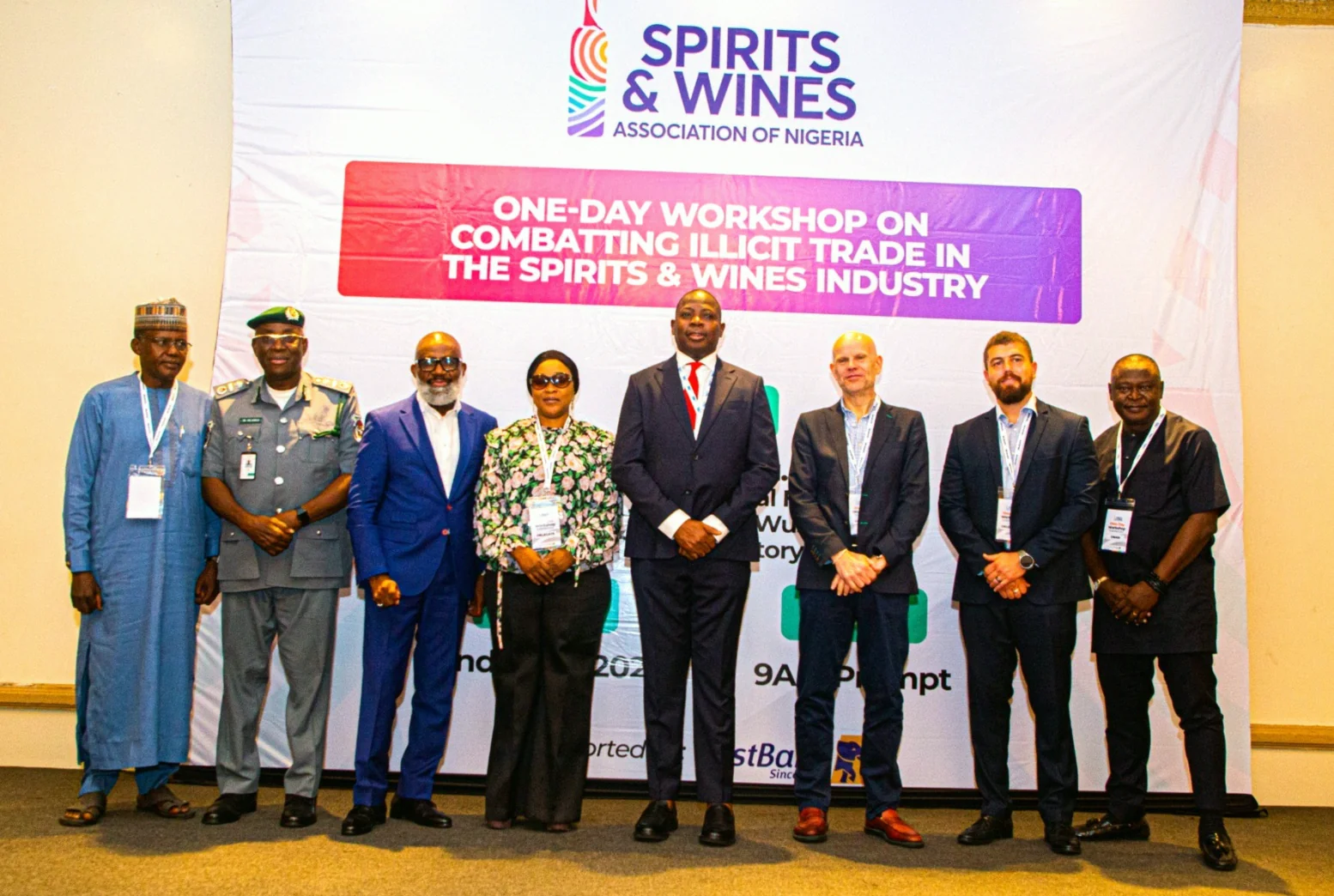
Illicit alcohol continues to pose a growing risk to public health, government income and the competitiveness of Nigeria’s legitimate spirits and wine industry, prompting the Spirits and Wines Association of Nigeria (SWAN) to call for tighter cooperation among regulators, enforcement bodies, companies and other stakeholders. The appeal followed a high-level workshop in Abuja that brought together multiple parts of the ecosystem to agree on practical ways to curb fake, smuggled and illegally produced products.
Background: why the issue matters in Nigeria’s alcohol market
In Nigeria, wines and spirits are a staple at social and commercial milestones, spanning weddings, birthdays, naming ceremonies, business meetings, product launches and weekend gatherings. Beyond their role in celebration, the industry says alcohol also helps build shared experiences across communities.
Against that cultural and economic backdrop, SWAN said the integrity of the market is being undermined by illicit trade, arguing that the problem threatens both consumer safety and the sustainability of businesses that comply with rules, pay taxes and invest in quality control. SWAN’s membership includes Bacardi, Diageo, Guinness Nigeria, Moët Hennessy, Nigerian Breweries, Pernod Ricard Nigeria, Nigerian Bottling Company Ltd., William Grants & Sons and Brian Munro Limited.
What happened: workshop in Abuja and key warnings
- SWAN convened a high-level workshop in Abuja bringing together regulators, enforcement agencies, industry players, media organisations and development partners to align on measures aimed at reducing illicit trade and strengthening market integrity.
- Pernod Ricard Nigeria Managing Director and SWAN President Michael Ehindero argued that illicit trade—covering production, importation or sale outside regulatory oversight—creates risks for consumer protection, public revenue and legitimate companies.
- Ehindero said illicit activity can take multiple forms, including counterfeiting, smuggling, illegal production, tax evasion and the redirection of lawful products into unauthorised channels, describing it as a global challenge that cuts across consumer goods and food and beverage supply chains as well as sectors such as pharmaceuticals, tobacco, cosmetics and alcohol.
- He warned that the impact extends beyond loss of life and health, noting that governments forgo billions of naira in tax receipts that would otherwise support services such as education, healthcare, infrastructure and public safety, while compliant businesses are undercut and jobs are lost.
- SWAN Director-General Tony Okwoju stressed that enforcement should be driven by stakeholders working together, linking illicit trade to harm to lives, legitimate operators and government revenue.
- David Francis, Managing Director of the Alliance Against Counterfeit Spirits (AACS), said counterfeit operations are becoming more organised and more sophisticated, with fake packaging materials often produced abroad and shipped into local markets.
- Francis described how counterfeiters can replicate labels, cartons, bottles and caps, calling it a “do-it-yourself” approach where the only remaining ingredient is the liquid, which he said is comparatively easy to obtain in many domestic markets.
- At the regulatory level, agencies acknowledged the increasing threat and continued interventions, with the Federal Competition and Consumer Protection Commission (FCCPC) framing the problem as both a public health and economic challenge.
- FCCPC Executive Vice Chairman Tunji Bello said illicit alcohol trade is a “multi-dimensional crisis” that affects consumer safety, market integrity and public revenue, adding that it is not limited to an industry problem but also covers consumer protection, health protection, public safety and the wider credibility of the market.
- The workshop concluded with a shared view that no single stakeholder can solve the issue alone, with participants highlighting the need for stronger enforcement and intelligence sharing, better regulatory coordination and ongoing consumer education, alongside greater transparency across the supply chain.
Reaction and next steps: enforcement, consumer awareness and responsible industry
SWAN also emphasised that informed consumer choices remain a critical line of defence, urging the public to buy alcohol only from reputable and authorised outlets. Stakeholders said this approach both protects buyers and supports legitimate businesses, helping sustain trust in the market.
The session further reinforced the role of responsible, lawful industry participants in promoting safe consumption and contributing to society. SWAN pointed to ongoing investments by companies in public education on responsible drinking and drink-driving prevention, alongside initiatives aimed at safer roads. It also cited sustainability programmes such as glass bottle collection and recycling to reduce environmental impact.
To strengthen Nigeria’s broader policy and operational environment, participants highlighted the importance of aligning policy priorities, deploying technology-enabled traceability solutions and sustaining public-private cooperation.
Who attended and what the industry says it will do
The engagement included participation from the FCCPC, Nigeria Customs Service, Standards Organisation of Nigeria (SON), Nigeria Police Force and the Nigeria Security and Civil Defence Corps (NSCDC), alongside media, civil society organisations, diplomatic partners and industry representatives.
SWAN said it will continue working with all stakeholders to deliver long-term, sustainable solutions. The message from the workshop was clear: only a unified, collaborative strategy will curb illicit trade, protect consumers and support the growth of a responsible and thriving spirits and wines sector in Nigeria.