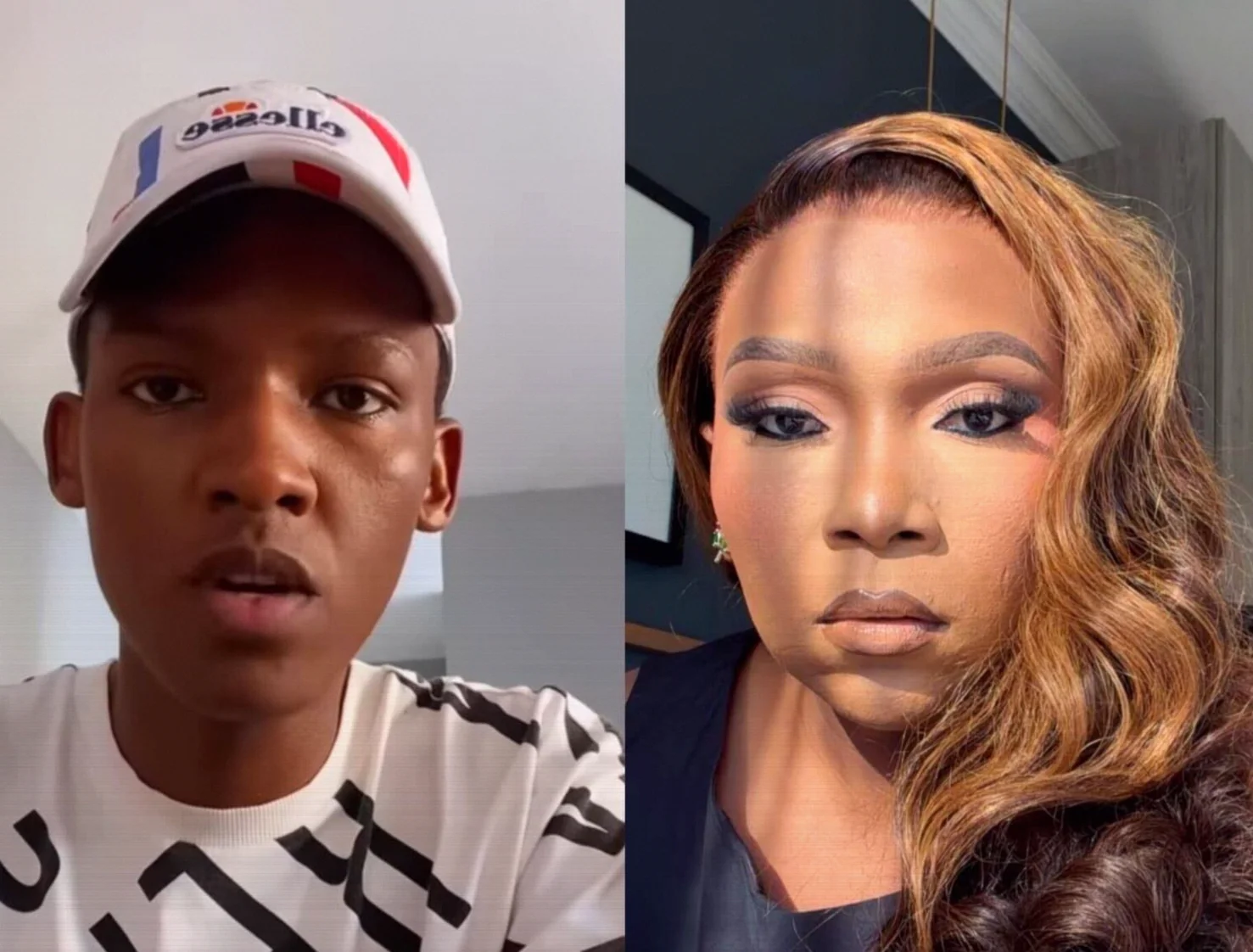
A TikTok creator, Nobangela Lokishi, is facing fresh scrutiny after explaining that a past criminal record has derailed his plans to attend university. The influencer says the fallout from an online spat has followed him through the admissions process, leaving him unable to enrol as he hoped.
What Lokishi says happened
- Lokishi says his criminal record traces back to a 2024 incident involving homophobic and body-shaming remarks aimed at creator Dominic Zaca.
- He claims the controversy resurfaced this year when he tried to register at a university.
- During registration, he was asked for documents including a certified ID copy, a police clearance certificate, and a clearance certificate from the National Child Protection Register.
- Officials allegedly told him his name had a “flag” due to the earlier incident and fine.
- Lokishi says the record has effectively prevented him from studying for the next five years.
Lokishi explained in a recent video that the trouble began around two years earlier, during the time he was filming promotional material for a sneaker brand. In that clip, he made derogatory comments about Zaca, and the exchange was later treated as homophobic. He was then ordered to pay a R45,000 penalty.
Although the public backlash eventually cooled, Lokishi claims the issue returned when he attempted to enrol at a university he did not name. He says the registration process required multiple documents, including a certified copy of his identity document, a police clearance certificate, and a clearance certificate linked to the National Child Protection Register.
When he went to the police station for the clearance, he was told that the earlier body-shaming incident and the resulting fine had left a record marker on his file. Lokishi said he was unaware that the matter had been active again, adding that he had been away from social media since finishing matric.
“She explained how the case was back in motion,” Lokishi said. “I didn’t know all this because I had been off social media since my matric final exams.”
The earlier dispute with Zaca
Lokishi’s account also points back to how the dispute escalated. At the time, Zaca posted a response video addressing the homophobic remarks, and demanded R45,000 from Lokishi for defamation. Zaca also claimed he contacted the sneaker brand involved and said it confirmed it had not approved Lokishi’s content.
Lokishi was reportedly instructed to remove the video but did not comply at first, which led Zaca to pursue legal action. In comments made during that period, Zaca told Lokishi to figure out how he would pay within seven days or face further involvement from his lawyer.
“I know you don’t have R45,000 since you’re a student, but since you want to play smart, I want you to figure out how you’re going to pay me in the next seven days, or my lawyer will be in touch,” Zaca said at the time. “I want to teach you a lesson so that in the future, when you are doing something, you use your brain.”
After the threat of legal consequences, Lokishi removed the video and shared an apology. However, he says the criminal impact remained, and he now believes it is blocking his education plans for the foreseeable future.
The story has since ignited heated discussion online, with many users questioning whether the alleged academic ban is justified and how severe the consequences should be.
Legal experts weigh in
Speaking to TimesLIVE, legal expert Kobue Mokgosi clarified that, in general, universities cannot stop a student from registering for a course they want as long as they meet the academic requirements. He said all applicants are assessed using APS (Admission Point Score), and that admission decisions are typically tied to academic eligibility rather than past wrongdoing.
“All students are judged on their APS (Admission Point Score). You cannot be stopped from registering for a course, but what you do after obtaining that qualification is a different story,” Mokgosi explained.
Mokgosi compared it to how prison inmates are legally allowed to study law. While a criminal record may not prevent someone from earning a qualification, he noted that a professional body—such as the Legal Practice Council—could raise objections later when it comes to practising as an attorney.
Department of higher education spokesperson Matshepo Seedat echoed the general principle that higher education is intended to be accessible. Seedat said criminal records should not automatically be used to exclude people from education across the board, while also pointing out that institutional rules can differ.
“Higher education is open to all, even inmates are students at institutions of higher education. So criminal records cannot universally be used to exclude people from education,” Seedat said.
Still, Seedat stressed that there are exceptions—particularly where the qualification requires direct involvement with vulnerable groups. In those cases, universities may request police clearance if it can be legally justified under their policies.
“In instances where the intended qualification requires direct interaction and work with children, a university may, through its policies, require police clearance. This is not applicable to all courses, but only those where it can be legally justified.”
Mokgosi added another possible explanation for what Lokishi is experiencing. He suggested the rejection may have more to do with how a university wants to manage its public image and partnerships than with eligibility alone.
“The institution might not want to associate itself with him. It brings unnecessary attention,” Mokgosi noted.
He also cautioned influencers against chasing viral engagement by insulting others, warning that online actions can carry long-term consequences. Mokgosi said Lokishi should understand that the behaviour was wrong, even if it seemed to produce likes at the time.
“You don’t want to insult someone because we live in a very sensitive society. If you think what you did 10 years ago won’t come back to bite you, that is foolish. He (Lokishi) must understand that what he did was wrong. He insulted someone to get views and likes — which he got — but now it has impacted his future.”