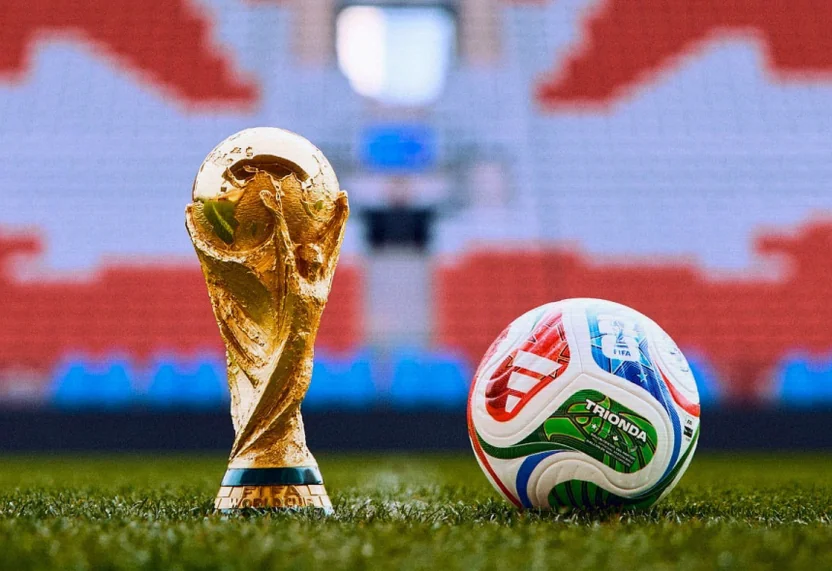
The 2026 FIFA World Cup, co-hosted by the United States, Canada and Mexico, will feature several major amendments to the Laws of the Game after approval from IFAB. The changes are intended to make matches play faster, improve how officials manage discipline, and raise decision accuracy through technology.
FIFA says the overall direction is clear: cut down on deliberate delays, smooth out the rhythm of play, strengthen enforcement when misconduct occurs, and use video support more effectively in moments that can swing a contest.
Four headline rule updates for the 2026 tournament
-
A strict five-second countdown for throw-ins and goal kicks
Referees will now signal with an outstretched hand and a visible count of five seconds when a throw-in or goal kick is awarded. If the ball is not returned to play within that window, possession will be granted automatically to the opposing side.
FIFA’s goal is to keep games moving and increase the amount of time spent playing rather than waiting for restarts.
-
A straight red card for covering the mouth during confrontations
Players who intentionally cover their mouth using a hand, arm, or shirt while confronting or arguing with opponents—often to obscure abusive language—will face an immediate red card. The measure is aimed at cleaning up on-field behavior and making it harder for officials to miss hidden misconduct during heated exchanges.
-
The 10-second rule for substitutions
Any player coming on must be allowed to enter only after the substitute who is being replaced exits within 10 seconds of the official signal. If the outgoing player delays—such as by strolling slowly in protest—the incoming player must wait an additional full minute, leaving the team short during that period.
FIFA says the adjustment is designed to discourage intentional time-wasting during the substitution process.
-
Expanded VAR coverage for corners and second yellow cards
Video Assistant Referees will be able to review and overturn incorrect corner awards. They can also intervene in situations involving mistaken identity or cases where a second yellow card was wrongly shown to the wrong player.
The update builds on existing VAR procedures, with an emphasis on improving accuracy during decisive set-piece moments and disciplinary calls while avoiding unnecessary interruption to match flow.
Alongside these headline amendments, the tournament framework also includes other competition-wide measures such as required hydration breaks in hot conditions and tighter guidelines for medical care, including a minimum one-minute departure time for injured players before treatment can be concluded and play can resume.
The 2026 World Cup is scheduled to begin on June 11, 2026, and the rule changes are already set to fuel debate among clubs, players and fans as the tournament approaches.