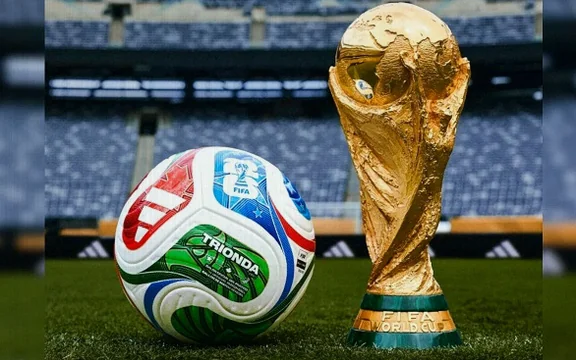
Nigeria will not feature at the 2026 FIFA World Cup when the tournament begins on June 11 across the United States, Canada and Mexico, but the nation’s football influence is expected to be visible throughout the competition as players of Nigerian heritage headline several title contenders.
Key takeaways
- The Super Eagles missed out on the 2026 World Cup for a second straight tournament.
- Nigeria’s qualifying run ended in November 2025 when they lost 3-4 on penalties to the Democratic Republic of Congo in the CAF play-off final in Rabat.
- Heritage players with Nigerian roots are included in multiple World Cup contenders, including England, France and Germany.
- Former Super Eagles figures argue that the country must address deeper structural issues rather than focus only on players’ personal choices.
- Disputes involving coach Eric Chelle’s representatives and the NFF are linked to concerns about instability ahead of the 2027 AFCON qualifiers.
Nigeria’s absence, and the Nigerian diaspora spotlight
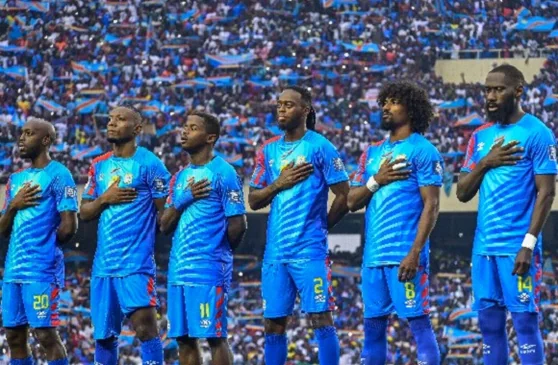
For the second consecutive World Cup cycle, Nigeria failed to reach the tournament, extending a difficult period for the country’s football. Their hopes were extinguished in November 2025 when the Super Eagles were beaten 3-4 on penalties by the Democratic Republic of Congo after their CAF play-off final in Rabat.
Despite the team’s non-participation, the World Cup is set to carry a strong Nigerian presence. Across major European and North American squads, a number of players of Nigerian descent are expected to feature for teams chasing major honours, highlighting both the size of the Nigerian diaspora in elite football and ongoing weaknesses in the domestic game.
Where Nigerian-heritage players will feature
Several of the tournament’s strongest squads include players with Nigerian roots. In England’s squad, Bukayo Saka represents one of the standout names, having been born in London to Yoruba parents and becoming a key figure in the Three Lions’ attacking setup. Saka is joined by Crystal Palace creative midfielder Eberechi Eze and Chelsea winger Noni Madueke.
France’s campaign includes Bayern Munich winger Michael Olise, who was born in England to a Nigerian father and a Franco-Algerian mother. Germany’s group features Jamal Musiala of Bayern Munich, born to a British-Nigerian father and a German mother, along with Borussia Dortmund midfielder Felix Nmecha.
Switzerland’s defence is set to be marshalled by Manchester City centre-back Manuel Akanji, while Monaco forward Noah Okafor is expected to provide attacking impetus. Norway return to the World Cup for the first time since 1998 and will look to fast winger Antonio Nusa for energy on the flanks. Austria’s David Alaba remains the most recognisable symbol of Ralf Rangnick’s side, with Chelsea’s Carney Chukwuemeka also in the mix after committing his senior international future to Vienna following his development through England’s youth system.
Among host nations, the United States include Monaco forward Folarin Balogun. Canada also carries a notable Nigerian presence, with Minnesota United’s Tani Oluwaseyi, striker Promise David and goalkeeper Owen Goodman all part of the group. South Africa’s Bafana Bafana have incorporated Hannover 96 defender Ime Okon into their defensive plans.
Debate in Nigeria: talent leaving, and the bigger problem
The scale of the diaspora contingent has prompted renewed debate among former Super Eagles players. Peter Osaze Odemwingie questioned how Nigeria can realistically compete for a World Cup when many of the brightest prospects are developing and committing their futures elsewhere, arguing that the Nigeria Football Federation should reassess why the home pathway no longer attracts heritage players as their preferred option.
Odemwingie’s point is echoed by the idea that if even a portion of these players had been integrated into the national setup, Nigeria could have built one of the most formidable rosters on the international stage. Instead, supporters have watched prime-age names, including Victor Osimhen, Ademola Lookman and captain Wilfred Ndidi, from afar.
Ndidi, speaking ahead of Nigeria’s June friendlies in Europe, underlined that every professional dreams of representing his country at a World Cup. Striker Paul Onuachu called the omission heart-breaking, while former forward Yakubu Aiyegbeni warned that careers move faster than young players often realise, and that missing a World Cup can turn into a regret that lasts for years.
Former players stressed that dual-nationality choices should be viewed as a symptom rather than the root cause. Odion Ighalo said he felt frustrated that a country with Nigeria’s depth of talent has missed successive World Cups, adding that it is embarrassing to see smaller nations qualify with ease.
Ifeanyi Udeze, a defensive stalwart in his playing days, urged perspective on coach Eric Chelle’s situation. He noted that Chelle, the Franco-Malian tactician, inherited a qualification campaign already in a fragile state when he took charge in January 2025.
How Chelle’s turnaround ended, and what comes next
Under Chelle, Nigeria improved sharply during the qualification run. The Super Eagles remained unbeaten in regulation across their remaining matches, winning four of six to earn their place in the play-offs, before the penalty defeat in Rabat brought the campaign to an end.
However, the next cycle has brought fresh uncertainty. Ongoing contract and salary disagreements between Chelle’s representatives and the NFF ahead of the 2027 AFCON qualifiers raise fears that Nigeria could face another period of technical instability.
The failure to qualify has strengthened calls for changes to the structure of Nigerian football. Former players and analysts have highlighted four urgent priorities: creating technical continuity and insulating coaches from administrative interference; engaging the diaspora early at youth level before players commit elsewhere; modernising grassroots infrastructure and national scouting to complement the private academy system; and improving institutional transparency by removing delayed bonus payments, transport or logistics breakdowns, and internal federation politics that discourage foreign-based professionals.
With players such as Saka, Musiala and Olise taking prominent roles across the Atlantic, the argument surrounding Nigeria is no longer about blaming individuals for the routes they chose. Instead, it is about building a football system with credibility and ambition strong enough that the Super Eagles become the clear first option for every Nigerian heritage player.