Nigeria’s Dangote Petroleum Refinery & Petrochemicals is increasingly in the spotlight as a tangible factor behind the country’s improving economic picture, after a major sovereign credit-rating upgrade from S&P Global Ratings. The rating action is being read by markets as a signal that Nigeria’s macroeconomic footing—particularly its external balances and energy capability—is strengthening.
In its latest review, S&P lifted Nigeria’s long-term sovereign credit ratings for both foreign and local currency to “B” from “B-.” The agency pointed to several supportive developments: firmer economic growth, better external account metrics, higher oil output, and a rise in domestic refining capacity. Those elements, taken together, were presented as evidence that Nigeria’s recovery is becoming more durable.
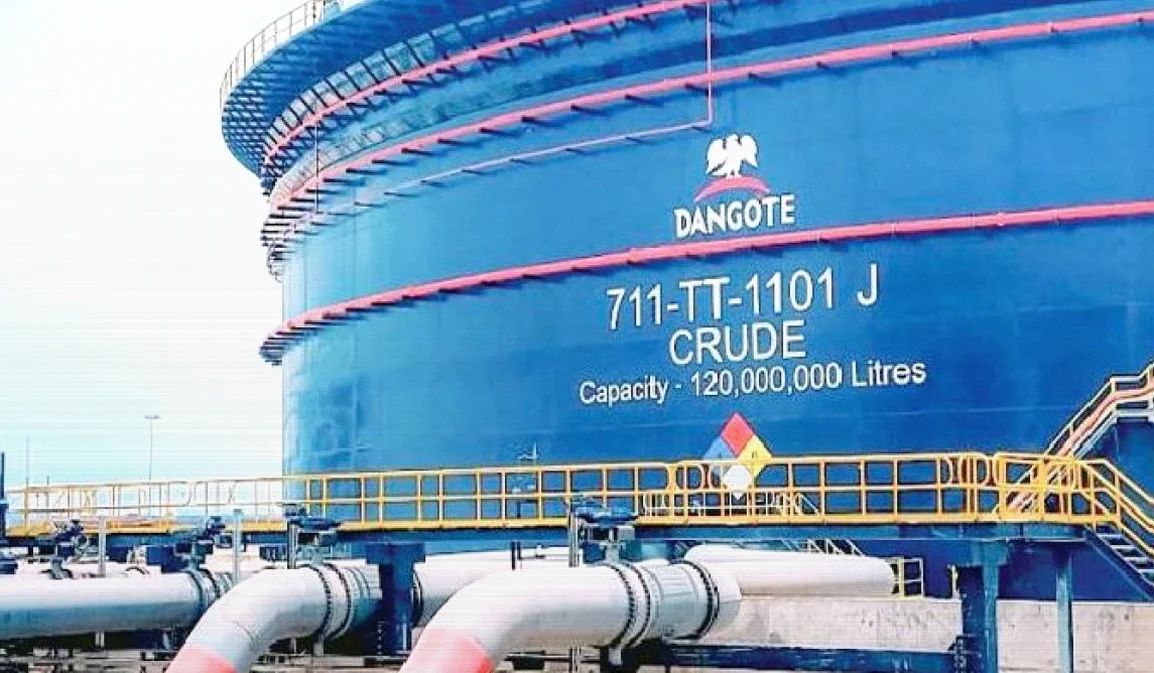
A central driver in S&P’s assessment was the operational ramp-up of the Dangote refinery, which is designed for 650,000 barrels per day. The ratings agency said the refinery’s progress has helped improve Nigeria’s balance of payments and strengthened the broader resilience of the economy.
S&P added that reaching full-capacity operations is supporting the country’s current account performance, including by boosting the surplus, lowering reliance on imported refined petroleum products, and improving the availability of foreign exchange. In the agency’s words, “Significant refining capacity is now also online; Dangote Industries Ltd.’s large scale refinery and petrochemical complex has ramped up to near its maximum capacity of 650,000 barrels per day.”
Looking ahead, S&P expects Nigeria’s current account surplus to widen to 5.8% of gross domestic product in 2026, up from 4.8% in 2025. The projection is supported in part by increased domestic refining activity and stronger hydrocarbon exports.
The agency also said the refinery is playing a wider role in meeting domestic needs, helping to ensure availability of refined fuel, natural gas, and fertiliser in Nigeria’s local market. Beyond that, it provides a cushion against disruptions in global supply linked to ongoing geopolitical tensions in the Middle East.
S&P further attributed Nigeria’s improving external position to several policy and market shifts, including reduced demand for fuel imports, the removal of fuel subsidies, exchange-rate liberalisation, and higher oil production. These changes, the agency argued, have helped reduce pressure on foreign exchange and supported more sustainable external financing dynamics.
On reserves, S&P said foreign exchange reserves have climbed markedly—from roughly $33 billion in 2023 to close to $50 billion by early 2026. Part of that improvement is linked to reduced import requirements for refined petroleum products following the start of operations at the Dangote facility.
Beyond Nigeria, S&P highlighted the refinery’s potential relevance to Africa’s industrialisation ambitions. It noted that Nigeria is moving away from a model built primarily around crude oil exports and is increasingly positioning itself as a producer and exporter of refined petroleum products.
The ratings agency also disclosed that Dangote Industries has already announced intentions to conduct feasibility studies to expand refining capacity to about 1.4 million barrels per day, compared with the current 650,000 barrels per day. S&P said that planned expansion—together with efforts to rehabilitate other refineries in the country—could further strengthen Nigeria’s economic performance and add to balance-of-payments gains over the coming years.
While S&P acknowledged that global crude oil prices and market-based pricing continue to influence domestic fuel costs, it maintained that greater local refining capacity improves energy security. The agency said this also reduces Nigeria’s exposure to external supply shocks.
S&P tied Nigeria’s improving macroeconomic outlook to reforms implemented since 2023. These include exchange-rate liberalisation, fiscal changes, higher petroleum revenue remittances, and efforts to raise oil production by improving security in the Niger Delta. The agency said these measures are supporting investor confidence and helping underpin growth that continues even as inflationary pressures persist.
It expects economic growth to remain solid, with reforms continuing to support both confidence and non-oil sector expansion. S&P said the ratings outlook is stable because it reflects a trade-off between better external conditions and ongoing structural issues—such as a relatively narrow tax base, persistently high inflation, and low levels of formal employment.